
 10 Mins Read

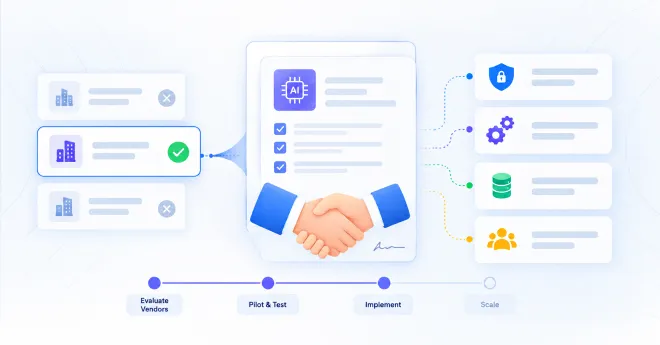
The Enterprise Guide to Hiring an AI Automation Partner (Without Wasting 6 Months)
Choosing the wrong vendor is the single biggest reason enterprise AI automation projects stall, blow past budget, or quietly die...

A simple, friendly guide comparing hired lead qualification services and automated AI agents, what each one actually is, and how to pick the right fit.
Every business with more leads than salespeople faces the same question: who follows up first, and who does that sorting, a team of trained people, or a piece of software?
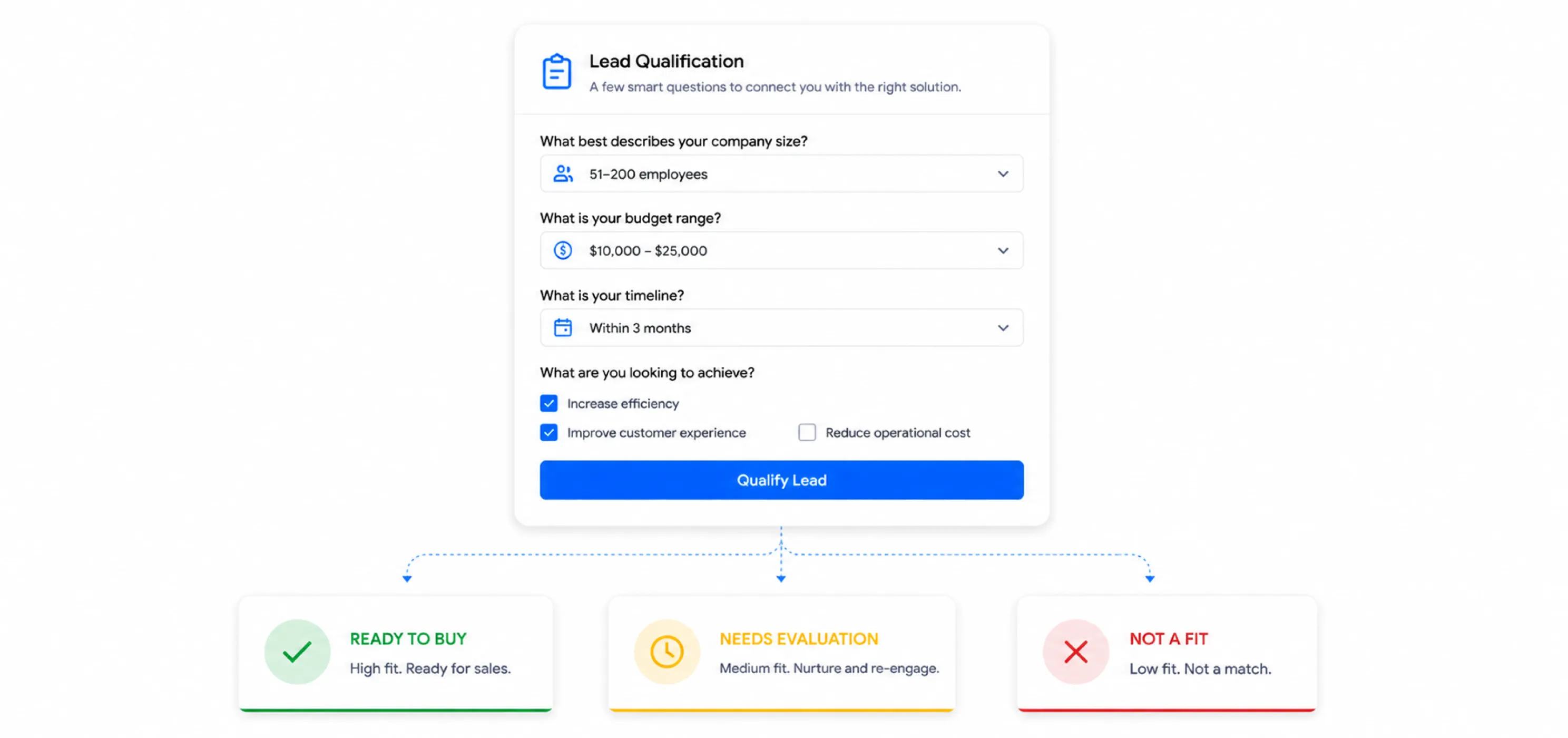
Picture a busy restaurant with a line out the door. Someone at the front needs to quickly figure out: is this person here for a table, just asking about the bathroom, or picking up a takeout order? Get that sorted fast, and everyone gets where they need to go.
Lead qualification is the business version of that. A company gets a stream of people interested in what it sells. Some are ready to buy soon. Some are just window-shopping. Some aren’t a good fit at all. Qualification is the step where someone or something asks a few smart questions and sorts the real, ready buyers from everyone else, before a busy salesperson spends time on them.
There are two very different ways to do this well today. You can hire an AI lead qualification service or a team of trained people who do this for a living. Or you can use automated AI agent software that has a conversation, asks questions, and decides who’s ready, without a human typing a single word.
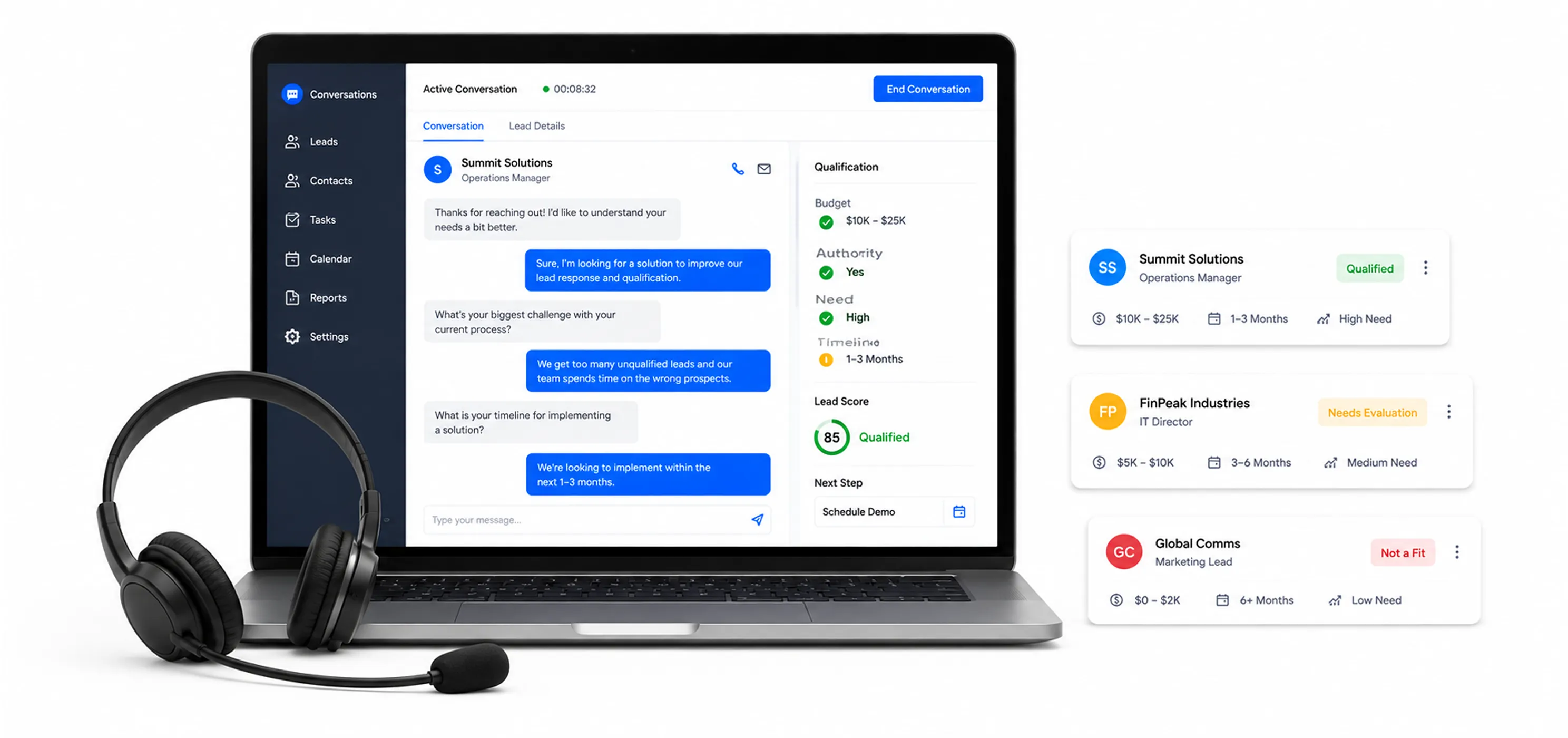
A lead qualification service is a company or a team within your own company made up of real people whose whole job is calling, emailing, and chatting with new leads to figure out if they’re worth a salesperson’s time. You’ll sometimes hear them called SDRs (sales development reps) or BDRs (business development reps), whether they work in-house or for an outside agency you hire.
These people are trained to ask good questions, listen closely, and pick up on things that are hard to write down, like when someone sounds excited but nervous about price, or when a “maybe later” really means “not interested, but too polite to say so.” A skilled human can read between the lines in a way that’s still genuinely hard to copy.
The tradeoff is simple: people need to be paid, trained, and given breaks. They can only be on one call at a time. And when your lead volume triples overnight, hiring ten more qualified people isn’t something you can do by lunchtime.
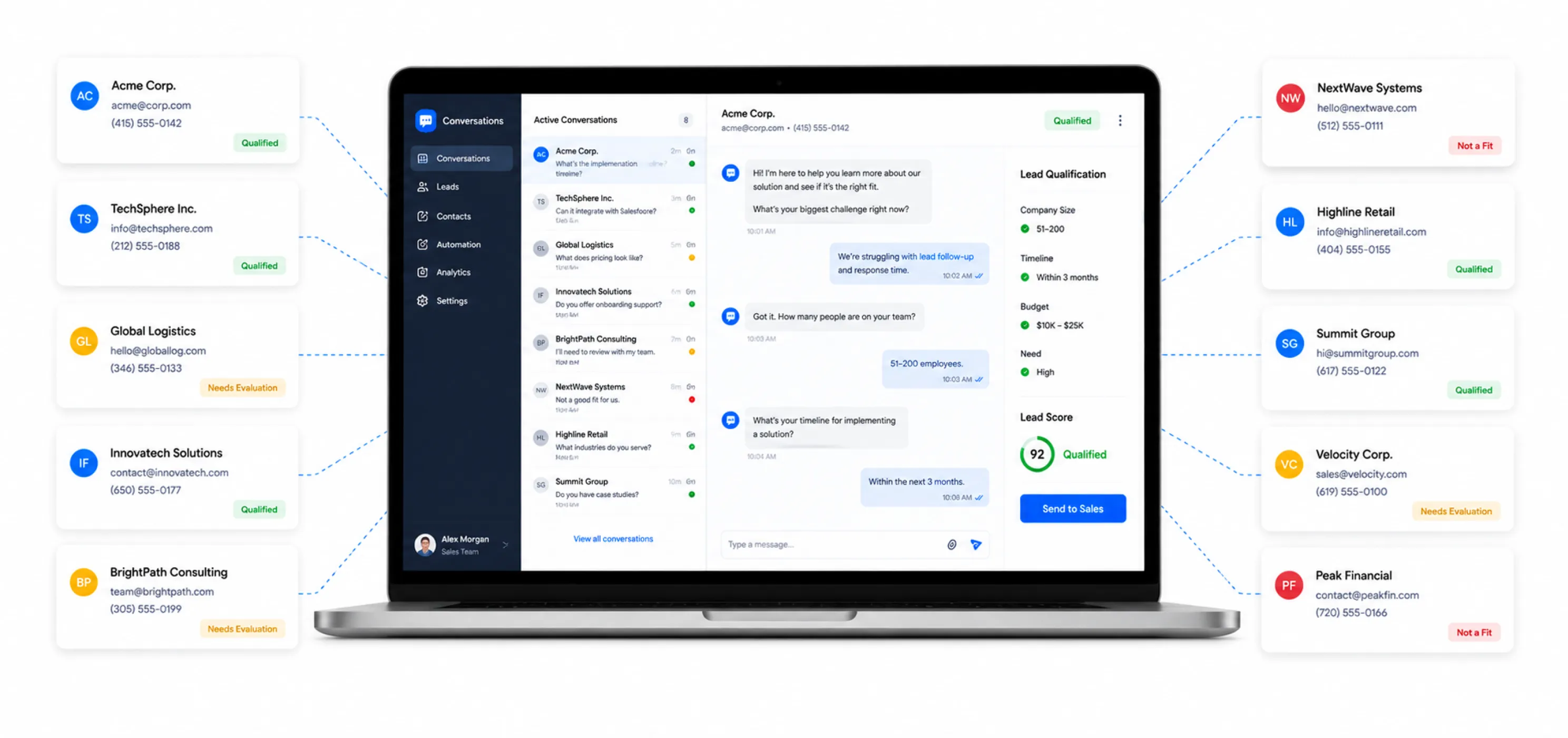
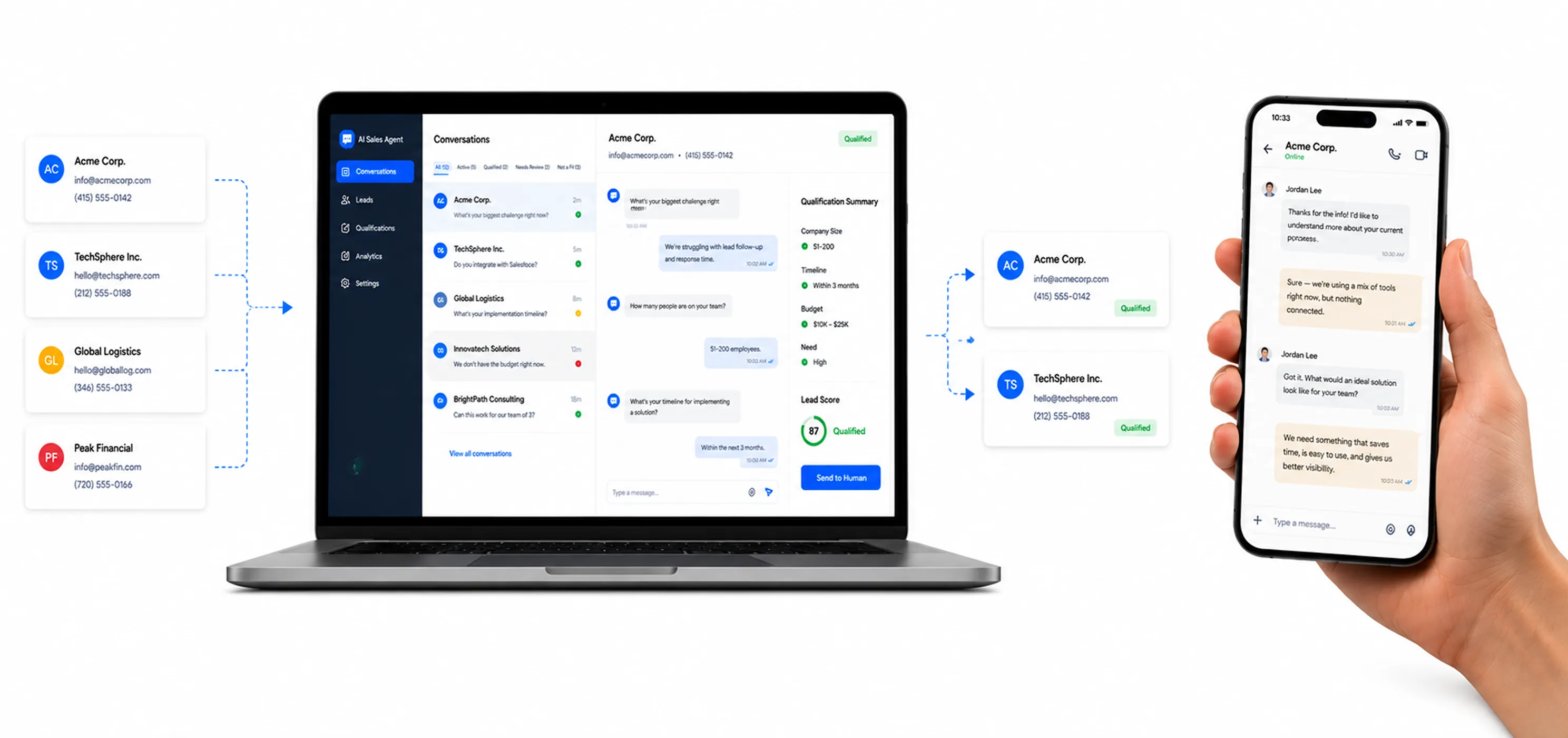
An automated AI agent is software built to have that same first conversation through chat, email, or even a phone call without a human on the other end. It asks the lead a few smart questions, understands the answers using AI, and decides on the spot whether this person looks ready to talk to a real salesperson.
The best part is scale. An AI agent can talk to one lead or ten thousand leads at the same moment, any hour of the day, in any time zone, without ever getting tired or short with someone on their fifth question. It also never forgets to follow up, and it treats every single lead with the same steady, consistent process.
The tradeoff here is also simple: an AI agent is only as good as the way it’s set up, and it can still misread an unusual situation, an odd typo, or a very particular tone. It’s very good at patterns it has seen before, and shakier on things it hasn’t.
| Note Neither option is automatically “better.” A five-person startup with a handful of warm leads a week may not need either. A company getting thousands of website visitors a day usually can’t survive without some kind of automation. The right choice depends entirely on how many leads you get, and how different each conversation needs to be. |
| Lead qualification services | Automated AI agents |
|---|---|
| Picks up on tone, hesitation, and unspoken concerns | Works all day, all night, every day of the week |
| Can improvise and handle truly unusual questions | Handles unlimited leads at the exact same time |
| Builds real rapport that can carry into the sales call | Responds within seconds, not hours |
| Good for high-value, complex, relationship-driven sales | Costs roughly the same no matter how much volume grows |
| What we’re comparing | Qualification service | Automated AI agent |
| Availability | Business hours, mostly | Around the clock |
| Handles a sudden lead spike | Hard, needs more hiring | Easy, scales instantly |
| Reads tone & hesitation | Strong | Improving, still learning |
| Cost as leads grow | Rises with headcount | Stays roughly flat |
| Best for | Complex, high-value deals | Stays roughly flatHigh volume, quick sorting |
“We didn’t replace our team with AI. We just stopped making them answer the same five questions two hundred times a week.”
~ a common line from teams that moved to a hybrid setup
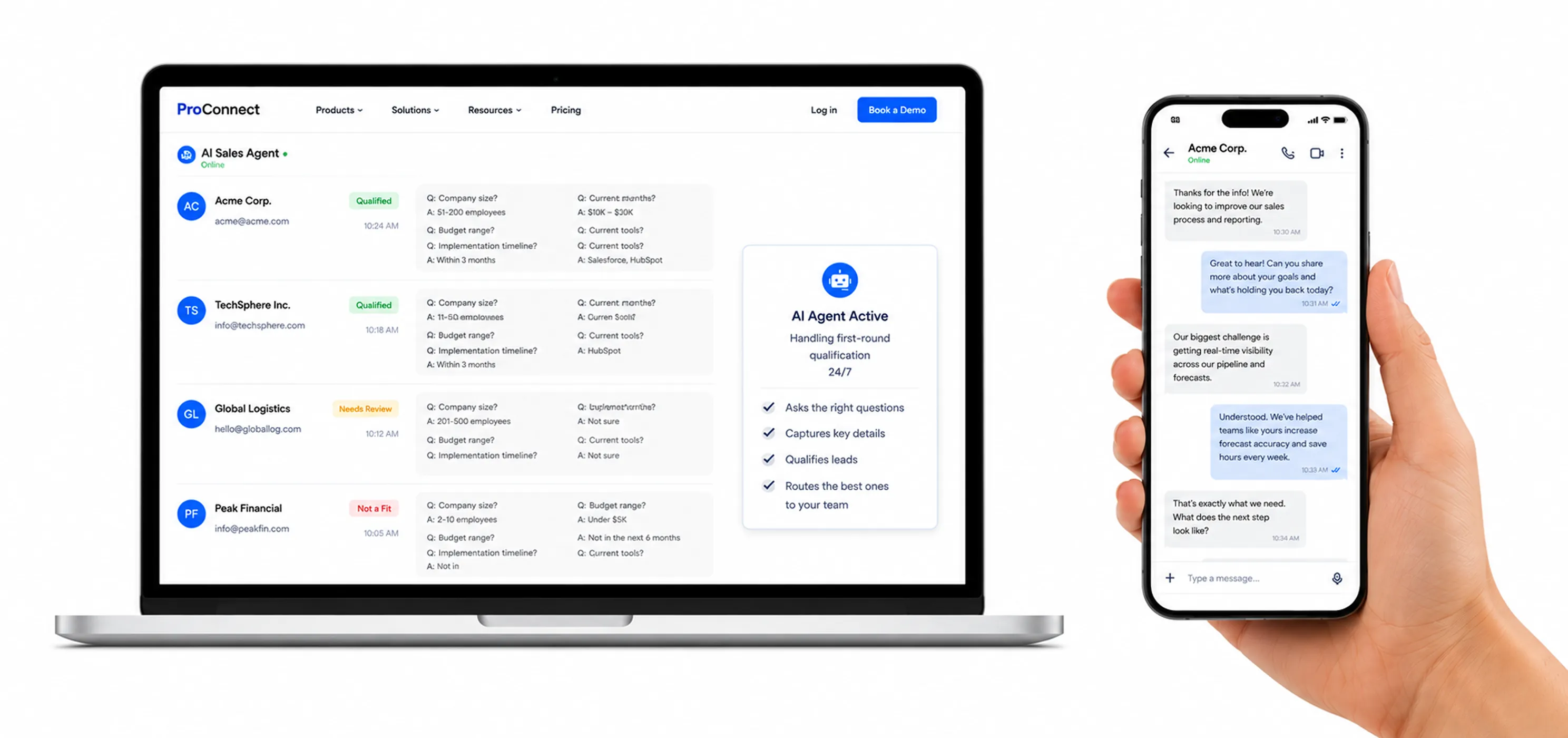
Picture a mid-size company selling business software. They used to have two people on the team whose entire job was answering the same first-round questions on every new lead: company size, budget, timeline, current tools. It was necessary work, but repetitive, and leads that arrived at night simply waited until morning.
They set up an AI agent to handle exactly that first round of questions, any time of day, through their website chat. Leads that looked ready got flagged and sent straight to a human rep the same day, while unclear ones got a few more gentle follow-up questions automatically. The two team members who used to do this all day now spend their time on the promising conversations the AI flags as ones that actually need a real person’s judgment.
A few tips before you choose
- Count your leads honestly. A handful a week usually doesn’t need automation yet. Hundreds a week almost always does.
- Think about how complex your first conversation really is. Simple, repeatable questions suit AI well. Nuanced, relationship-heavy sales usually still need a person.
- Try a hybrid setup before picking one extreme. Let AI handle the first sort, and let people handle the leads that need real judgment.
It helps to see the actual steps side by side, so there’s no mystery about what happens after a lead fills out a form or starts a chat.
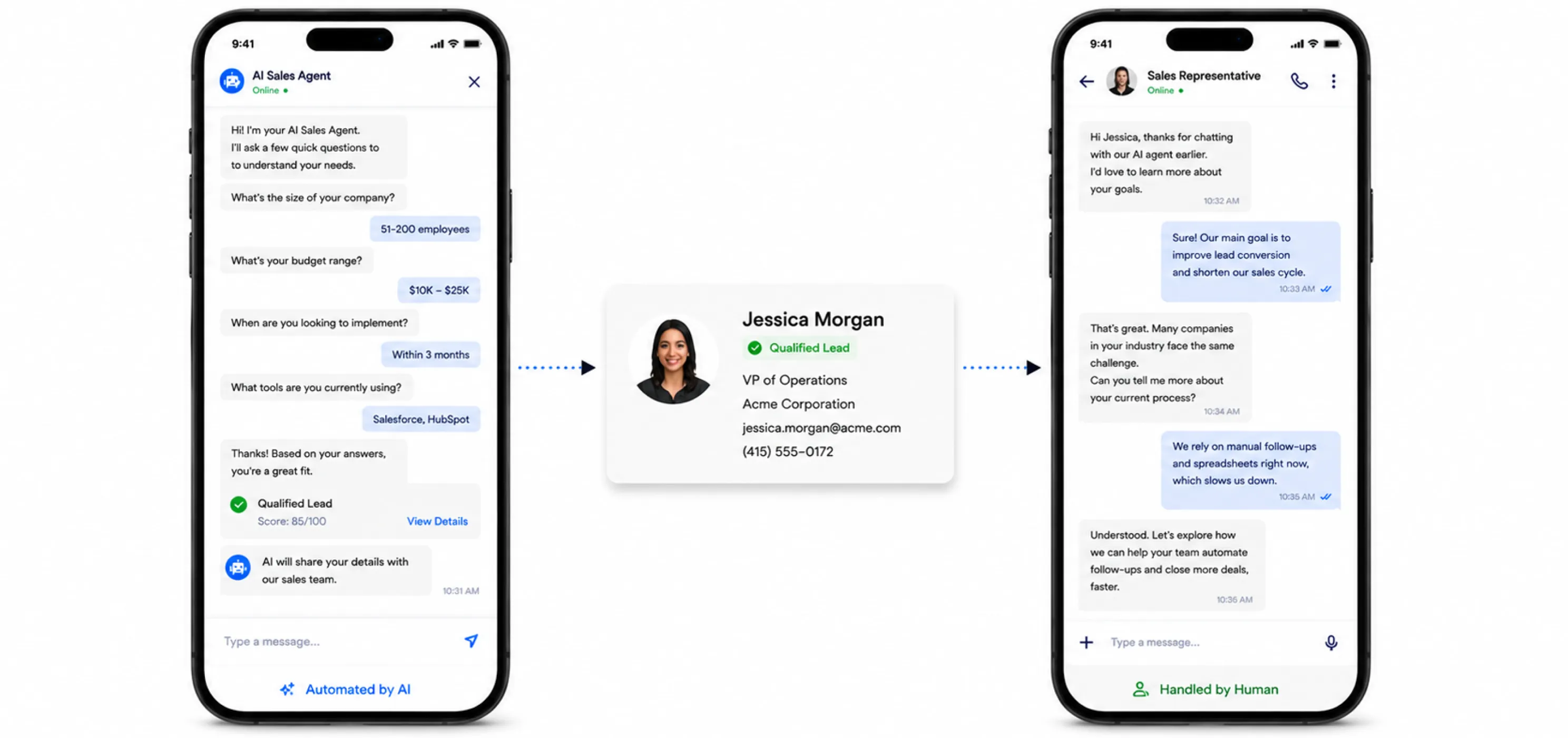
| A lead qualification service, step by step | An automated AI agent, step by step |
| A new lead comes in and gets added to a rep’s call or email list | A new lead starts a chat, opens an email, or fills out a form |
| A rep reaches out, usually within business hours, sometimes the next day | The AI agent responds within seconds, any time of day |
| The rep asks a set of questions, but adjusts them naturally based on the answers | It asks a set of smart questions and reads the answers using AI |
| The rep decides, using judgment and experience, whether to pass the lead to sales | It scores the lead and decides whether to hand off to a human right away |
| Notes from the conversation get added to the CRM for the next person to read | The full conversation is logged automatically, with no extra typing needed |
Notice that the two paths aren’t as different as they might sound. Both are really doing the same job: asking good questions and making a judgment call just at very different speeds and very different costs per conversation.
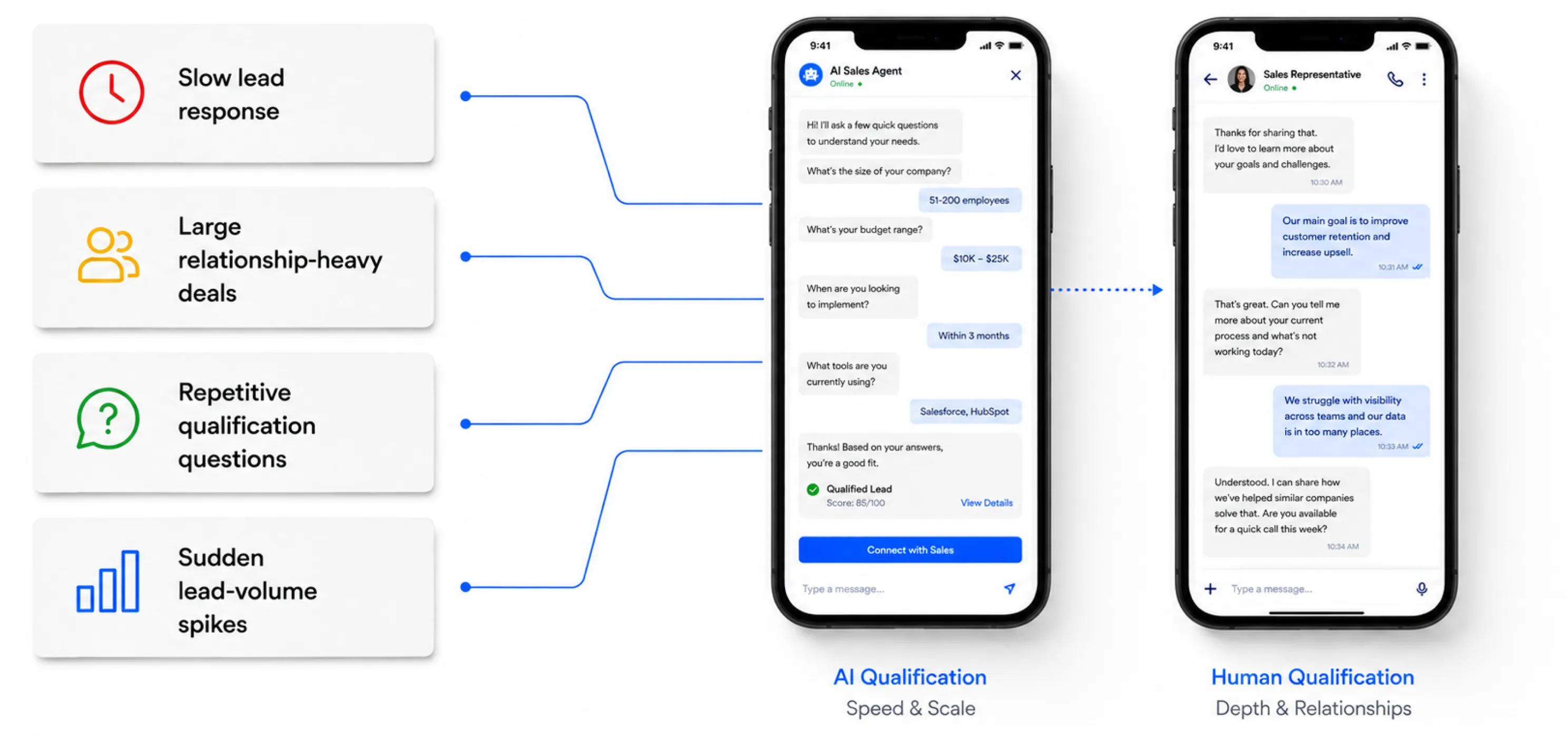
If you’re still not sure which direction fits your business, a few honest questions can usually point you the right way.
Are leads waiting hours or days for a first reply? That’s usually a sign speed matters more than anything else right now, which tends to favor adding an AI agent, even a simple one.
Are your deals big, slow, and relationship-heavy? If closing a single deal takes months of trust-building, a skilled human is very likely still worth the extra cost and time.
Is your team repeating the exact same first questions all day? That kind of repetitive, predictable work is exactly what AI agents are best at taking off someone’s plate.
Do you get sudden spikes in leads, like after a big campaign or a mention in the news? A human team can struggle to absorb a spike overnight, while an AI agent barely notices the difference.
There’s no single right answer here, and that’s actually good news. Lead qualification services bring real judgment, warmth, and the kind of instinct that’s hard to teach a machine.
Automated AI agents bring speed, availability, and the ability to handle far more leads than any team of people ever could on their own.
The smartest move for most growing businesses isn’t choosing a side; it’s figuring out which parts of that first conversation truly need a human touch, and letting AI quietly handle the rest.

 Lead Qualification Services vs. Automated Al Agents

Choosing the wrong vendor is the single biggest reason enterprise AI automation projects stall, blow past budget, or quietly die...
B2B customer acquisition gets harder as a business grows. More website visitors, more leads, more conversations, and more follow-ups can...
A website visitor can leave behind very little information. They may read a few pages, check your pricing, download a...