
Website Lead Enrichment Tools: Data You Actually Need
A website visitor can leave behind very little information. They may read a few pages, check your pricing, download a...

 8 Mins Read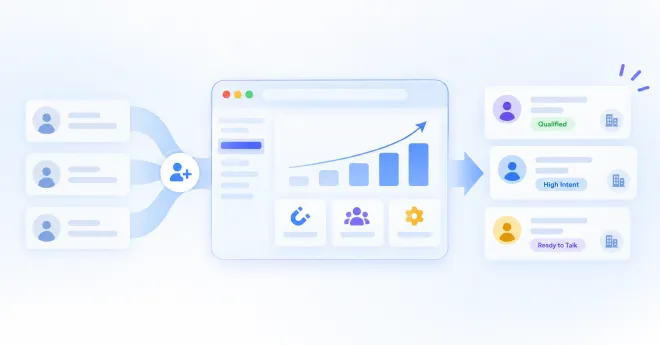
B2B customer acquisition gets harder as a business grows. More website visitors, more leads, more conversations, and more follow-ups can quickly become difficult for a sales team to manage manually.
What works when you have 20 leads a month may not work when you have 500.
This is where B2B customer acquisition software can make a difference. The right tools can help businesses capture leads, understand prospects, automate repetitive tasks, identify buying intent, and move qualified opportunities to sales faster.
But scaling does not mean automating everything. It means creating a system where technology handles repetitive work while sales teams focus on conversations that actually need human attention.
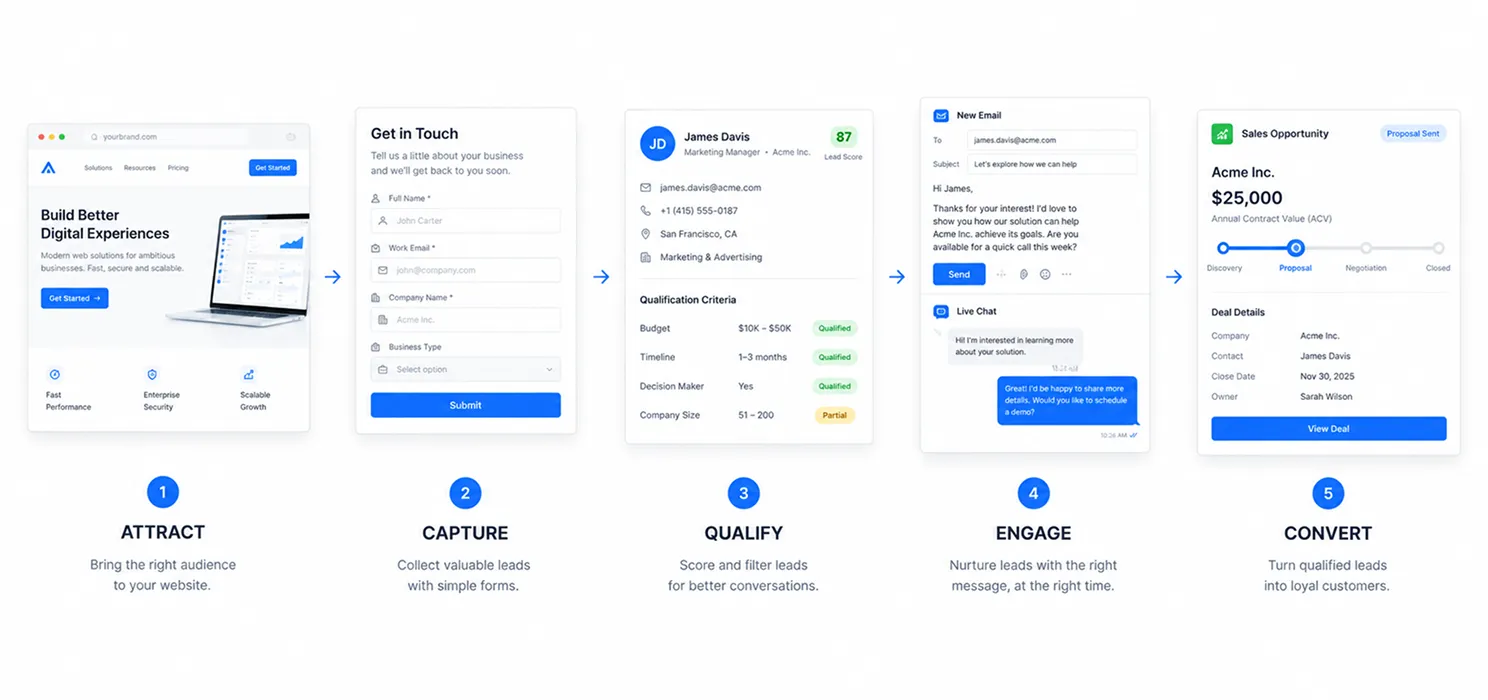
B2B customer acquisition software refers to tools that help businesses attract, capture, qualify, engage, and convert potential business customers.
Depending on the platform, these tools can support:
Instead of managing every prospect manually, businesses can use software to create a more consistent acquisition process.
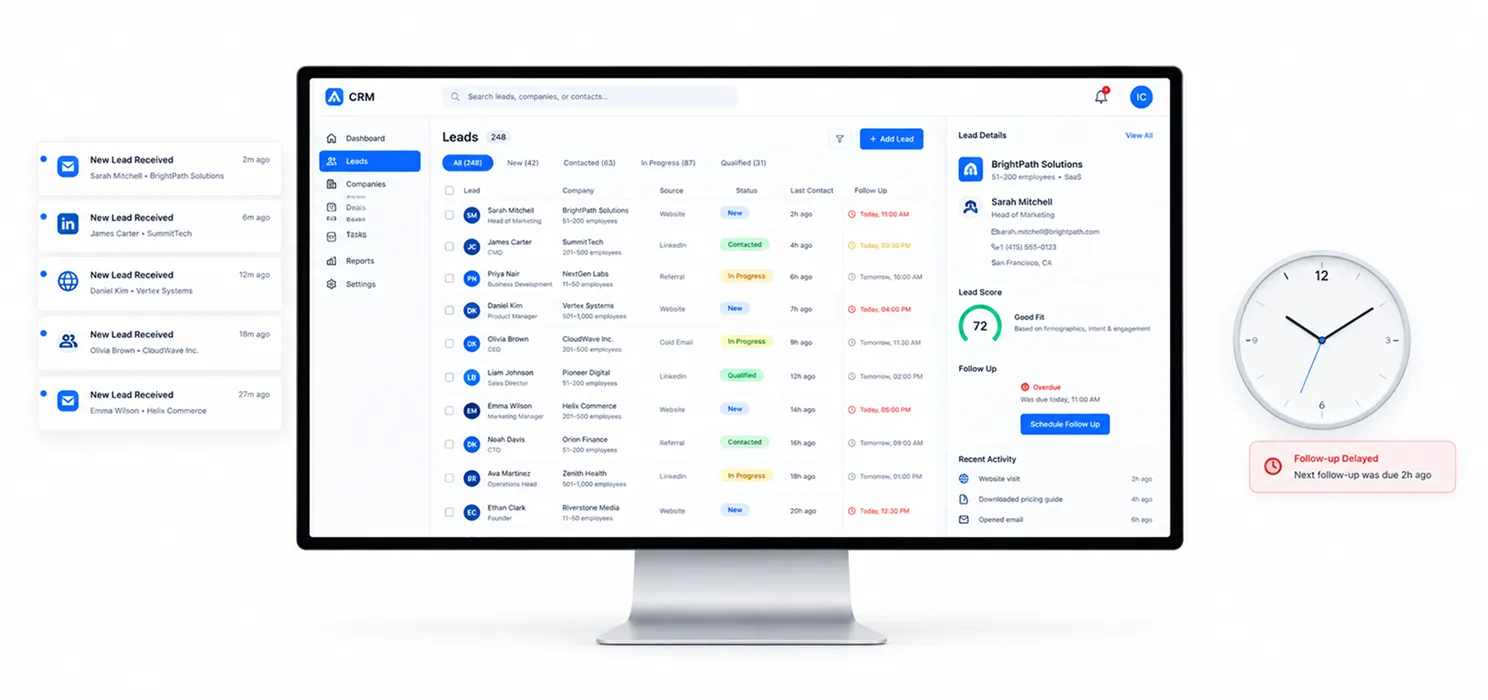
The biggest challenge is usually not generating leads. It is managing them efficiently.
As lead volume increases, sales teams have to spend more time on repetitive tasks such as:
This can create delays.
A prospect who is ready to talk today may not be interested three days later.
B2B sales software helps reduce this delay by automating parts of the process and giving sales representatives better information.
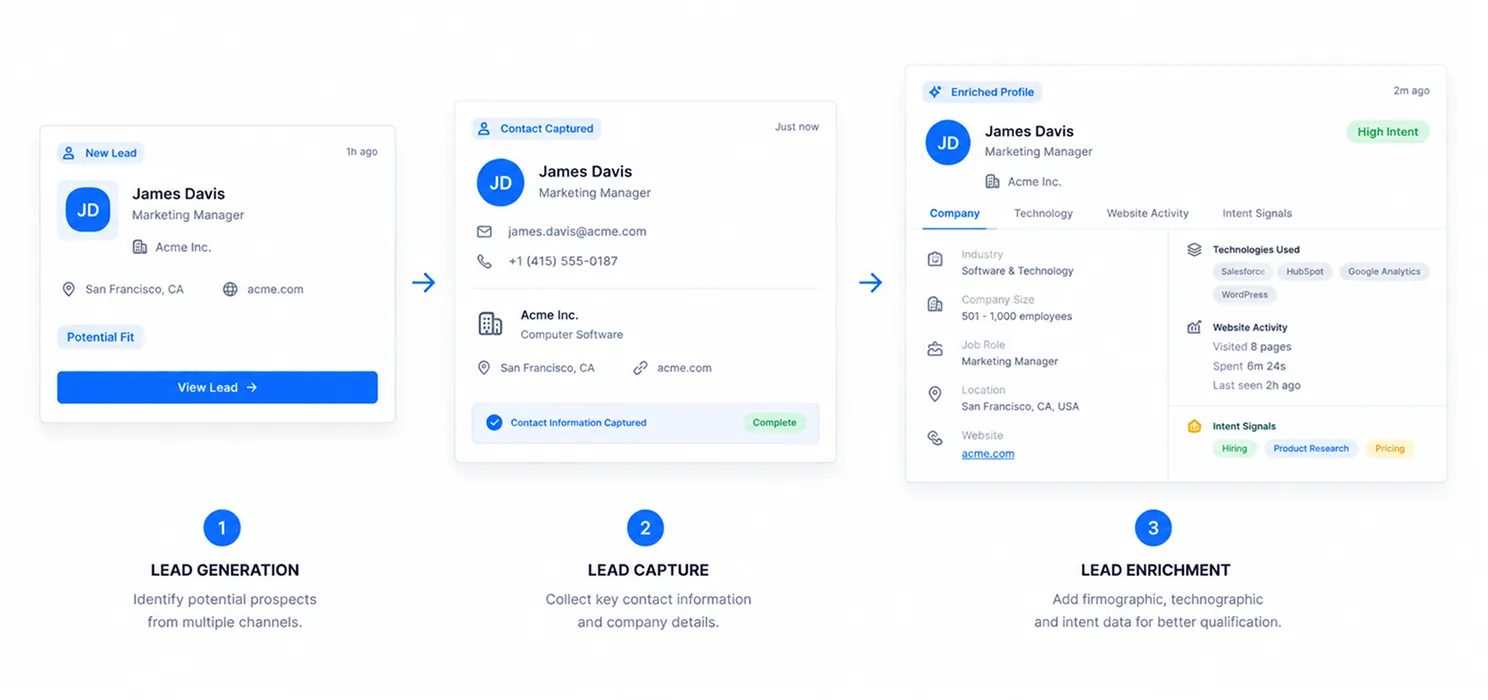
A scalable acquisition strategy usually involves several connected stages.
The first step is attracting the right audience.
Businesses can generate B2B leads through:
The objective should not simply be to generate more traffic. It should be to attract people who match your ideal customer profile.
Once visitors arrive, businesses need a way to capture their information.
Traditional forms can collect details such as:
However, long forms can sometimes create friction.
Conversational AI provides another option by allowing visitors to interact with an assistant and share information naturally during a conversation.
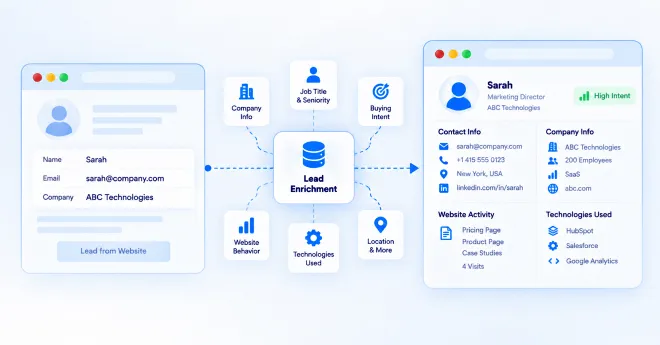
Basic contact information rarely provides enough context.
Lead enrichment can add details such as:
This helps sales teams understand whether a prospect is actually a good fit.
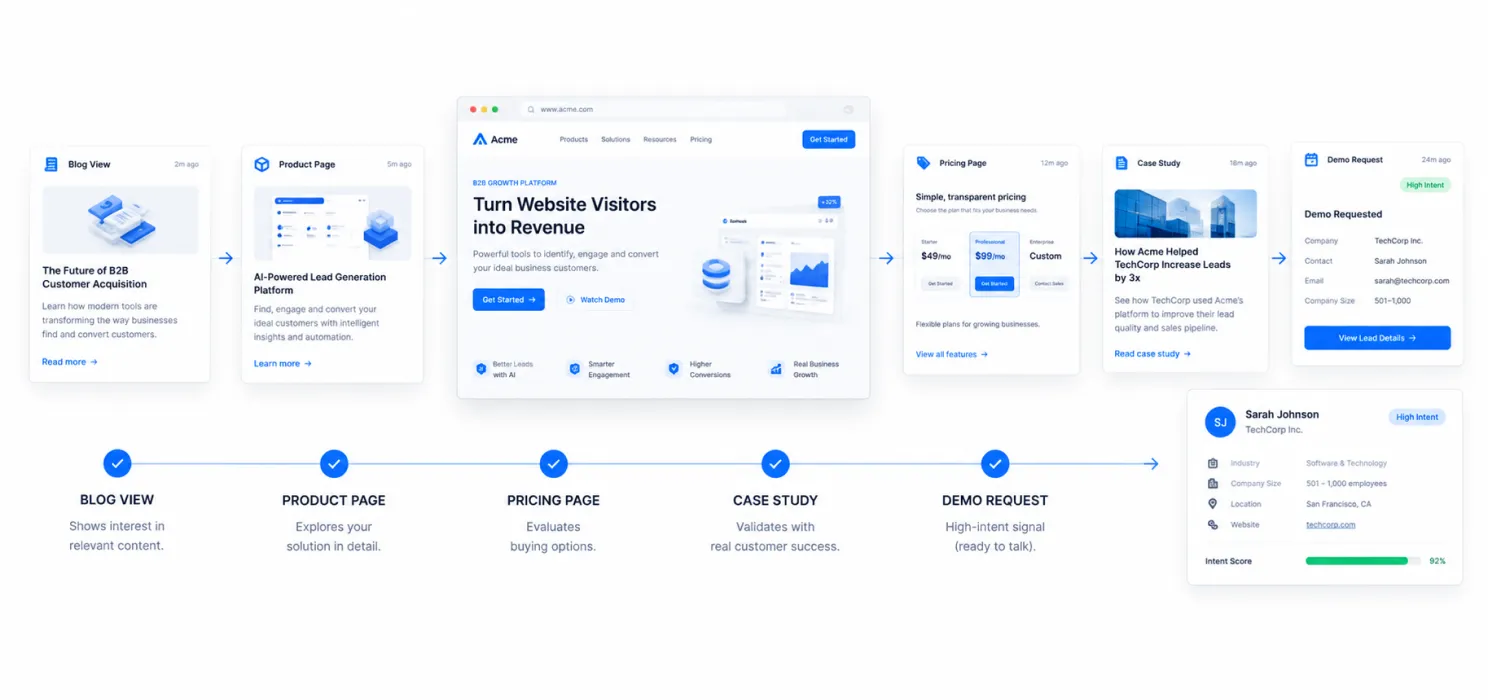
Your website can provide useful information about what prospects are interested in.
For example, a visitor may:
One action alone may not mean much.
But several high-intent actions together can indicate that the visitor is actively evaluating a solution.
B2B sales software can help collect these signals and make them available to sales teams.
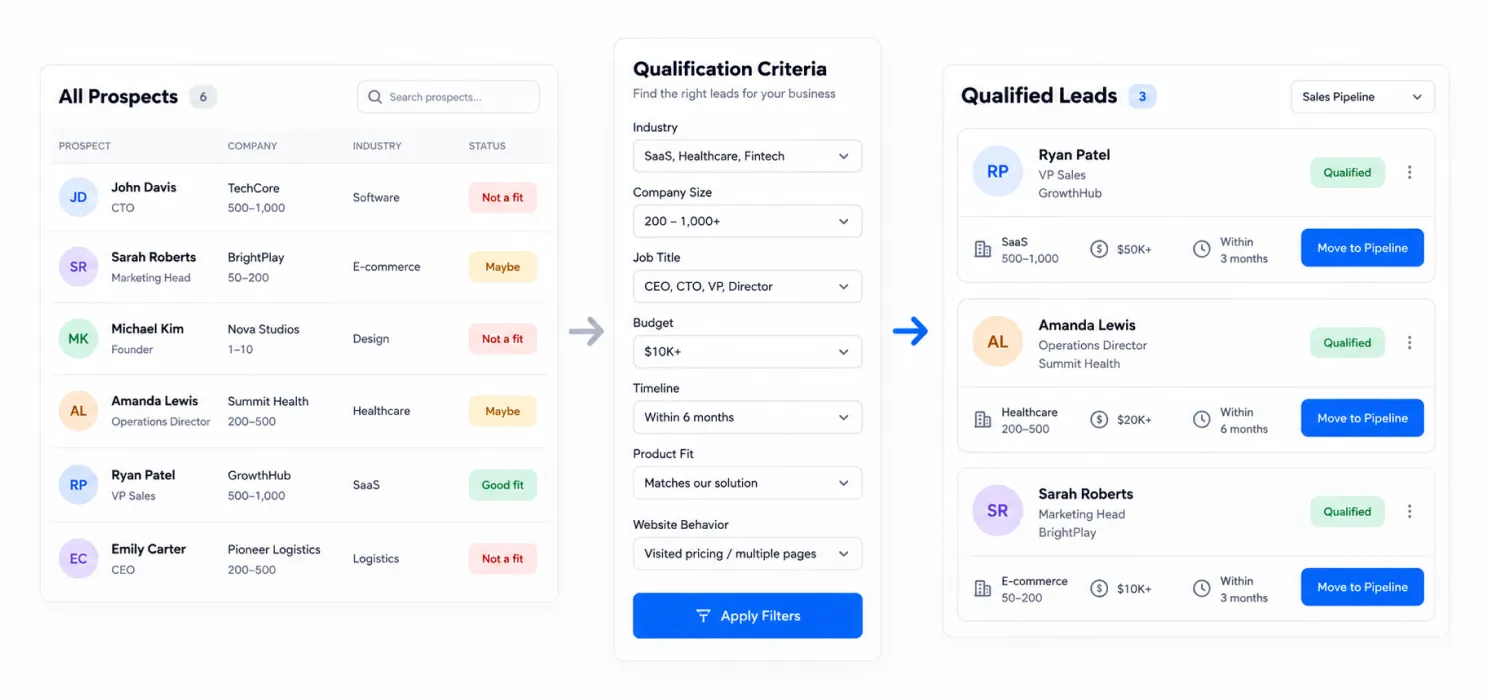
Not every lead deserves immediate sales attention.
Lead qualification helps businesses determine whether a prospect matches their ideal customer profile.
Common qualification factors include:
A company can create its own qualification criteria based on what historically produces good customers.
The result is a more focused sales pipeline.
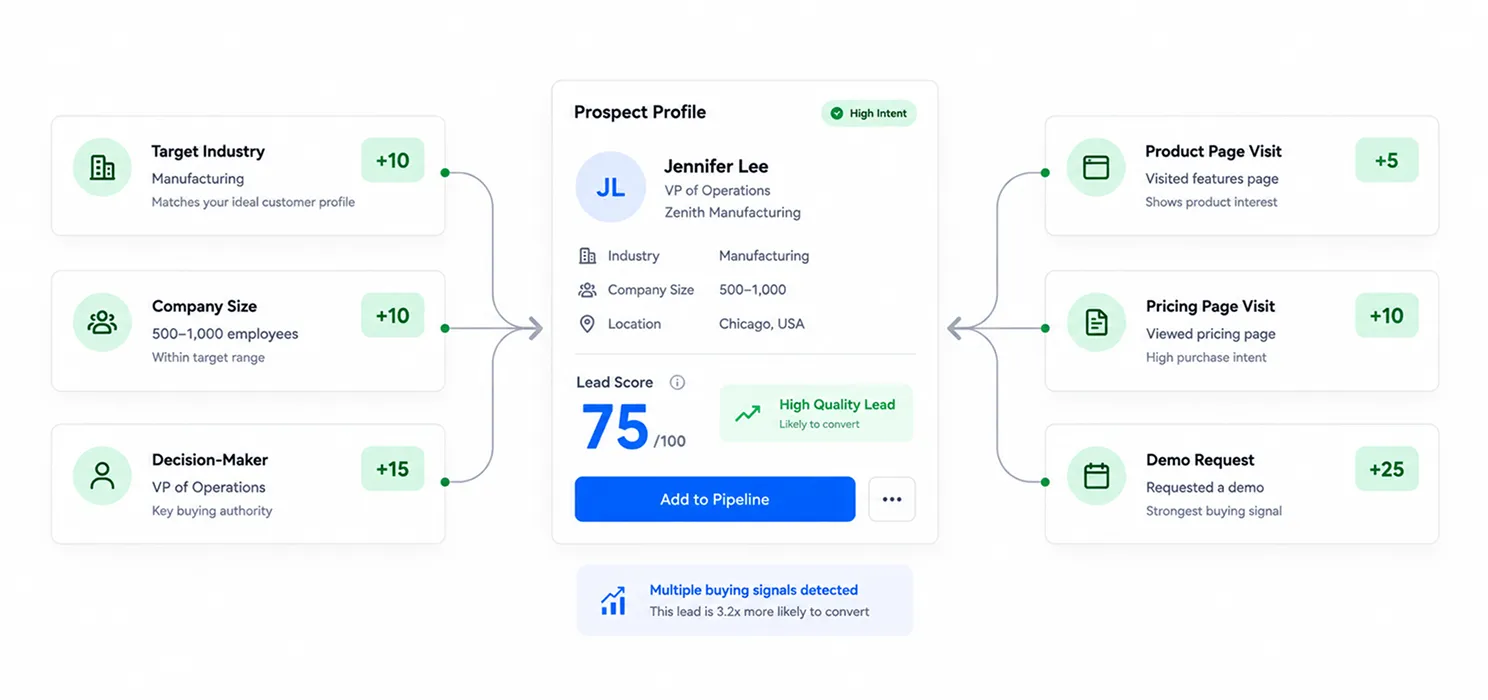
Lead scoring assigns values to different characteristics or actions.
For example:
| Signal | Example score |
| Target industry | +10 |
| Target company size | +10 |
| Decision-maker | +15 |
| Product page visit | +5 |
| Pricing page visit | +10 |
| Demo request | +25 |
These numbers are only examples. Every business should create its own scoring system.
The purpose is to help sales teams distinguish between low-interest leads and prospects showing stronger buying signals.
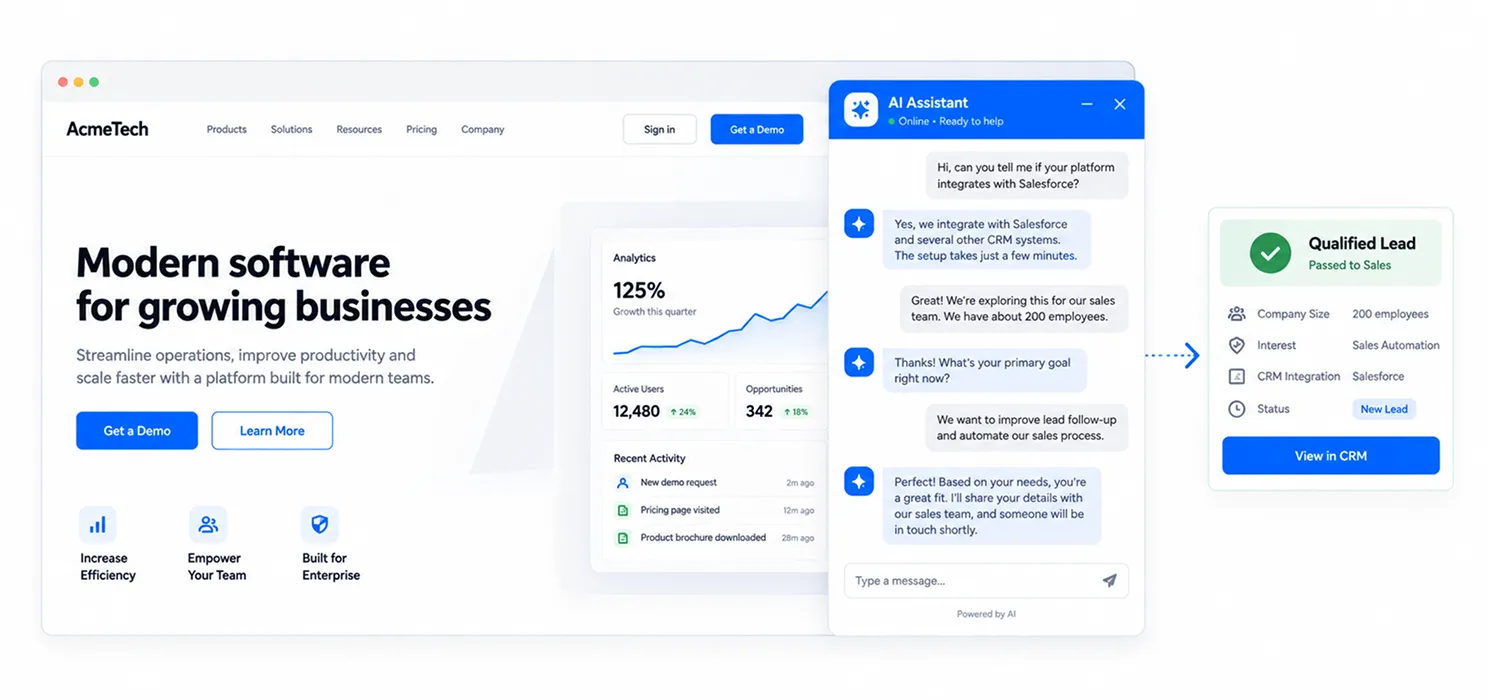
AI can handle many repetitive interactions without requiring a salesperson to be available every time.
A website AI assistant can:
This can be especially useful outside business hours.
Instead of a visitor seeing a contact form and waiting for a response, they can start a conversation immediately.
How Corvexa Fits into B2B Acquisition
Corvexa can support this process by using AI-powered conversations to engage website visitors and help businesses capture and qualify leads.
Instead of forcing every visitor through the same form, Corvexa can have a conversation based on what the visitor is asking.
For example, a visitor might say:
“We need a solution for our 100-person sales team.”
The conversation can then explore what the business needs, what problem it is trying to solve, and whether the visitor wants to speak with sales.
This creates useful context that a basic form may not capture.
Corvexa can also work with tools such as HubSpot, Salesforce, Calendly, and email, helping businesses connect website conversations with their broader sales workflow.
The goal is not simply to capture more leads.
It is to identify better opportunities and move them toward the next step faster.
Follow-up is another area where automation can help.
A scalable workflow could automatically:
Automation creates consistency.
However, automated messages should still feel relevant. Sending the same generic message to every prospect can damage the customer experience.
B2B customer acquisition becomes more efficient when your tools work together.
A typical workflow may include:
If these systems are disconnected, information can get lost.
For example, a visitor may have an AI conversation, submit a form, and book a meeting, but the salesperson may not see the full journey.
Integrations help create a more complete picture of the prospect.
Not every sales activity should be automated.
The best approach is to automate repetitive work while keeping important conversations human.
Scaling customer acquisition requires measuring the results.
Important metrics include:
These metrics help you understand whether your acquisition process is becoming more efficient or simply generating more activity.
More leads do not automatically mean more customers. Lead quality matters.
Too much automation can make the buying experience feel impersonal.
Your website can provide valuable signals about prospect interest. Do not focus only on form submissions.
Qualification helps sales teams spend their time where it matters most.
Your CRM, website, enrichment, automation, and scheduling tools should work together whenever possible.
Scaling B2B customer acquisition is about building a process that can handle more prospects without creating the same amount of additional manual work.
B2B customer acquisition software can help businesses capture leads, enrich information, understand website behavior, qualify prospects, automate repetitive tasks, and connect sales workflows.
AI can take this further by engaging visitors in real time and helping businesses understand what they need.
Tools such as Corvexa can become part of that process by turning website conversations into useful sales opportunities.
The goal is simple: generate the right leads, understand them quickly, and get qualified prospects into meaningful sales conversations without unnecessary manual work.
B2B customer acquisition software helps businesses attract, capture, qualify, engage, and convert potential business customers using tools such as CRM systems, automation, lead enrichment, and conversational AI.
It automates repetitive tasks, organizes prospect information, improves lead qualification, speeds up follow-ups, and helps sales teams focus on high-value opportunities.
Yes. AI can engage website visitors, answer questions, collect qualification information, identify potential buying signals, and help schedule sales meetings.
No. Qualification and lead scoring can help identify which prospects are a strong fit before they reach the sales team.
Corvexa uses AI-powered website conversations to engage visitors, understand their needs, collect useful lead information, and help identify qualified sales opportunities.
 Scaling Customer Acquisition with B2B Sales Software
A website visitor can leave behind very little information. They may read a few pages, check your pricing, download a...
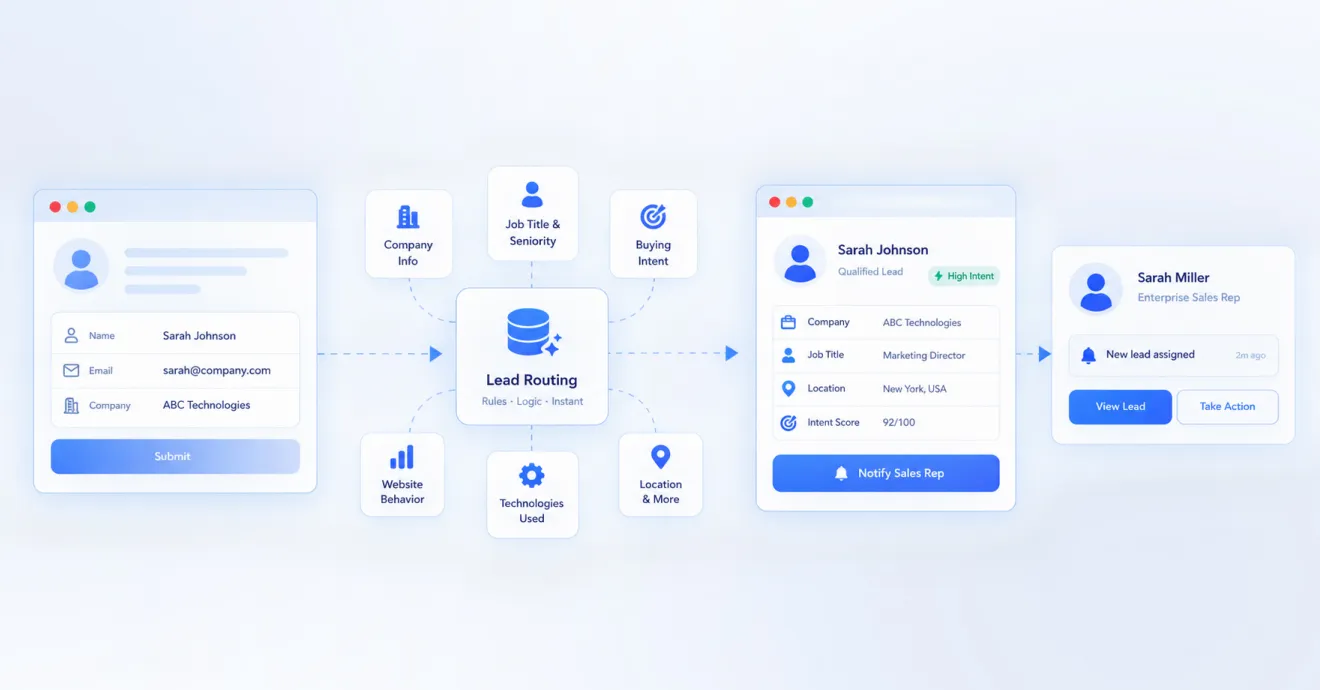
A great lead that sits in an inbox for six hours is barely better than no lead at all. Here’s...
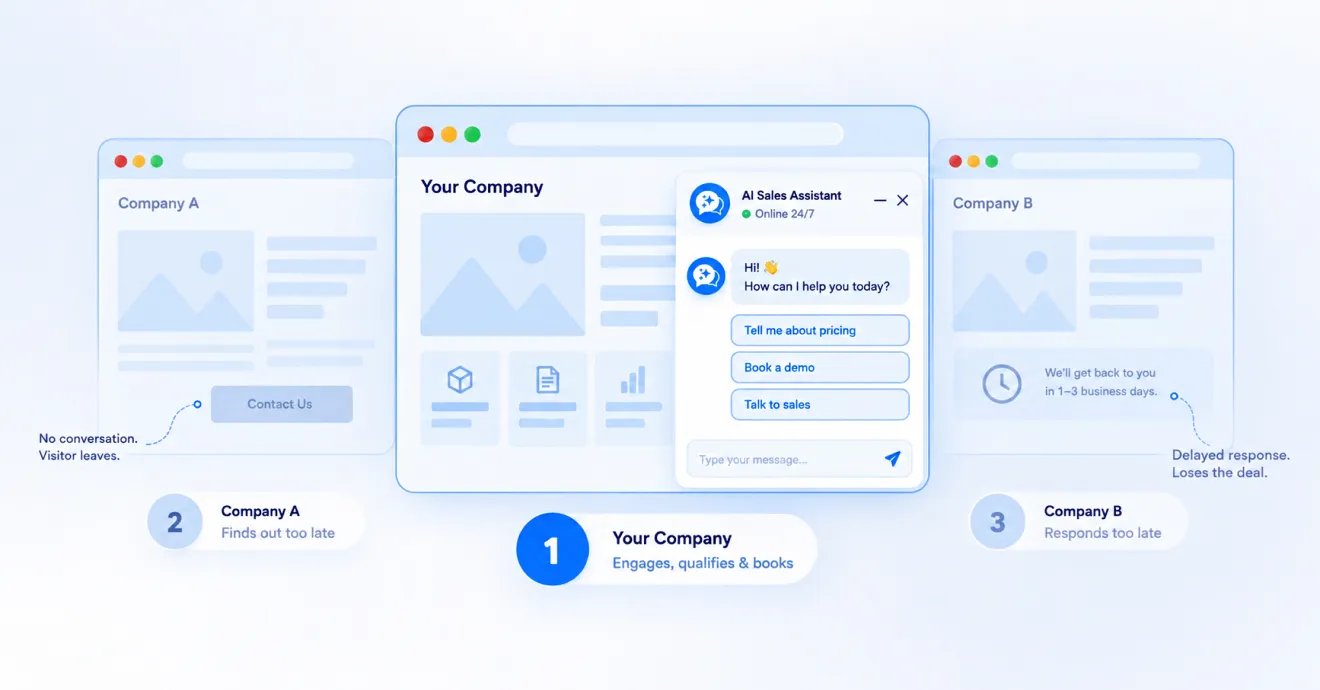
Two companies can get the exact same visitor on the exact same day, searching for the exact same solution. One...