
Scaling Customer Acquisition with B2B Sales Software
B2B customer acquisition gets harder as a business grows. More website visitors, more leads, more conversations, and more follow-ups can...

 15 Mins Read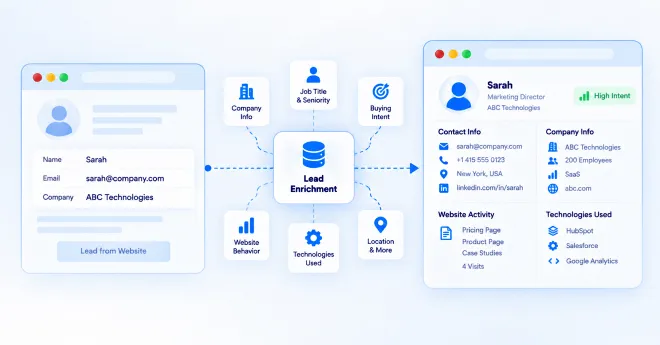
A website visitor can leave behind very little information.
They may read a few pages, check your pricing, download a resource, and leave without filling out a form. Even when they do submit a form, you may only receive a name, email address, and company name.
That is not always enough for a sales team to understand whether the person is a good prospect.
This is where website lead enrichment tools become useful.
Lead enrichment adds useful information to an existing lead or visitor profile. Depending on the tool, that information can include company details, job role, website activity, technology used, intent signals, and previous interactions.
But there is one important point to remember:
More data does not always mean better leads.
The goal is to collect the information that helps your team understand, qualify, prioritize, and follow up with a prospect.
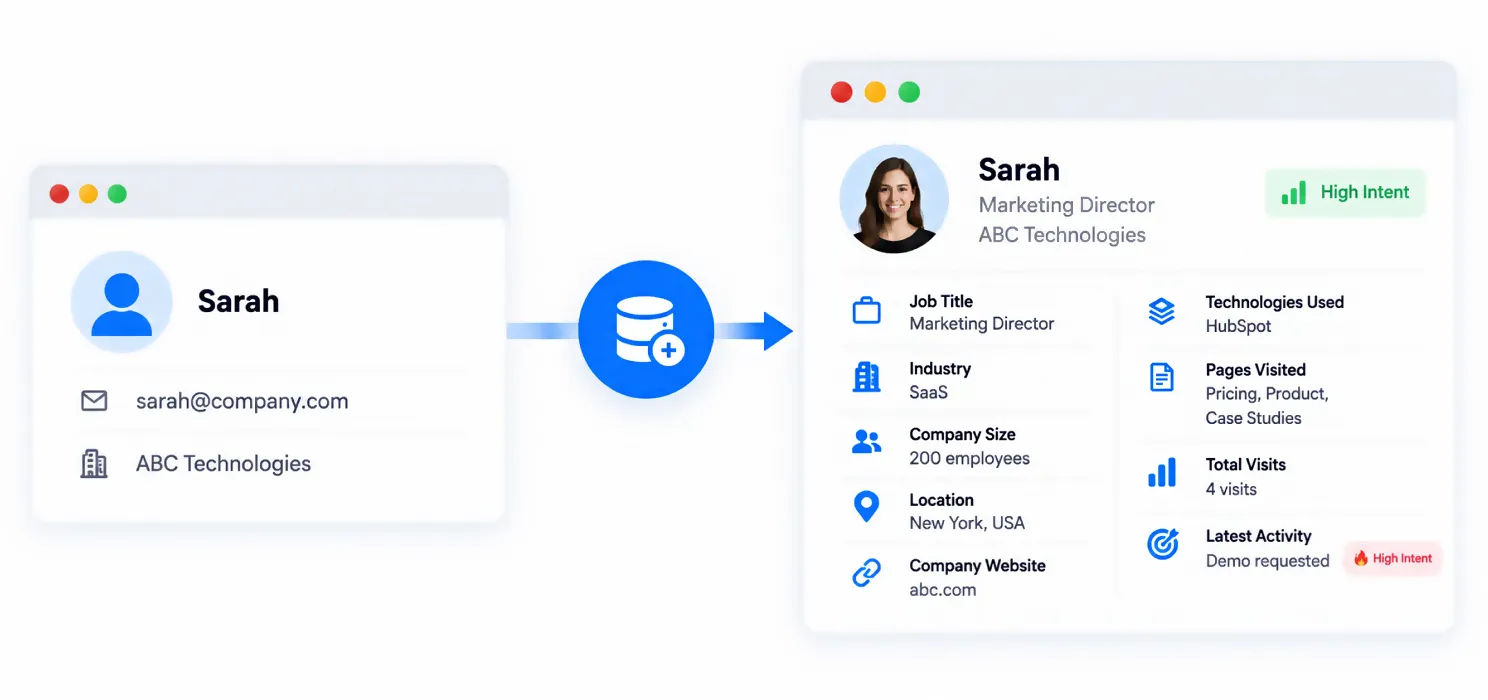
Website lead enrichment tools collect additional information about leads and companies and connect it with the information you already have.
For example, imagine someone fills out your website form with:
That is a basic lead record.
A lead enrichment tool might add:
Now your sales team has much more context.
Instead of seeing a contact who submitted a form, they can see a potential buyer who works in the right industry, has the right seniority, and is showing interest in the product.
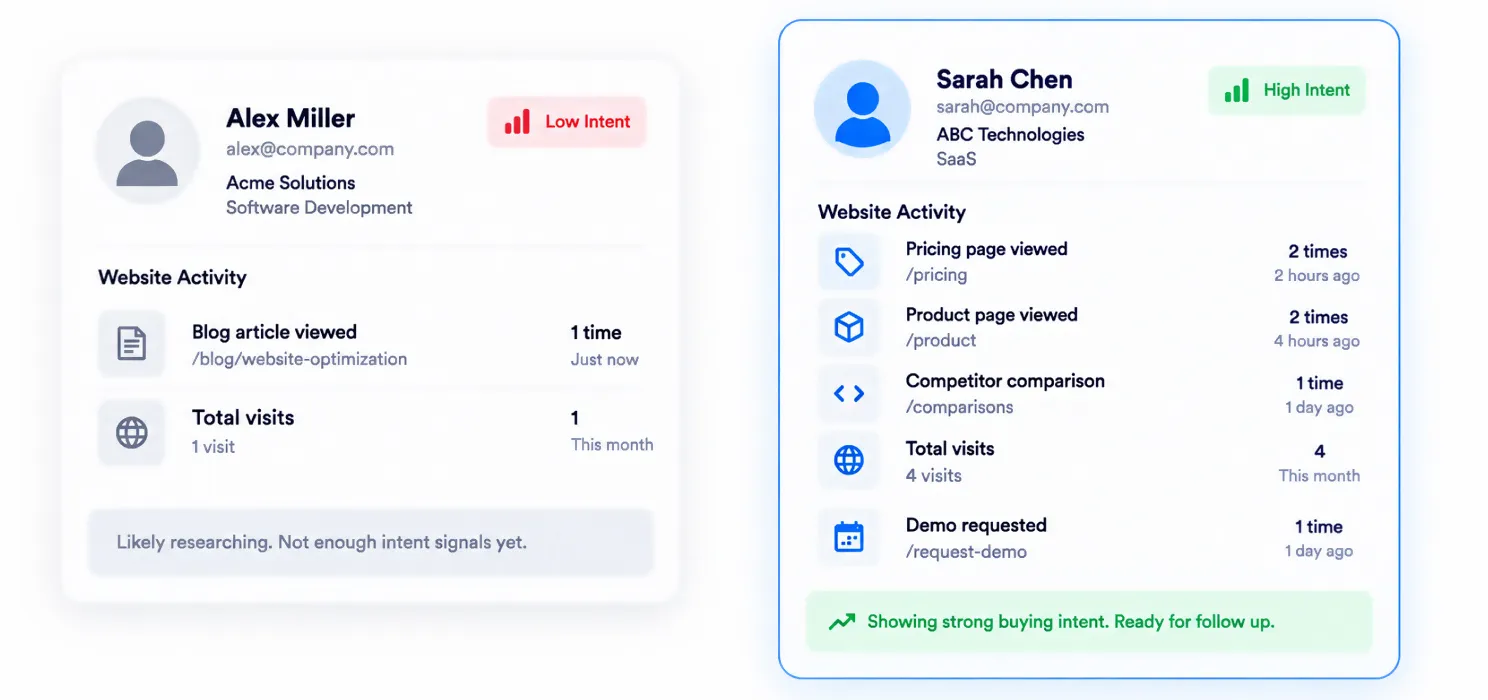
Not every website visitor has the same value.
Someone reading a general educational blog post may simply be researching a topic. Another visitor may be comparing your product with competitors and repeatedly checking your pricing page.
If both visitors are treated as identical leads, your sales team may spend time on the wrong people.
Lead enrichment helps separate these situations.
It can help sales and marketing teams understand:
The result is better context before a sales conversation even begins.
There are dozens of data points that a lead enrichment platform can potentially provide.
You do not need all of them.
The most useful information generally falls into a few categories.
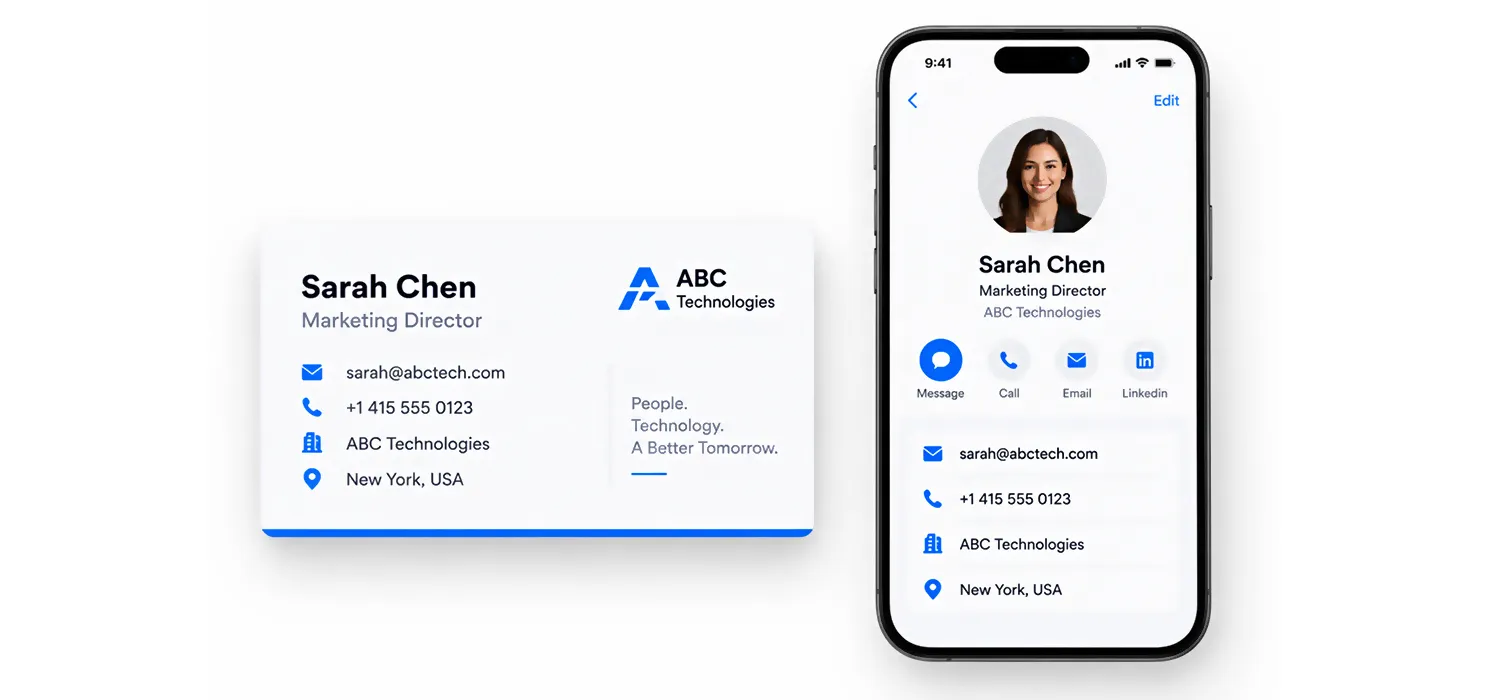
Contact information is the starting point.
Useful fields can include:
This information helps identify the person behind the lead.
However, contact information alone does not tell you whether the person is a qualified prospect.
For example, knowing someone’s name and email address does not tell you whether they have buying authority or whether their company needs your product.
That is why contact information should be combined with other enrichment data.
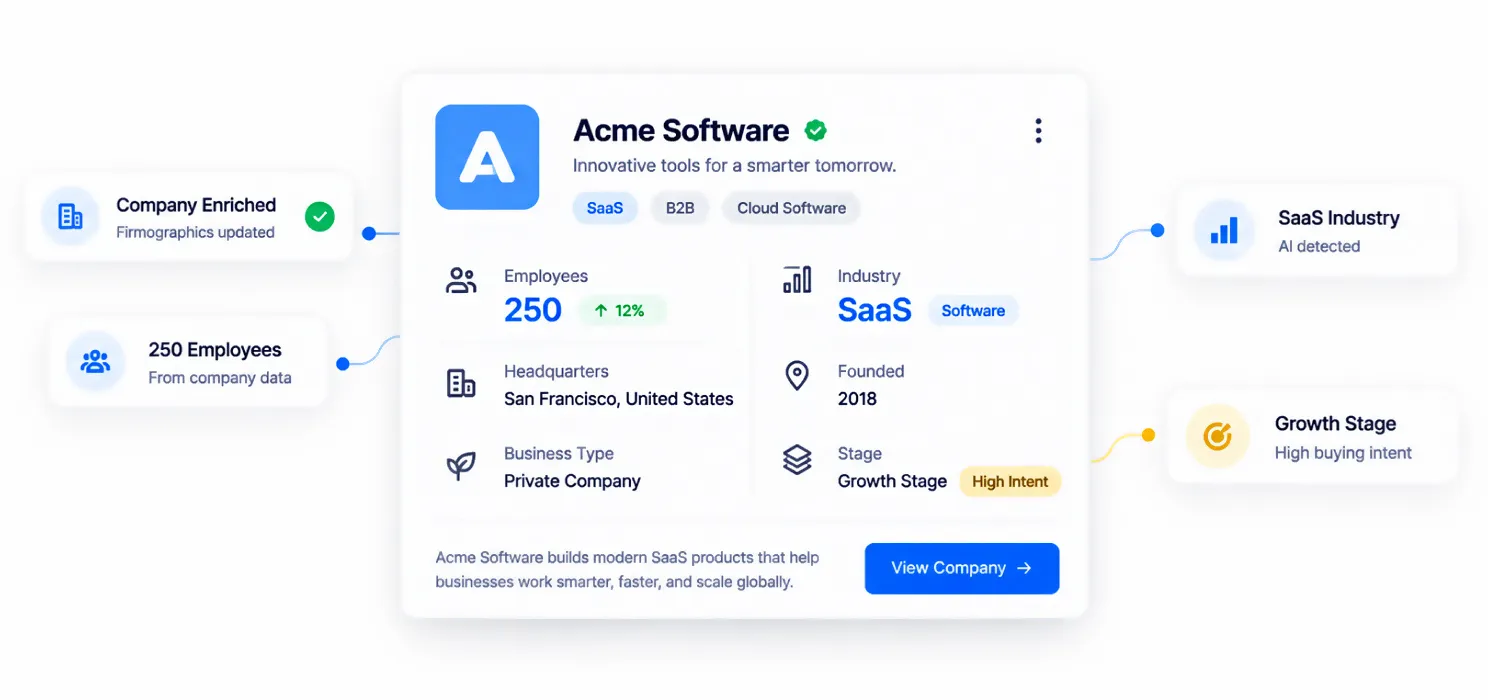
Company information is especially important for B2B businesses.
Useful company-level data includes:
Suppose your product is designed for companies with 50 to 500 employees.
A lead from a 250-person SaaS company could immediately look more relevant than a lead from a five-person business.
This allows your sales team to focus on companies that are more likely to fit your ideal customer profile.
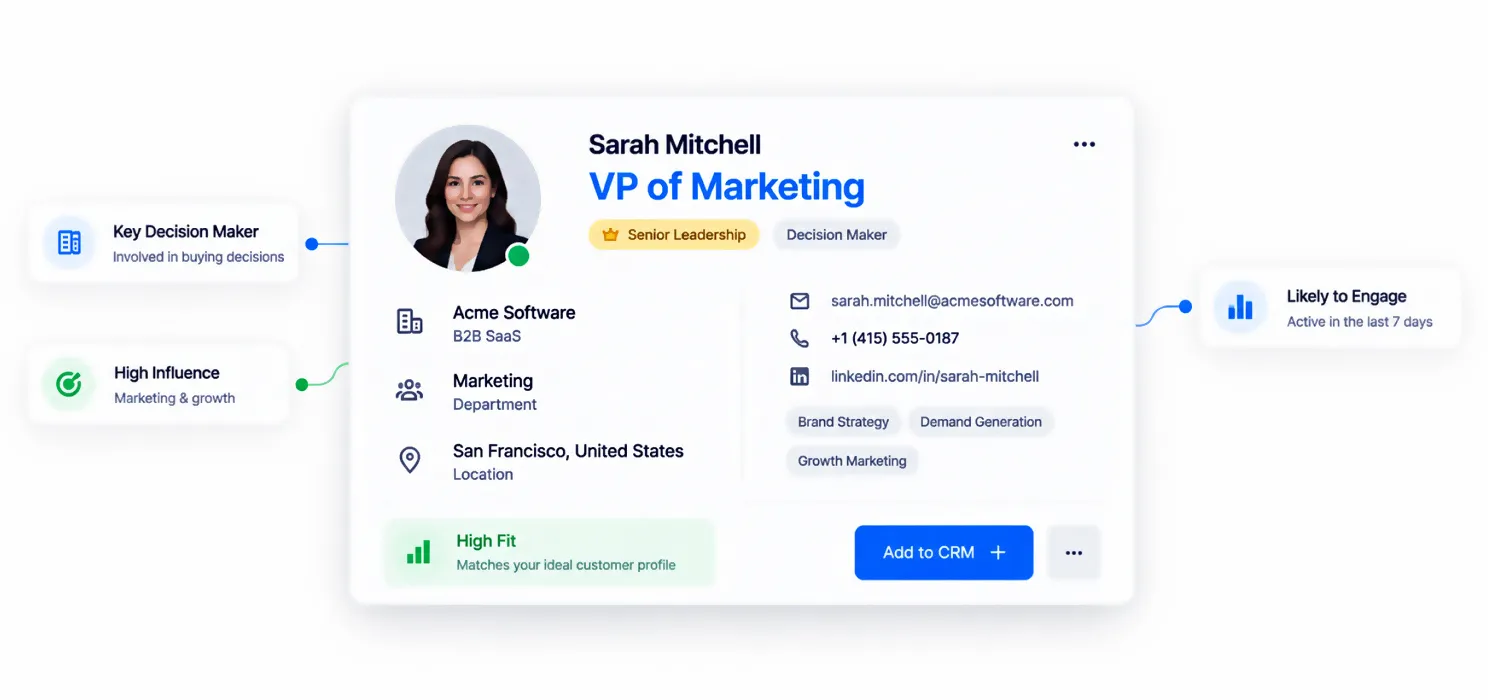
Knowing what someone does at a company can be just as important as knowing which company they work for.
A person may be:
These roles can have very different levels of influence over a purchase.
For example, if your product is an enterprise marketing platform, a VP of Marketing may be a stronger sales opportunity than someone who is only researching the product for a college project.
Job title and seniority can therefore help sales teams understand potential buying influence.
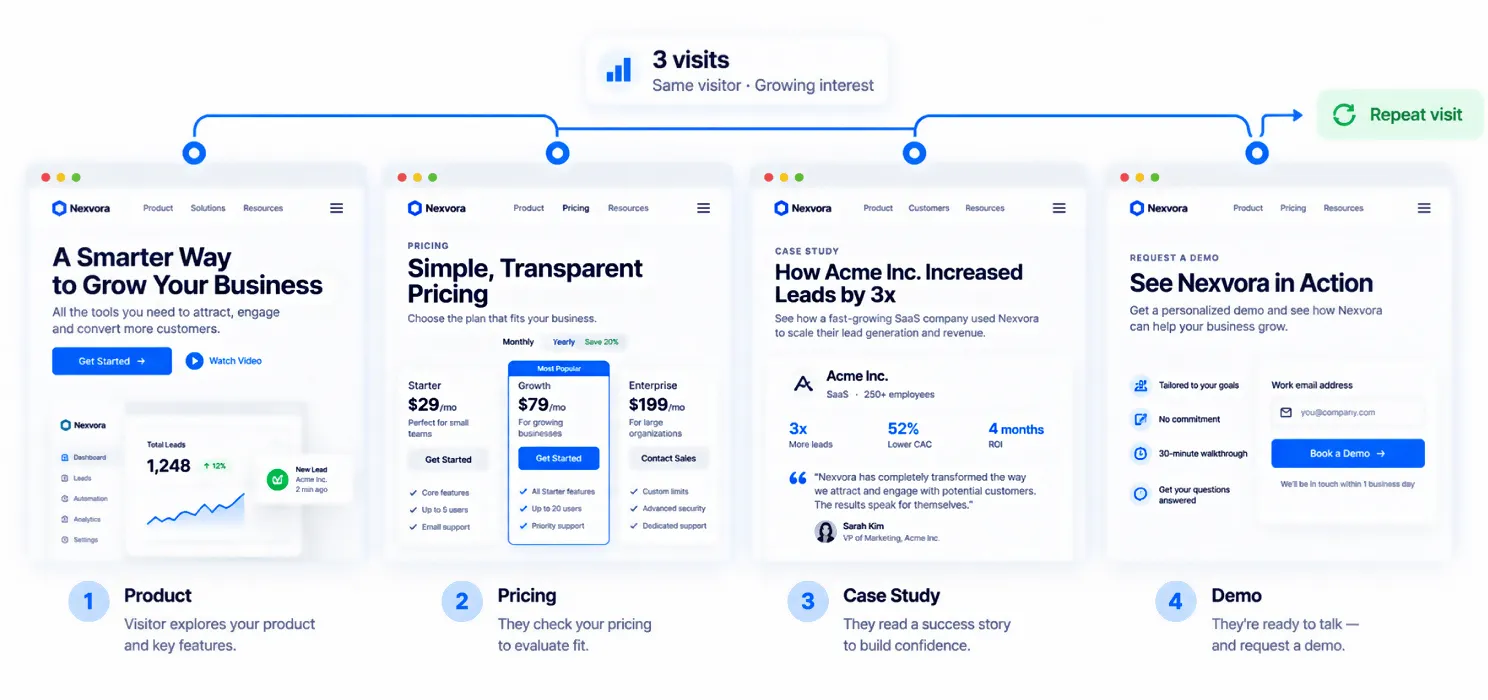
This is one of the most useful types of enrichment because it shows what a visitor is actually doing.
Useful behavioral signals can include:
Consider two visitors.
Visitor A reads one blog post and leaves.
Visitor B visits your product page, pricing page, case study page, and demo page across several sessions.
Both may eventually submit the same form.
But Visitor B has already demonstrated significantly more interest.
Website behavior gives your team this context.
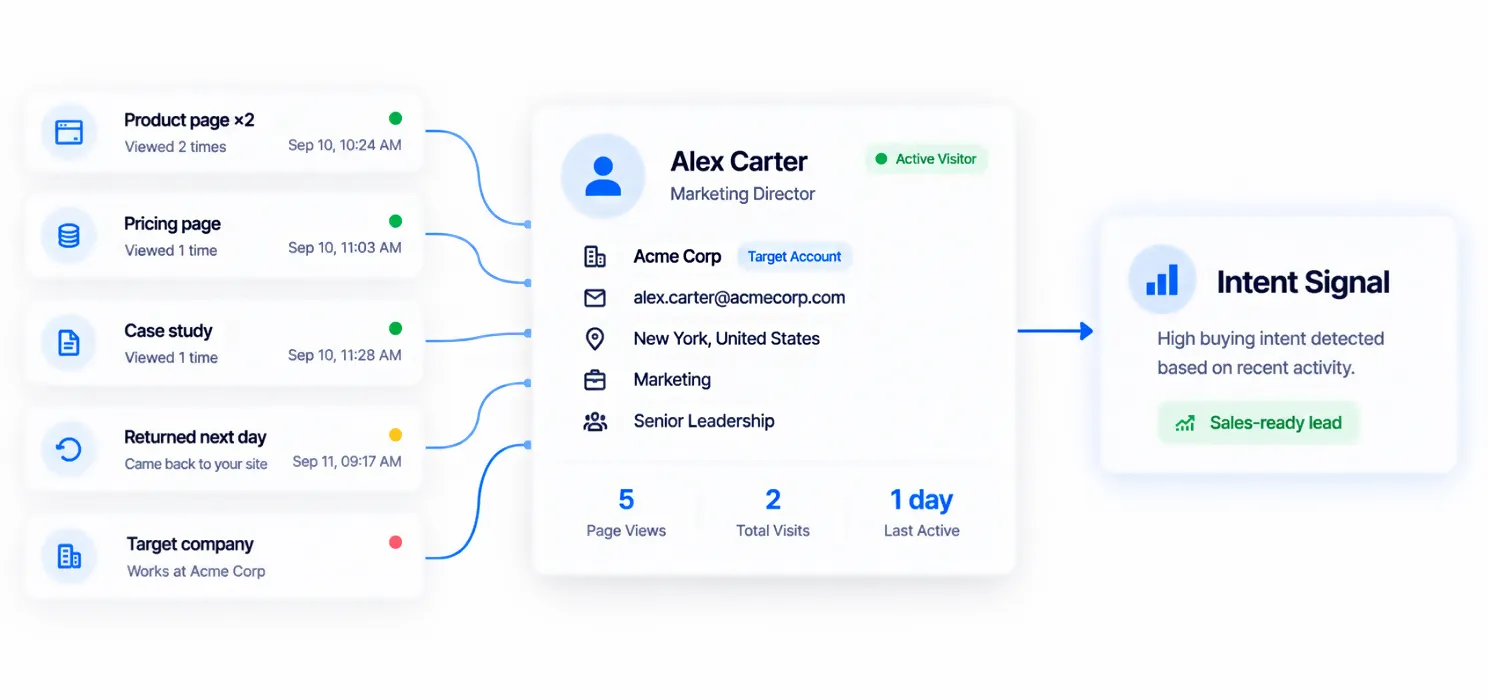
Website activity becomes even more valuable when it is used to understand intent.
Intent data attempts to answer a simple question:
Is this visitor showing signs that they may be ready to buy?
Some common intent signals include:
No single action proves that someone is ready to buy.
But several actions together can create a strong signal.
For example:
A decision-maker from a target company visits your product page twice, checks pricing, reads a case study, and returns the next day.
That is much more useful than simply knowing that the person visited your website.
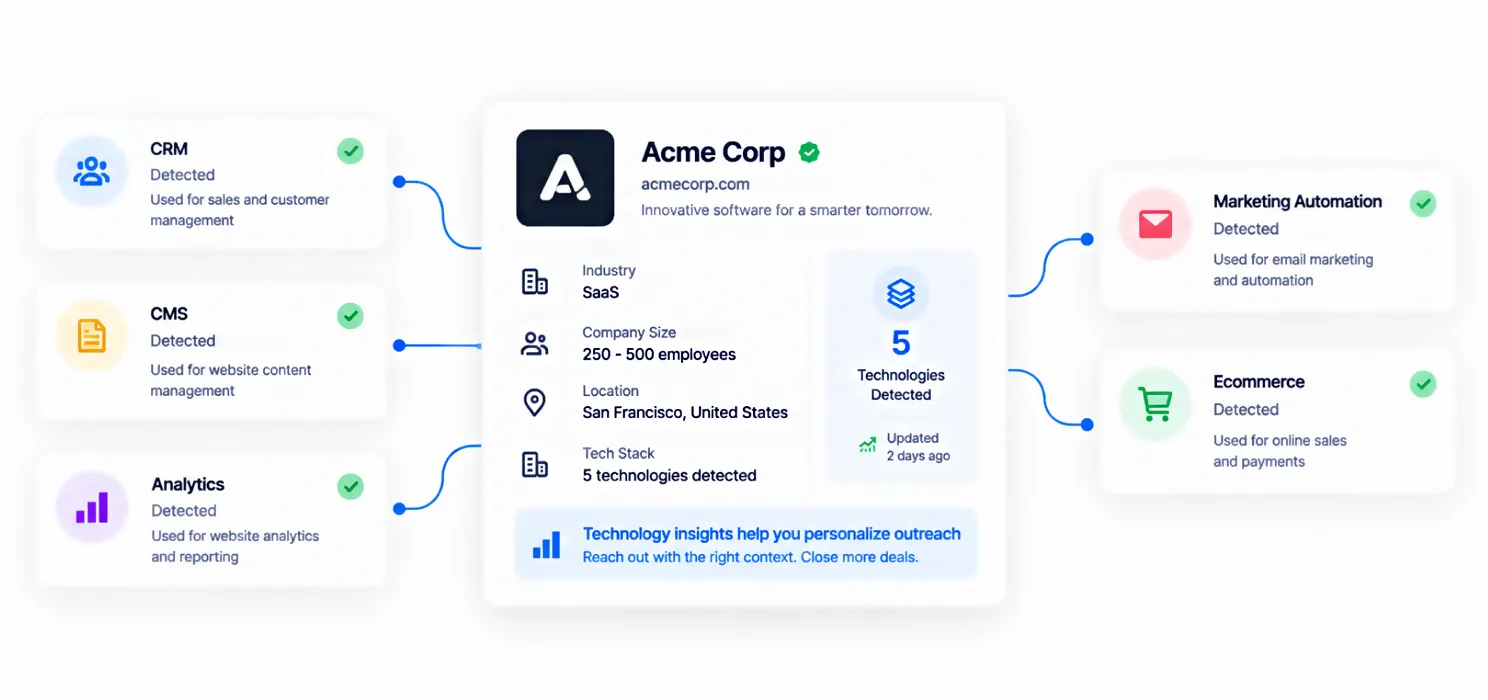
Technology data can also help businesses qualify leads.
Depending on the enrichment provider, you may be able to identify technologies associated with a company or website, such as:
This can be useful when your product integrates with particular technologies.
For example, if your software integrates with a CRM that a prospect already uses, that information could become part of your qualification process.
Technology data can also help sales representatives personalize their conversations.
Instead of starting with a generic pitch, they can understand more about the prospect’s existing setup.
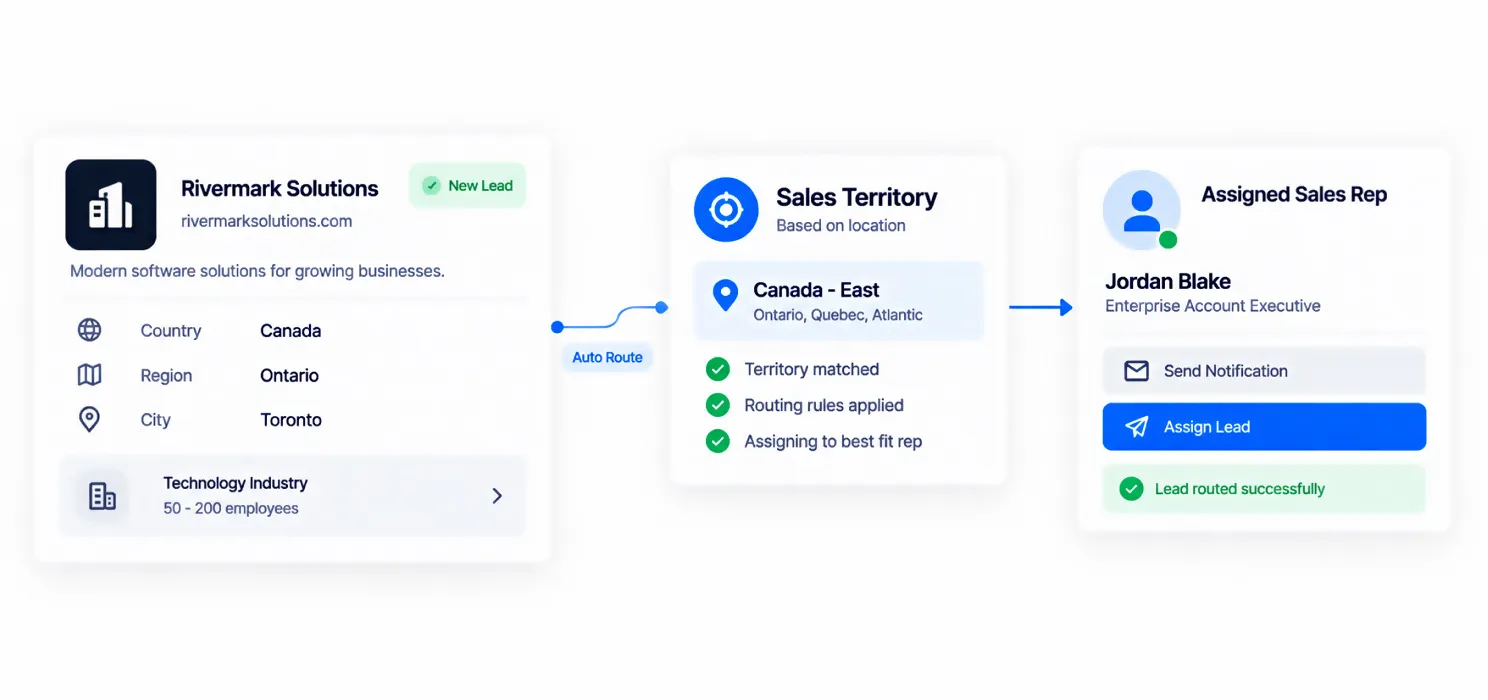
Location may not be the most important enrichment field for every company, but it can be useful for businesses with regional sales teams.
Relevant information may include:
Geographic information can help with:
For example, a company selling software across different regions may automatically route leads based on their location.
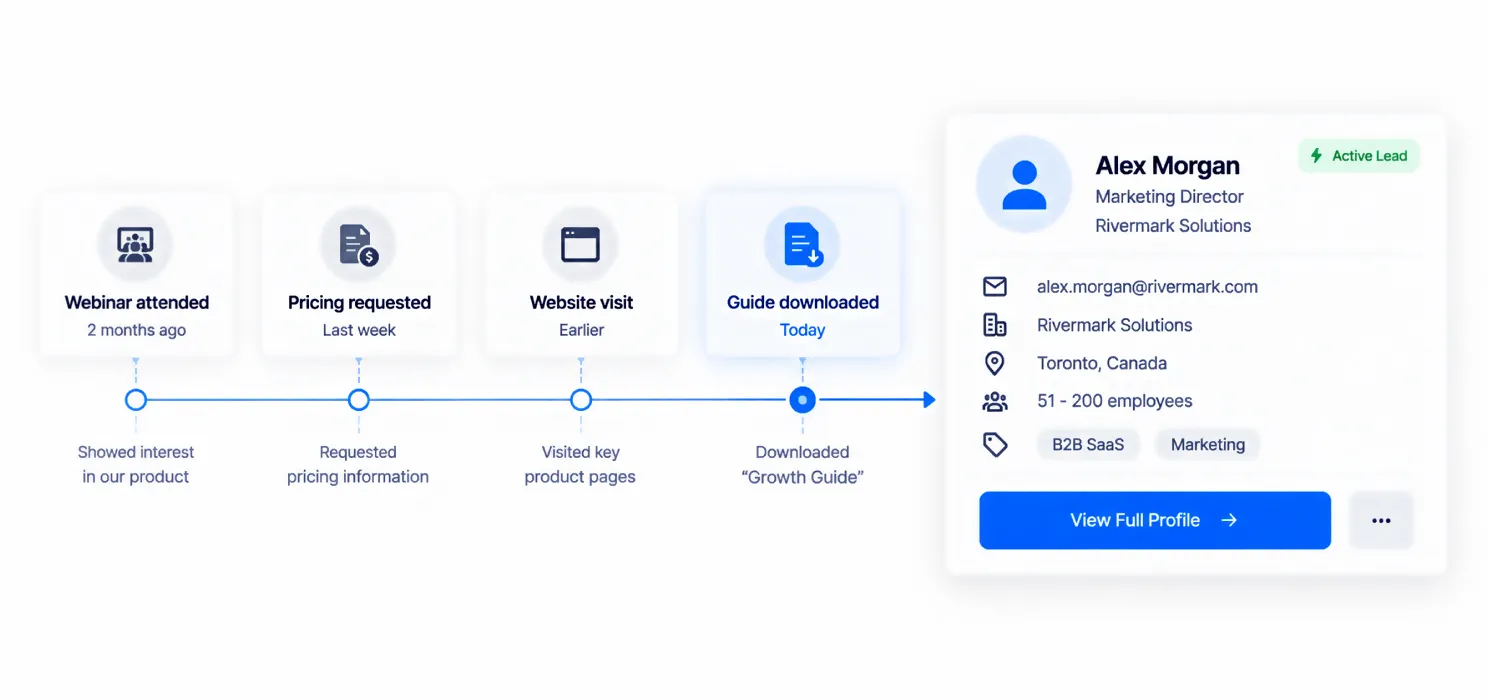
A lead’s current website visit is only one part of their journey.
A good enrichment process should also consider previous interactions.
This can include:
Imagine that someone downloads a guide today.
Without historical information, it may look like a new lead.
But if your system shows that the same person attended a webinar two months ago and requested pricing information last week, the situation looks completely different.
Historical data provides context.
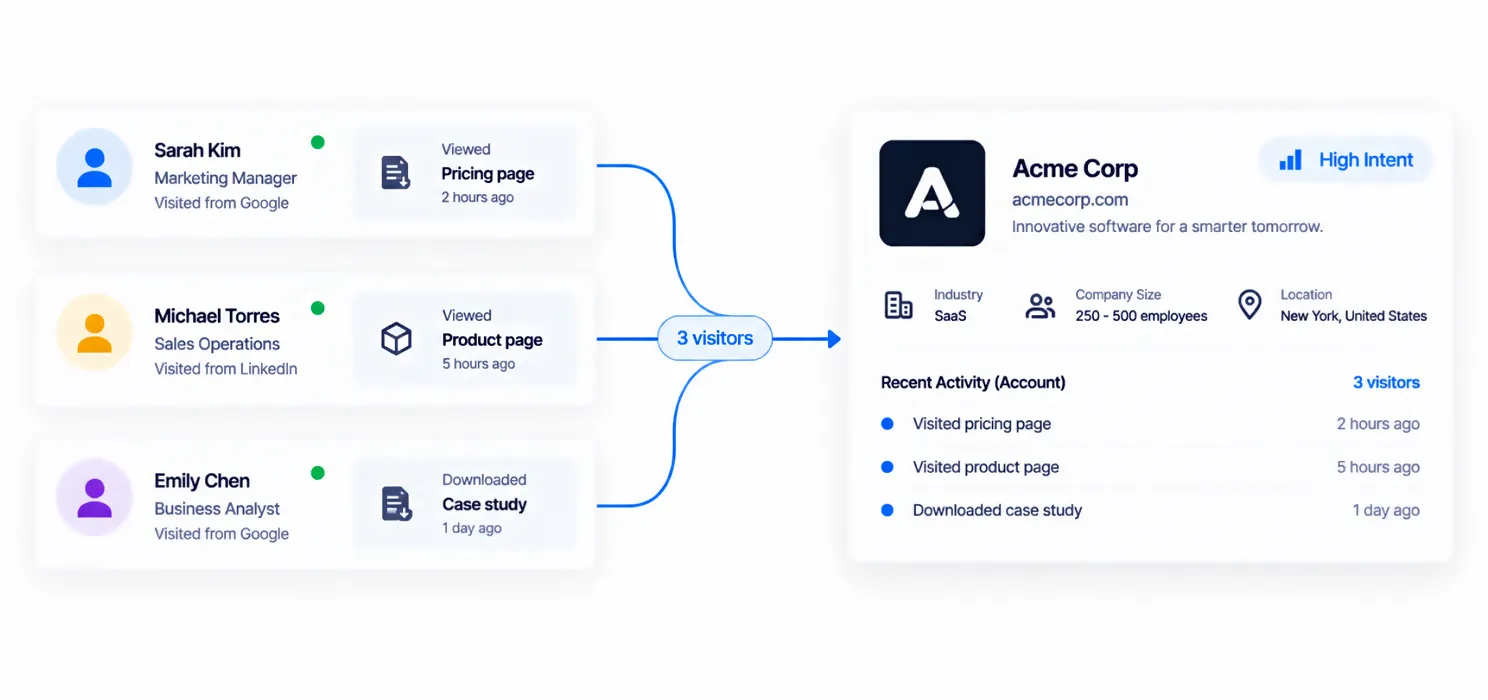
B2B companies should also look beyond individual leads.
Sometimes multiple people from the same company visit your website without anyone submitting a form.
For example:
Individually, these visitors may not look significant.
Together, they can indicate that the company is actively researching your product.
Account-level enrichment can help identify:
This can be particularly valuable for account-based marketing.
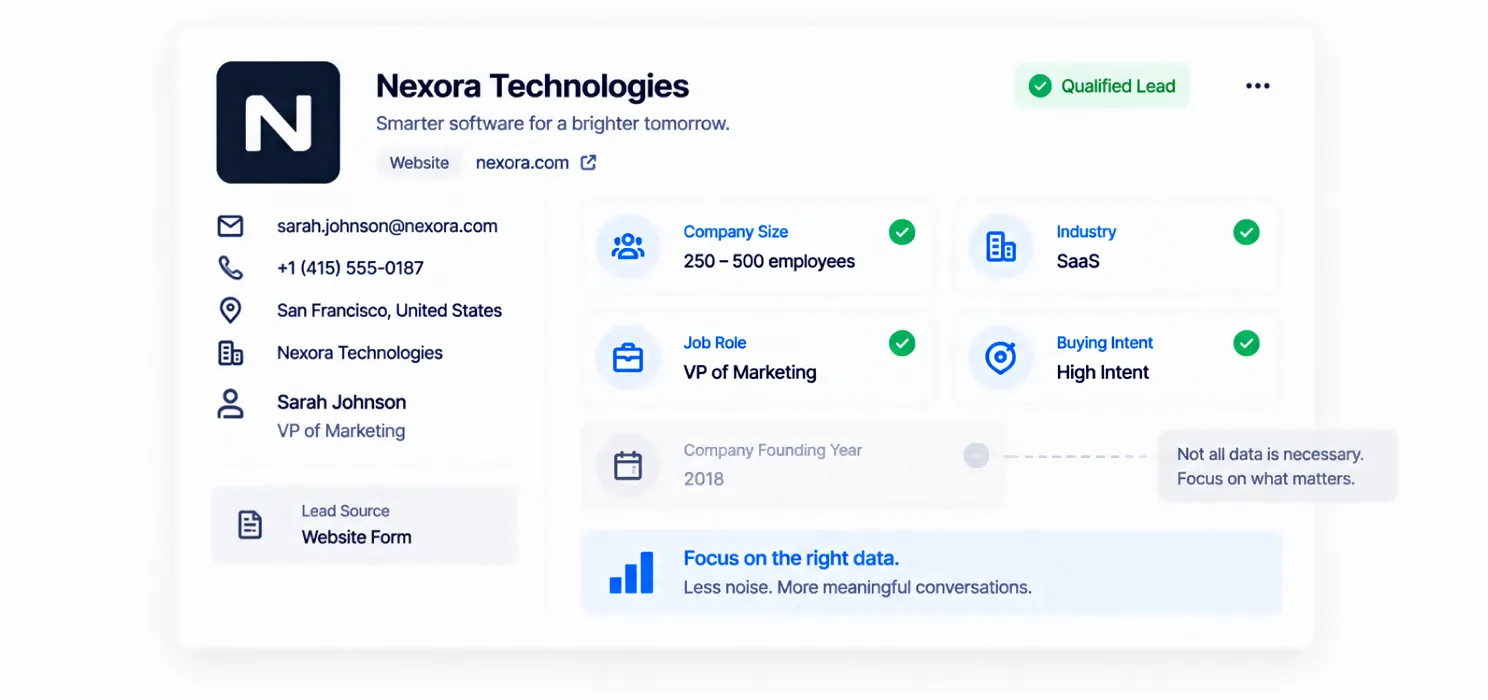
This is where many businesses make a mistake.
Because an enrichment tool can provide a piece of information does not mean you need it.
Your sales team probably does not need dozens of irrelevant details about every lead.
Before adding a data field to your CRM, ask:
Will this information help us qualify, prioritize, route, or personalize this lead?
If the answer is no, it may not be necessary.
For example, a prospect’s company founding year might be interesting.
But if your sales team makes decisions based primarily on company size, industry, job role, and buying intent, the founding year may not add much value.
Good enrichment is about relevant information, not maximum information.
Lead enrichment becomes much more useful when it connects with lead scoring.
Lead scoring assigns a value to a lead based on characteristics and behavior.
For example:
The exact scoring model will depend on the business.
The important thing is that enrichment provides the information needed to make the score more meaningful.
Instead of saying:
“This person filled out a form.”
Your system can identify:
“This person matches our ideal customer profile and is showing several high-intent behaviors.”
That is much more actionable.
These two concepts are often confused.
Lead generation is about finding and attracting potential customers.
Examples include:
Lead enrichment happens after you have some information about the prospect and want to understand them better.
For example:
Lead generation:
Someone discovers your website through Google.
Lead enrichment:
You learn that they work at a 300-person SaaS company and have visited your pricing page twice.
Both are important, but they solve different problems.
Visitor tracking primarily focuses on website behavior.
It answers questions such as:
Lead enrichment adds additional context.
It can answer:
When the two are combined, sales teams get a much clearer picture.
Traditional enrichment often focuses on adding static information to a database.
AI can add another layer by helping interpret the information.
For example, an AI system can analyze:
It can then help determine whether the visitor appears to be:
This is especially useful when your website receives a large number of visitors.
Instead of asking sales representatives to manually review every activity, AI can help surface the conversations and leads that deserve attention.
This is where a conversational AI platform such as Corvexa can add another layer to the process.
Traditional website forms depend on visitors deciding to provide their information.
A conversational AI assistant can engage with visitors directly.
For example, a visitor could ask:
“Do you offer this for companies with 100+ employees?”
Instead of simply showing another page, the AI can respond, understand the visitor’s needs, and continue the conversation.
During that interaction, it can potentially capture useful qualification information such as:
Combined with website behavior, this creates a richer lead profile.
The value is not simply collecting more information.
It is understanding why the visitor is interested.
For businesses using CRM systems and other sales tools, this information can then become part of the broader lead qualification workflow.
Not every enrichment platform is built for the same use case.
Before choosing one, consider the following.
Poor-quality data can create more problems than it solves.
Look at:
Your sales team needs information they can trust.
If your primary goal is lead qualification, look beyond basic contact enrichment.
A useful platform should help you understand what visitors are actually doing.
Your enrichment data should fit into the tools your sales team already uses.
Look for integrations with platforms such as:
The less manual work required to move information between systems, the better.
Manual enrichment can quickly become time-consuming.
Look for automation that can help:
Lead data should always be handled responsibly.
Before choosing a platform, understand:
Data quality should never come at the expense of responsible data handling.
Even a good enrichment platform can become ineffective if it is used incorrectly.
More fields can make your CRM harder to manage.
Focus on data that supports actual sales decisions.
A company profile can tell you who the prospect is.
Website behavior can tell you what they are interested in right now.
Both are valuable.
A first-time visitor and a repeat visitor checking pricing should not necessarily receive the same sales priority.
A single pricing-page visit does not automatically mean someone is ready to buy.
Look at multiple signals together.
If useful information remains inside a separate platform and never reaches the sales team, its value is limited.
The enrichment process should connect with your broader sales workflow.
A practical workflow can look like this:
Step 1: Capture the visitor or lead
Collect information through forms, website conversations, or other legitimate sources.
Step 2: Enrich the profile
Add relevant company, contact, and behavioral information.
Step 3: Analyze intent
Look at pages visited, repeat activity, conversations, and other engagement signals.
Step 4: Score the lead
Compare the information against your ideal customer profile and qualification criteria.
Step 5: Prioritize
Send the most relevant leads to sales first.
Step 6: Personalize the follow-up
Use the available context to make the sales conversation more relevant.
Step 7: Keep the data updated
Lead information changes over time, so enrichment should not be treated as a one-time activity.
Website lead enrichment tools can help businesses move beyond basic lead collection.
Instead of knowing only that someone filled out a form, you can understand more about:
But the objective should never be to collect the largest amount of data possible.
The best enrichment strategy focuses on useful data that supports better decisions.
Start with company information, role, website behavior, intent, and previous interactions. Then connect that information to your CRM, lead scoring, and sales workflow.
And when conversational AI is added to the process, tools such as Corvexa can help capture something traditional enrichment cannot always provide: the actual context behind a visitor’s interest.
That combination can turn website activity from anonymous traffic into actionable sales intelligence.
Website lead enrichment tools add additional information to website leads or visitors, such as company details, job roles, website behavior, technology data, and buying intent.
For most B2B businesses, company information, job title, website behavior, buying intent, and previous interactions are among the most useful data points.
No. Lead generation focuses on attracting potential customers, while lead enrichment adds information and context to existing leads or visitors.
Yes. Enriched company, contact, behavioral, and intent data can make lead scoring more accurate and help sales teams prioritize prospects.
Yes. AI can analyze visitor conversations, website behavior, and available lead information to help identify intent, qualification signals, and sales opportunities.
Corvexa uses conversational AI to engage website visitors, understand their needs, collect useful qualification information, and help businesses identify visitors who may be valuable leads.
 Website Lead Enrichment Tools: Data You Actually Need
B2B customer acquisition gets harder as a business grows. More website visitors, more leads, more conversations, and more follow-ups can...
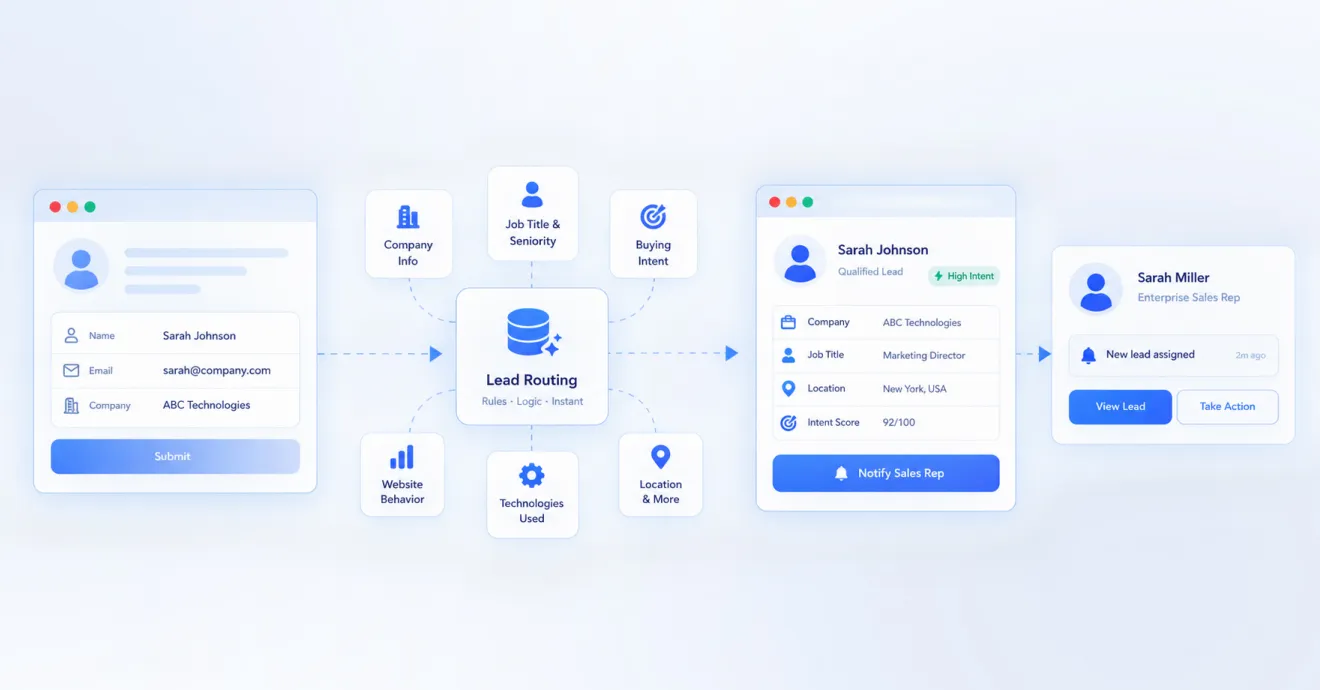
A great lead that sits in an inbox for six hours is barely better than no lead at all. Here’s...
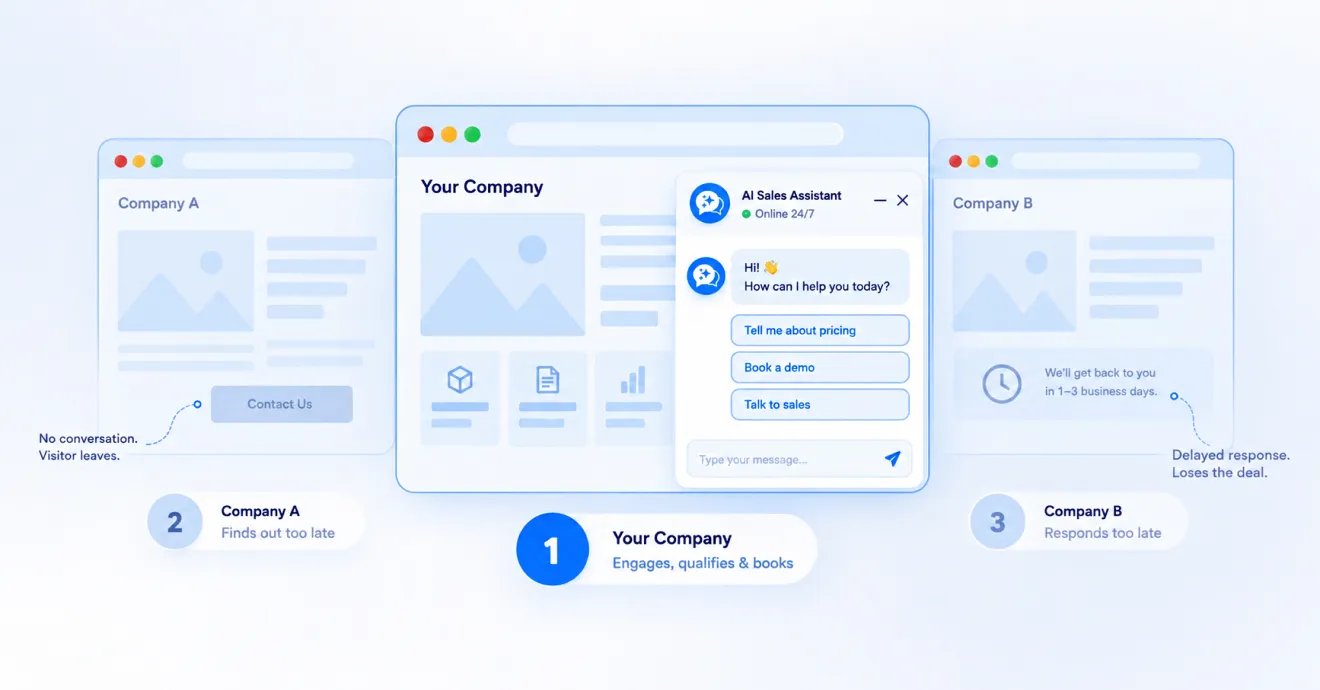
Two companies can get the exact same visitor on the exact same day, searching for the exact same solution. One...