
 9 Mins Read

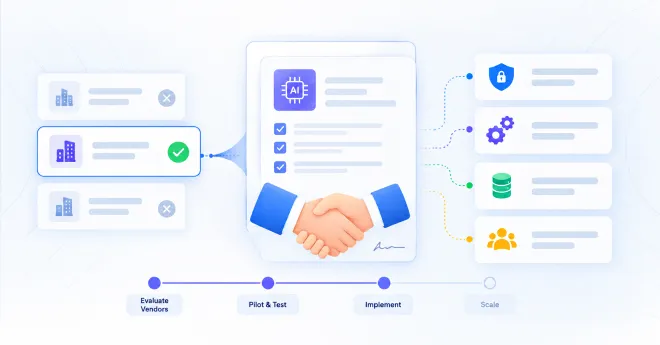
The Enterprise Guide to Hiring an AI Automation Partner (Without Wasting 6 Months)
Choosing the wrong vendor is the single biggest reason enterprise AI automation projects stall, blow past budget, or quietly die...

In this guide, we’ll look at an intent-based framework for doing exactly that: how to separate fit from intent, identify meaningful buying signals, score leads, use AI conversations to gather context, decide when a lead is ready for sales, and build a qualification process that saves your team from chasing every inquiry.
The objective isn’t to keep leads away from sales. It’s to make sure sales spends more time with the people most likely to buy.
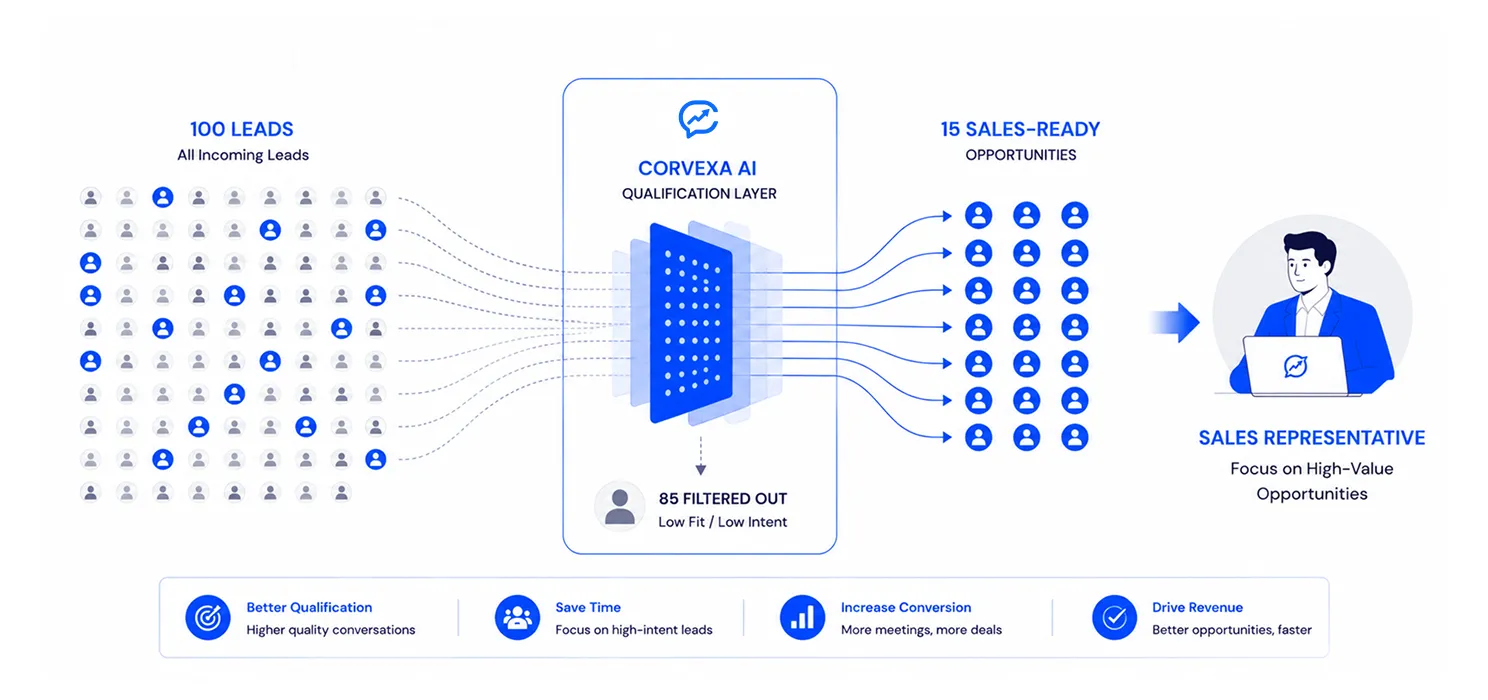
Salespeople are expensive resources. You don’t want them spending their day opening every form submission, researching every company, and trying to figure out whether someone is actually interested. Imagine your website generates 100 leads. If sales contacts all 100, but only 15 are genuinely relevant, most of the team’s time is going toward filtering rather than selling. Now imagine your qualification process identifies those 15 first.
Sales starts with:
That changes the conversation.
Instead of: “Hi, just following up on your inquiry.”
Your salesperson can start with: “I understand you’re currently looking to replace your existing lead capture process before the end of the quarter.”
That’s a much stronger starting point.

This distinction is easy to miss.
Lead capture tells you that someone showed interest.
Lead qualification tells you whether that interest is commercially meaningful.
A form might capture:
But it doesn’t necessarily tell you:
This is why simply generating more leads doesn’t automatically improve sales. You need to improve the quality and context of those leads.

A practical framework can be built around five questions:
These questions help turn an anonymous website interaction into a clearer sales opportunity.

Before looking at buying intent, determine whether the visitor is even a potential customer.
Your ideal customer profile might include:
For example, suppose you sell enterprise B2B software. A visitor from a 500-person SaaS company may be a strong fit. A student looking for a free tool probably isn’t. Both could ask questions. Both could provide an email address. But only one belongs in your sales pipeline. Fit is the first filter.

A good qualification process shouldn’t immediately ask: “What’s your budget?”
Start with the problem.
Ask something more natural: “What are you trying to improve?”
The answer can tell you a lot.
Consider these two responses: “I’m just exploring what’s available.”
and “Our sales team is receiving too many unqualified inquiries and we need to fix that.”
The second response reveals an actual business problem. That’s important because buyers usually don’t purchase software simply because they like software. They buy because they want to solve something.

Intent is one of the most important parts of qualification. A visitor can be a perfect customer fit and still not be ready to buy. Look for actions and statements that suggest active evaluation.
Examples include:
Not all signals have equal value. Someone reading your blog has shown interest.
Someone asking: “Can I book a demo for Thursday?” has shown much stronger intent.

A buyer’s timeline can completely change their priority.
Compare: “We’re researching solutions for next year.”
with: “We need to replace our current system this quarter.”
Both may be good leads. But they should not receive the same urgency. You can categorize buying timelines into simple groups:
| Timeline | Typical priority |
|---|---|
| Ready now | Very high |
| This month | High |
| This quarter | Medium-high |
| Next quarter | Medium |
| Researching | Low |

Your website itself can provide useful intent signals. Think about the difference between someone who:
and someone who:
Neither behavior guarantees a purchase. But the second pattern suggests considerably more engagement. Your qualification system should bring these signals together rather than judging a lead from a single action.
Forms are useful. But forms often ask questions before the visitor has enough context to care about answering them. AI conversations can approach qualification differently.
Imagine a visitor says: “I’m looking for something to qualify leads automatically.”
Instead of immediately asking for their email, the AI could respond: “Sure. Are you currently qualifying leads manually, or are you already using another tool?”
The visitor answers. Now the system knows more.
It can continue: “What usually makes a lead worth sending to your sales team?”
Now you understand their qualification process.
Then: “How many inbound leads does your team typically handle each month?”
The conversation is gradually revealing:
Problem → current process → scale → qualification criteria → potential fit
That’s far more useful than simply collecting contact details.

If your AI asks six questions one after another, you’ve basically rebuilt a form inside a chatbot. That defeats the purpose. Instead, use progressive qualification. Start with the visitor’s question. Understand what they’re trying to accomplish. Then ask only the questions that help determine whether you can help.
For example:
Visitor:
“We’re looking for a chatbot.”
AI:
“What would you mainly like it to help with — customer support, lead generation, or both?”
Visitor:
“Lead generation.”
AI:
“Got it. Are you currently using forms, a chatbot, or another process to capture those leads?”
Now the next question has context. That’s how qualification becomes less intrusive.

This is where many businesses struggle. If you send leads to sales too early, your team gets overwhelmed. If you wait too long, you may lose high-intent prospects.
A useful rule is: Send the lead to sales when fit and intent are both strong enough to justify human attention.
For example:
Action: Notify sales immediately.
Action: Continue nurturing and monitor intent.
Action: Provide useful information without involving sales immediately.

Don’t send: Sarah [email protected] High score
That’s not enough.
Instead:
Sarah ABC Software
Company size: 250 employees
Problem: Too many unqualified inbound inquiries
Current process: Static website forms
Timeline: This quarter
Interest:AI lead qualification
Intent: High
Requested: Product demo
Conversation: Asked about HubSpot integration
Now your salesperson has a reason to call. They don’t need to start the discovery process from scratch.

Corvexa
Corvexa allows businesses to configure an AI agent around their own website, knowledge, ideal customer profile and qualification criteria.
You can teach it about your:
- Website content
- Products
- Pricing
- FAQs
- PDFs and business documents
- Ideal customer profile
- Pain points
- Disqualifiers
- Hot-intent keywords
During conversations, Corvexa can answer visitor questions while collecting relevant lead information.
It can capture details such as:
- Name
- Phone
- Interest
- Preferred follow-up time
It can also identify high-intent signals and score leads as High, Medium or Low.
When a conversation reaches a point where human involvement makes sense, your team can take over directly.
Qualified leads can then flow into your workflow through the Corvexa dashboard, email, HubSpot, Salesforce or Calendly.

Qualification shouldn’t be the end of the process. It should determine the next action.
For a high-intent prospect: “Based on what you’ve shared, it sounds like this could be a good fit. Would you like to book a demo?”
For a researcher: “Here’s a guide that explains how this works.”
For someone who isn’t a fit: “Here’s some information that may help with what you’re looking for.”
Every visitor gets an appropriate experience. Sales gets involved where it matters.

1. Treating every lead equally: Not every form submission deserves the same sales attention.
2. Scoring based only on page views: Engagement matters, but buying intent matters more.
3. Asking too many qualification questions: If the visitor feels like they’re completing an interrogation, they’ll leave.
4. Ignoring negative signals: Good qualification identifies poor fit too.
5. Sending leads to sales without context: A score without an explanation isn’t very actionable.
6. Waiting too long to respond: High-intent visitors may be evaluating several providers at once.
7. Never updating your qualification criteria: Your best customers can change over time.
Review closed-won and closed-lost opportunities regularly and adjust your framework.

Start with your existing customers. Look at your last 20–50 closed-won deals and ask:
Then look at your poor-quality leads. Find the patterns. You may discover that your best prospects share several characteristics. Those characteristics become qualification signals. Your framework then becomes based on real buying behavior, rather than assumptions.

The biggest mistake B2B companies make is treating lead qualification as something that happens after a form is submitted. By then, you’ve already missed valuable context. The visitor has already told you what they care about through their questions, behavior, product interest and urgency. The opportunity is to recognize those signals before sales gets involved. Start with fit. Understand the problem. Look for intent. Determine timing. Use conversations to gather context. Score the opportunity. Then send the right leads to the right person at the right moment. That’s what it really means to qualify leads before sales. You’re not putting another barrier between buyers and your sales team.
You’re removing the noise so your sales team can focus on the conversations that actually have a chance of becoming revenue.

 Qualify Leads Before Sales: The Intent-Based Framework

Choosing the wrong vendor is the single biggest reason enterprise AI automation projects stall, blow past budget, or quietly die...
This guide compares eight AI chatbots for B2B websites on one measure: how well each one turns a website visitor...

This blog settles the AI agent vs chatbot debate with real 2026 data rather than marketing buzzwords. You’ll learn the...