
Scaling Customer Acquisition with B2B Sales Software
B2B customer acquisition gets harder as a business grows. More website visitors, more leads, more conversations, and more follow-ups can...

 8 Mins Read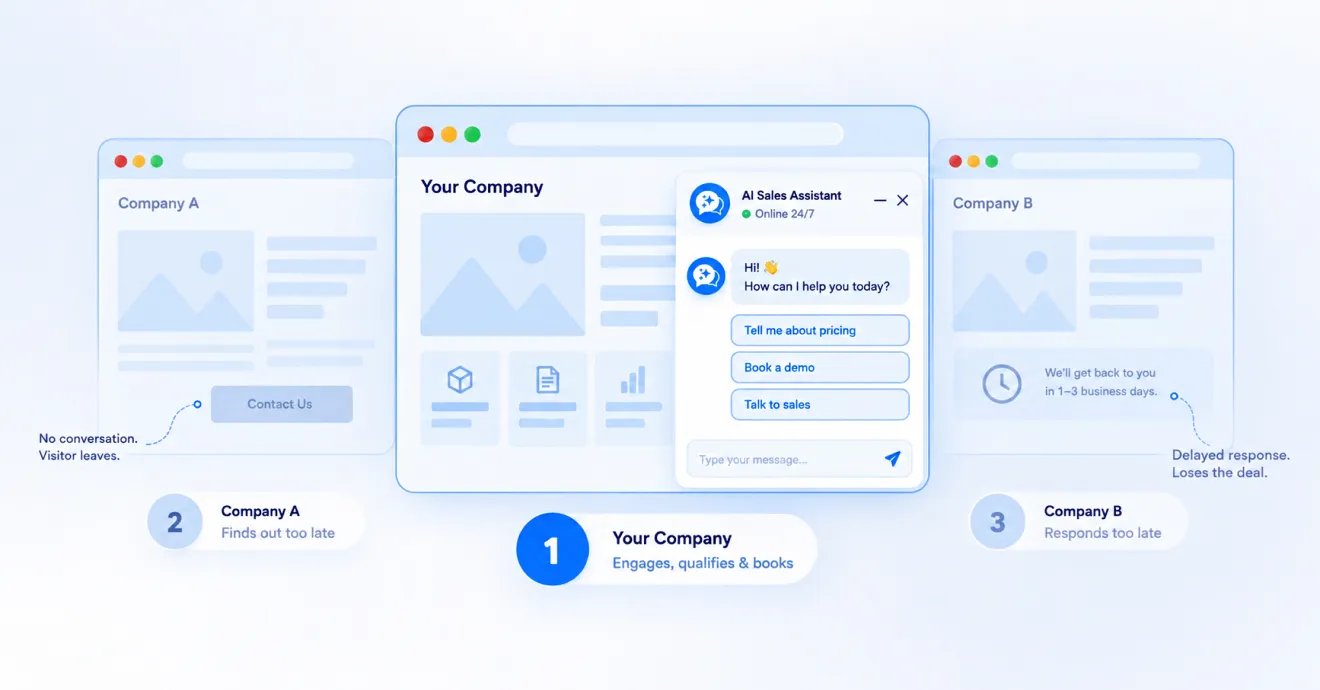
Two companies can get the exact same visitor on the exact same day, searching for the exact same solution. One wins the deal. The other never even finds out the visitor existed. Here’s what actually separates them and how to make sure it’s you.
Picture two B2B companies selling nearly identical products. Same price range, same target customer, same quality of product. A procurement manager researches both on the same Tuesday night. One website starts a helpful conversation within seconds and has her name, her interest, and a booked call by the time she closes her laptop. The other shows her a pricing page and a “Contact Us” button. Three days later, someone finally emails her back, and by then, she’s already signed with the company that talked to her first.
That’s the conversational sales race, and most B2B companies are running it without realizing it’s happening. This isn’t about who has the better product anymore. It’s about who responds, qualifies, and moves a buyer forward while the competitor is still sitting in an inbox.
B2B buying has quietly changed shape. Buyers do the overwhelming majority of their research before ever speaking to a salesperson,n comparing vendors, reading pricing pages, and forming an opinion almost entirely on their own. By the time they’re willing to fill out a form, they’ve usually already narrowed the field to two or three options.
That shift means the moment of first contact isn’t a scheduled sales call anymore. It’s whatever happens the instant a buyer lands on a website with a real question. Whoever answers that question first has an outsized advantage not because they were smarter or cheaper, but because they were simply there.
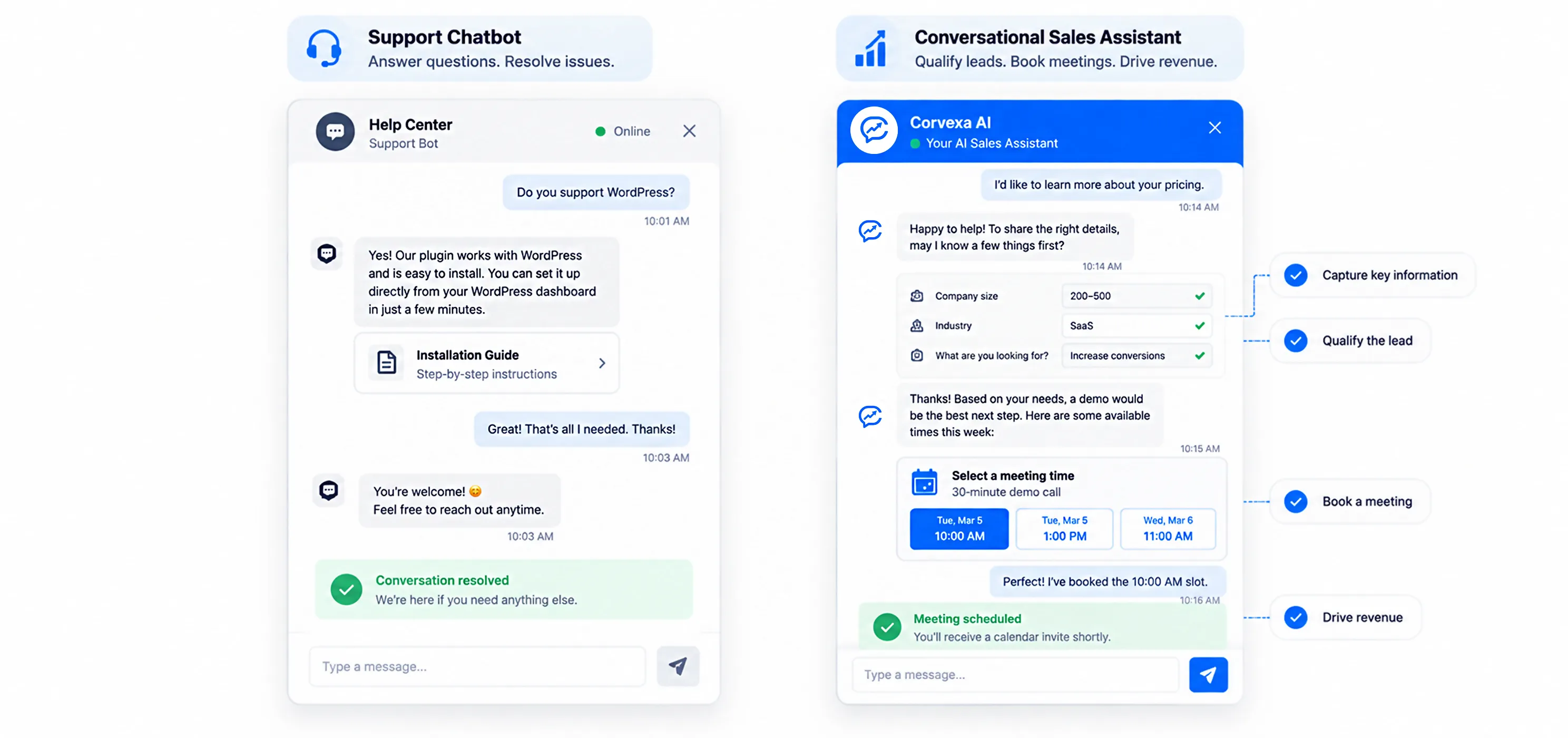
A conversational sales platform is different from a support chatbot or a marketing pop-up, even though they can look similar on the surface. Its entire job is to move a buyer through the early sales motion engaging, qualifying, and scheduling inside a real-time conversation, instead of waiting for a human to pick up that job hours or days later.
The distinction that matters: a support chatbot exists to answer a question and close the loop. A conversational sales platform exists to open a pipeline. It’s judged on a completely different scoreboard: not “was the visitor’s question answered,” but “did this turn into a qualified conversation sales can act on.”
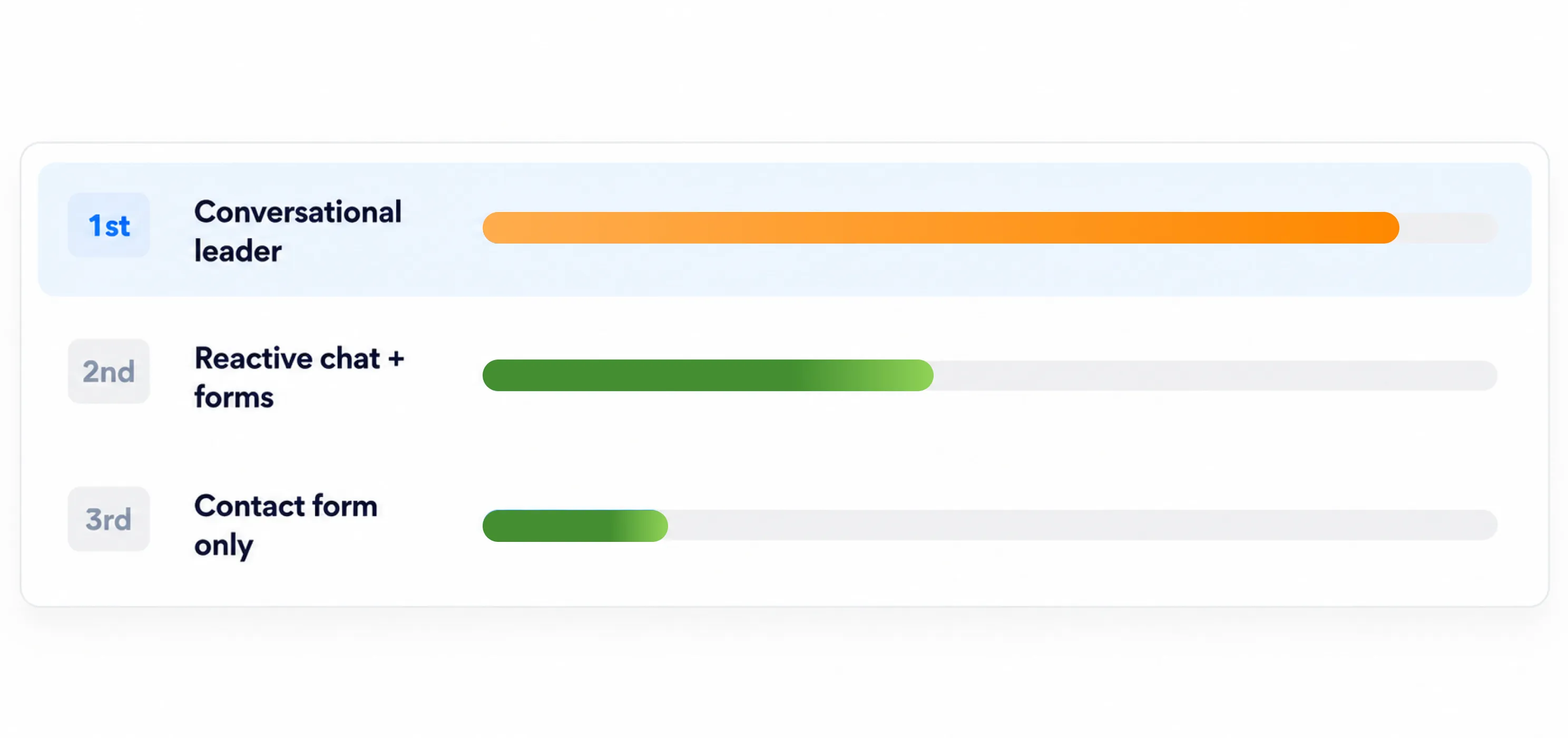
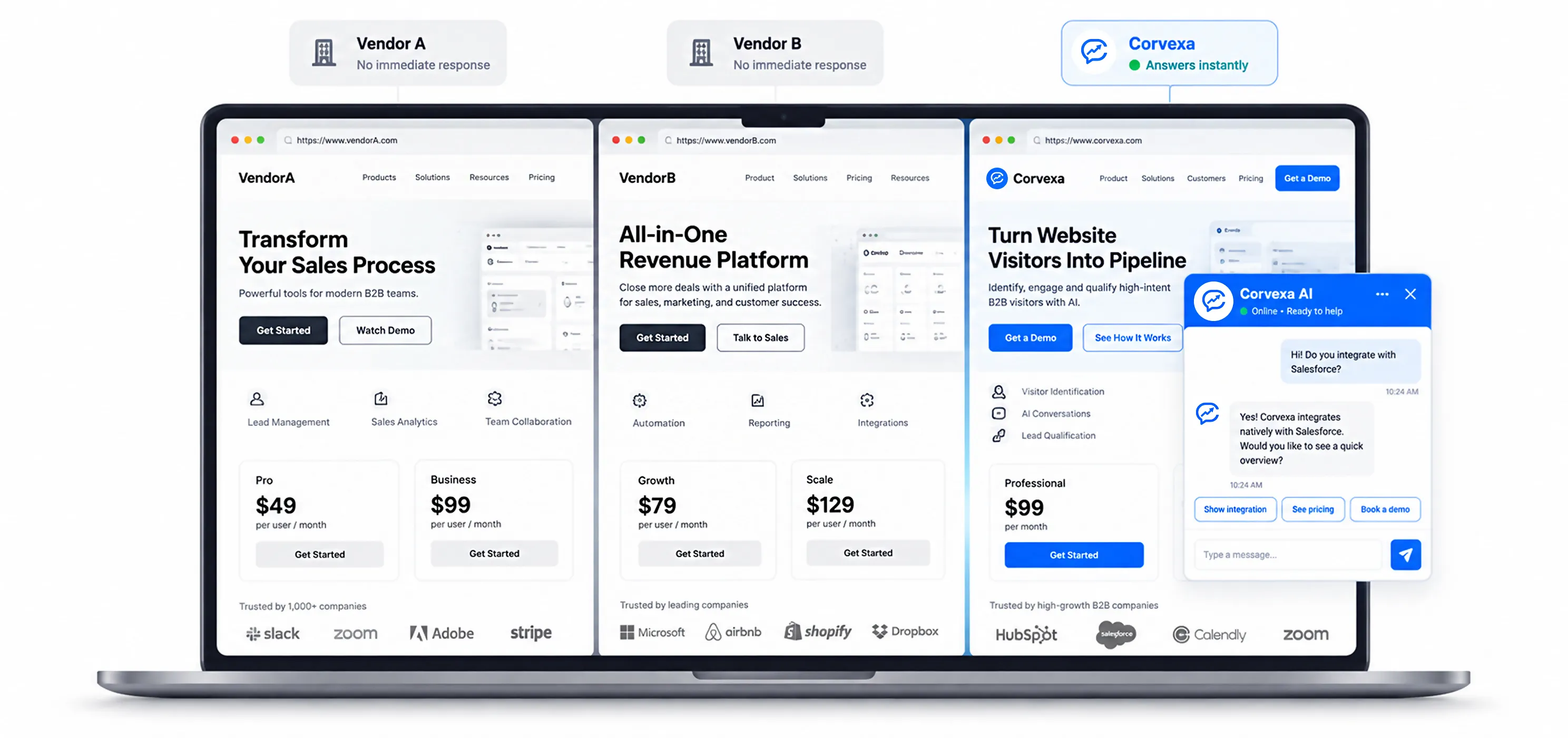
Picture three companies competing for the same buyer, ranked by how much ground they cover before a human ever gets involved.
The gap here isn’t small, and it isn’t about budget. It’s about how much of the early sales motion happens automatically, in real time, versus how much sits waiting on a person’s calendar. The company in first place isn’t winning. Their reps are faster typists; they’re winning because their reps never had to be the first responder at all.
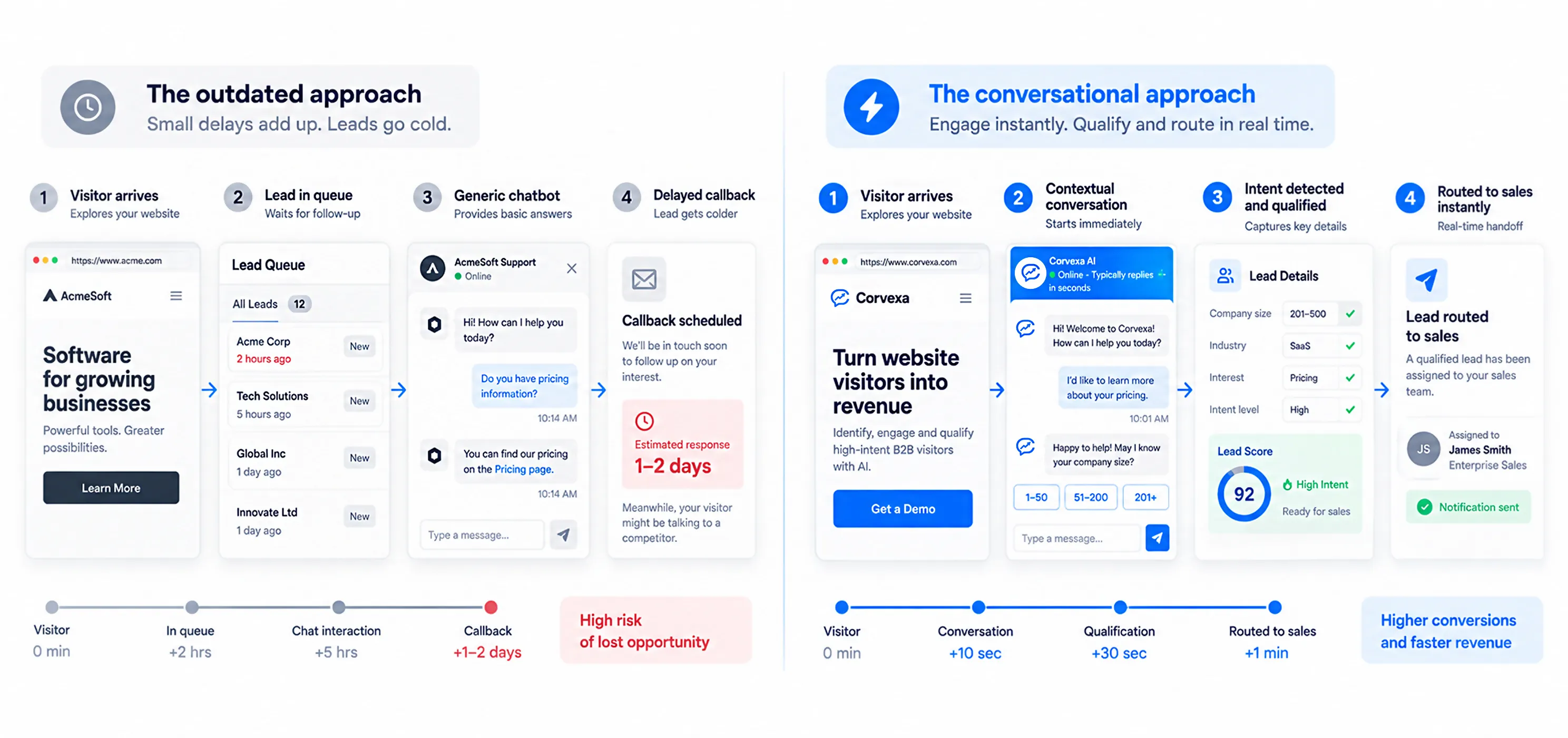
| Falling behind | Pulling ahead |
|
|
None of this requires a bigger team or a bigger budget. It requires a different default: treating the first conversation as something your website should start, not something your buyer has to go looking for.
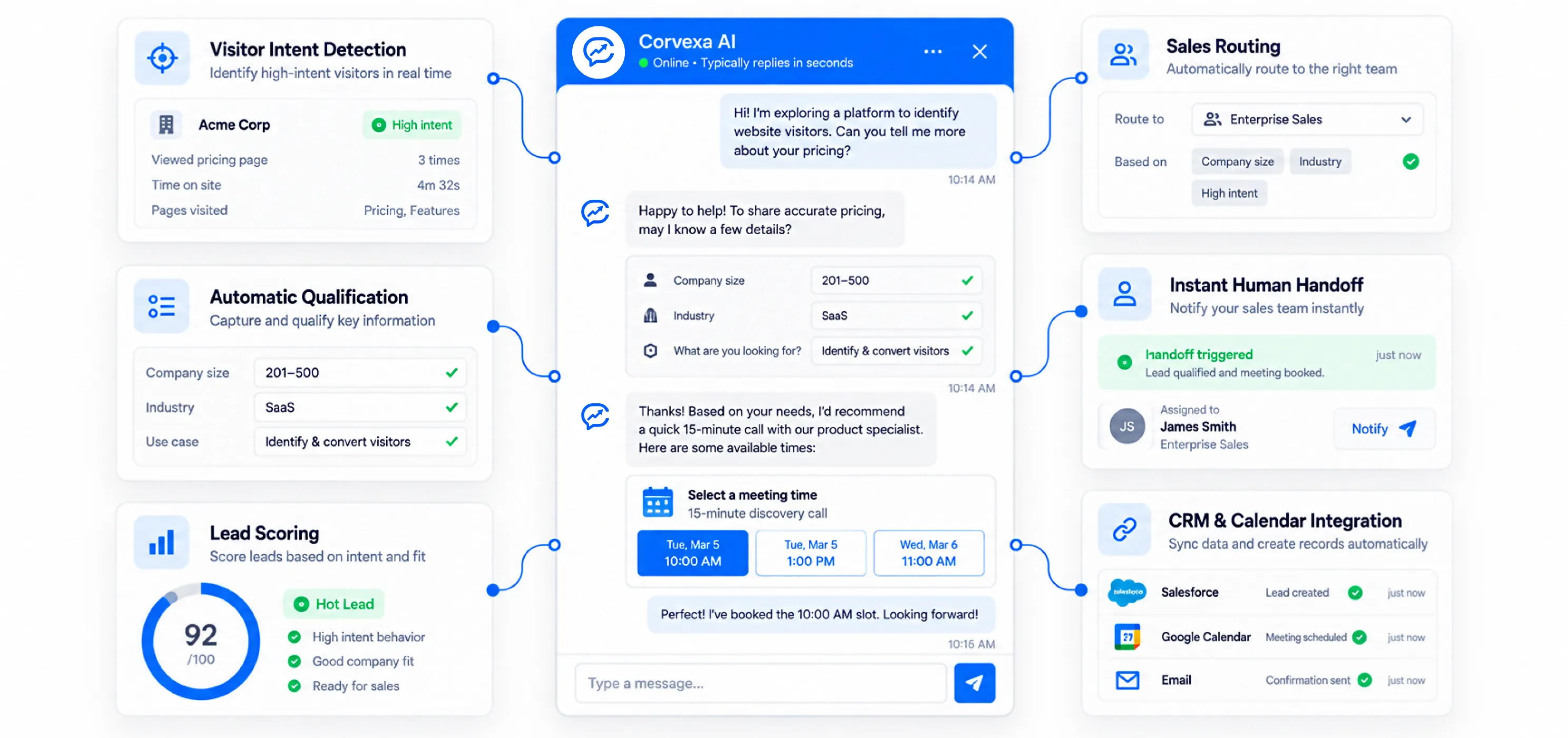
Not every tool that calls itself “conversational” is actually built for sales. Here’s the checklist that separates a real conversational sales platform from a rebranded support widget.
✓ Opens conversations proactively
It should engage based on real visitor behavior, not sit waiting for a click.
✓ Understands buying intent, not just keywords
It should tell the difference between someone browsing and someone ready to talk to sales.
✓ Qualifies without a separate form
The details sales needs should come out of the conversation itself, naturally.
✓ Scores and routes automatically
A hot lead should reach the right rep without anyone manually triaging an inbox.
✓ Lets a human take over instantly
The moment a deal-making question comes up, a rep should be able to step in with full context.
✓ Connects to where sales already works
CRM, calendar, and email: a great conversation is wasted if it dead-ends in a dashboard nobody checks.
Almost no company decides to lose the conversational race on purpose. It happens gradually, through a few quiet assumptions that felt reasonable at the time.
“Our sales team is fast enough already”
Fast for a human is still slow compared to instant. A rep who calls back within an hour feels responsive until you remember the competitor’s website already had the buyer’s name twenty minutes after they landed on the page.
“We already have a chatbot”
A chatbot that answers support questions isn’t the same as a platform built to detect intent and qualify a buyer. Many teams check this box early and never revisit whether the tool is actually built for sales.
“We’ll add this once we’re bigger”
This is backwards. Smaller teams benefit the most from automating the first response, because they have the fewest people available to do it manually in the first place.
Corvexa
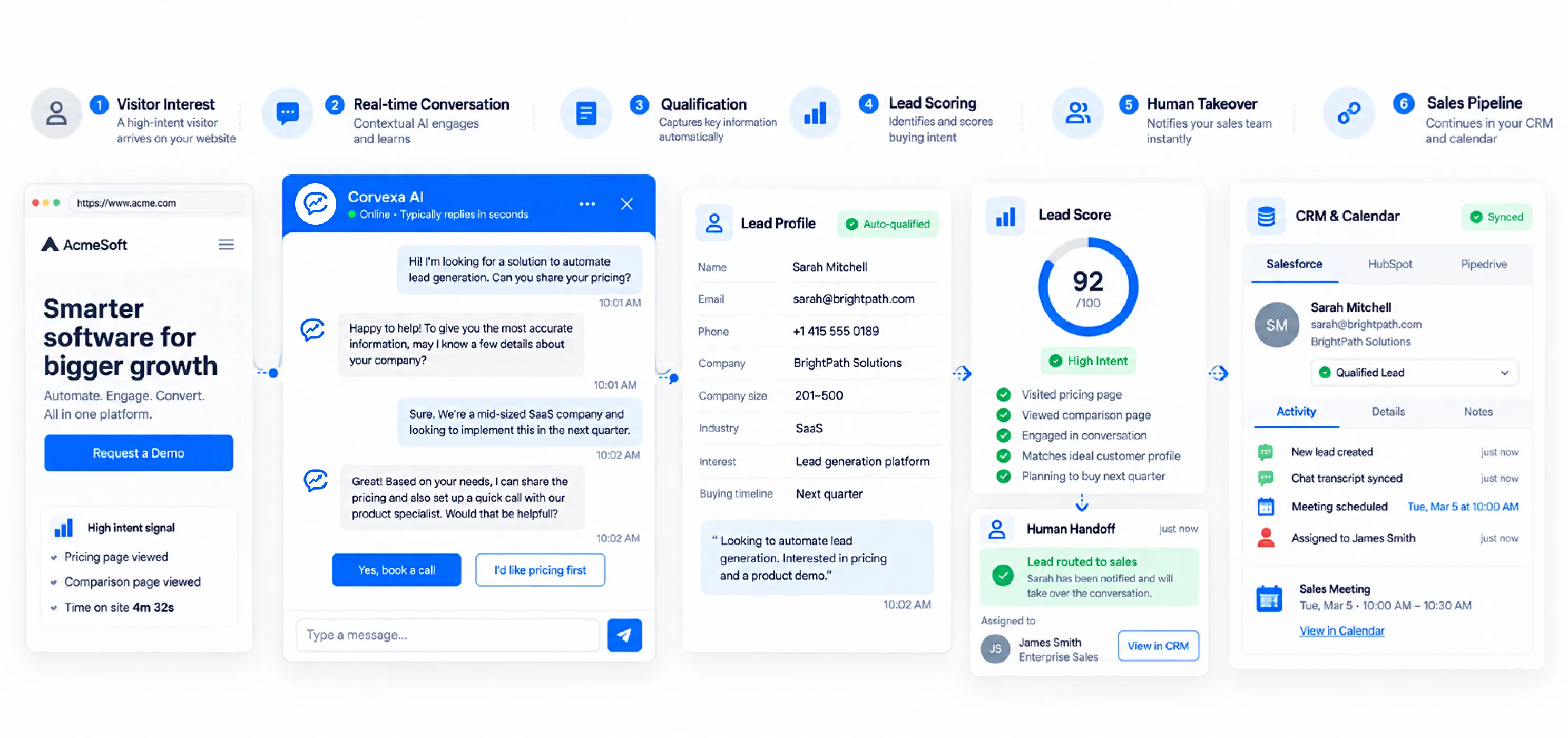
Corvexa is built specifically for the part of the race that matters most: the seconds and minutes right after a visitor shows real interest. Instead of waiting for a form or a callback, Corvexa opens the conversation, answers from your real content, and qualifies the visitor in real time.
- Proactive by default: engages visitors with page-specific quick actions instead of waiting to be clicked on.
- Real intent detection: hot keywords and behavior combine into a live High/Medium/Low lead score.
- Qualifies inside the conversation: name, email, phone, interest, and timing, no separate form required.
- Human takeover in one click: a rep can jump into any live chat with full context the moment it matters.
- Synced to your pipeline: HubSpot, Salesforce, or Calendly, so a won conversation doesn’t stall waiting for someone to notice it.
The companies pulling ahead in this race aren’t necessarily outspending everyone else on ads or headcount. They’ve simply made sure nothing stands between a buyer’s first question and a real answer, and that’s a gap most competitors still haven’t closed.
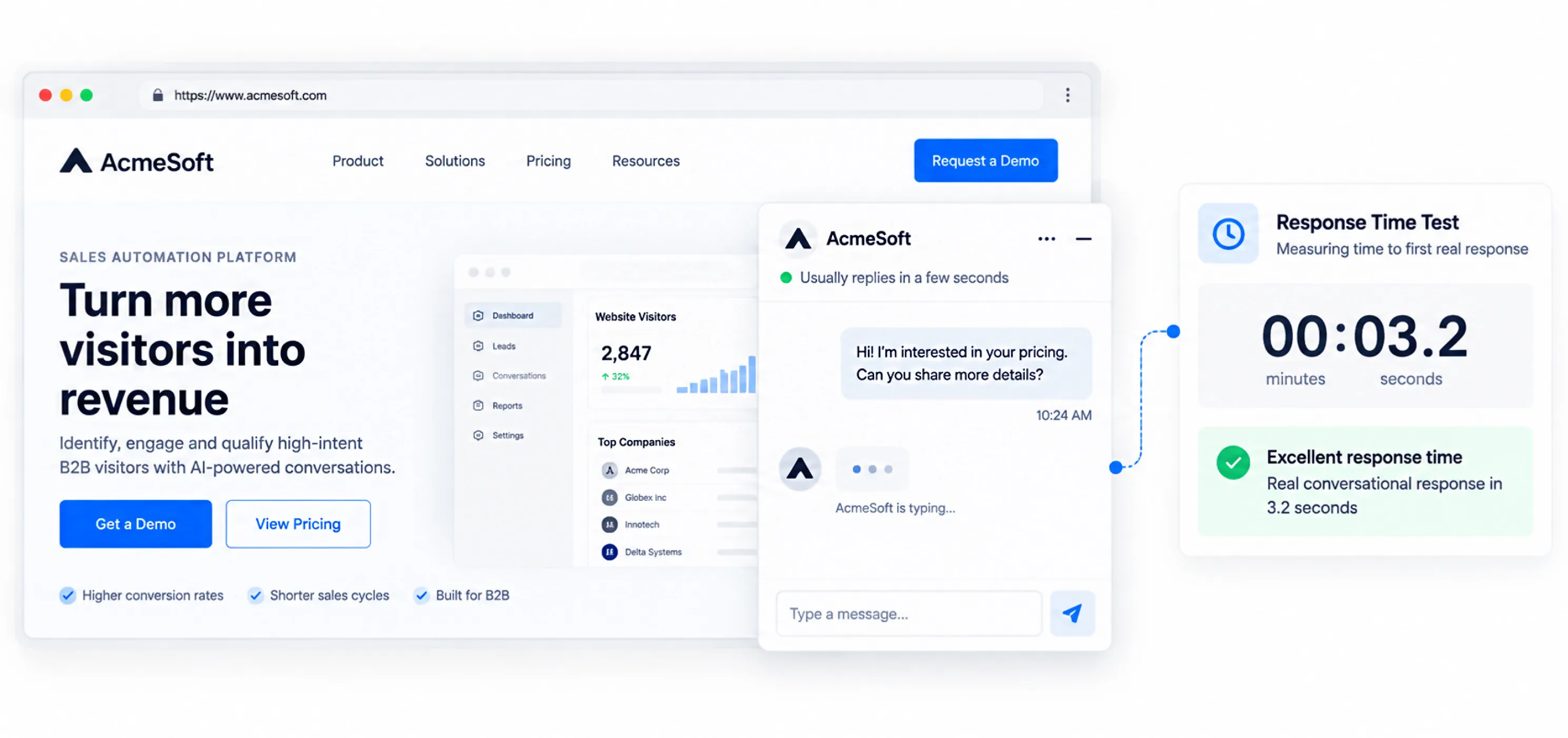
Time your current first response
Test it yourself:f visit your own site as a stranger would and see how long it actually takes to get a real answer.
Audit what your competitors .do
Do the same test on two or three competitor sites. This is usually the moment teams realize how far behind (or ahead) they already are.
Fix the response gap before anything else.
Every other improvement better content, better ads, better pricing matters less if the first conversation still takes three days to start.
Give your team a reason to trust i.t
Show reps the qualified, scored leads coming through, not just the tool. Adoption follows once they see it’s actually saving them time.
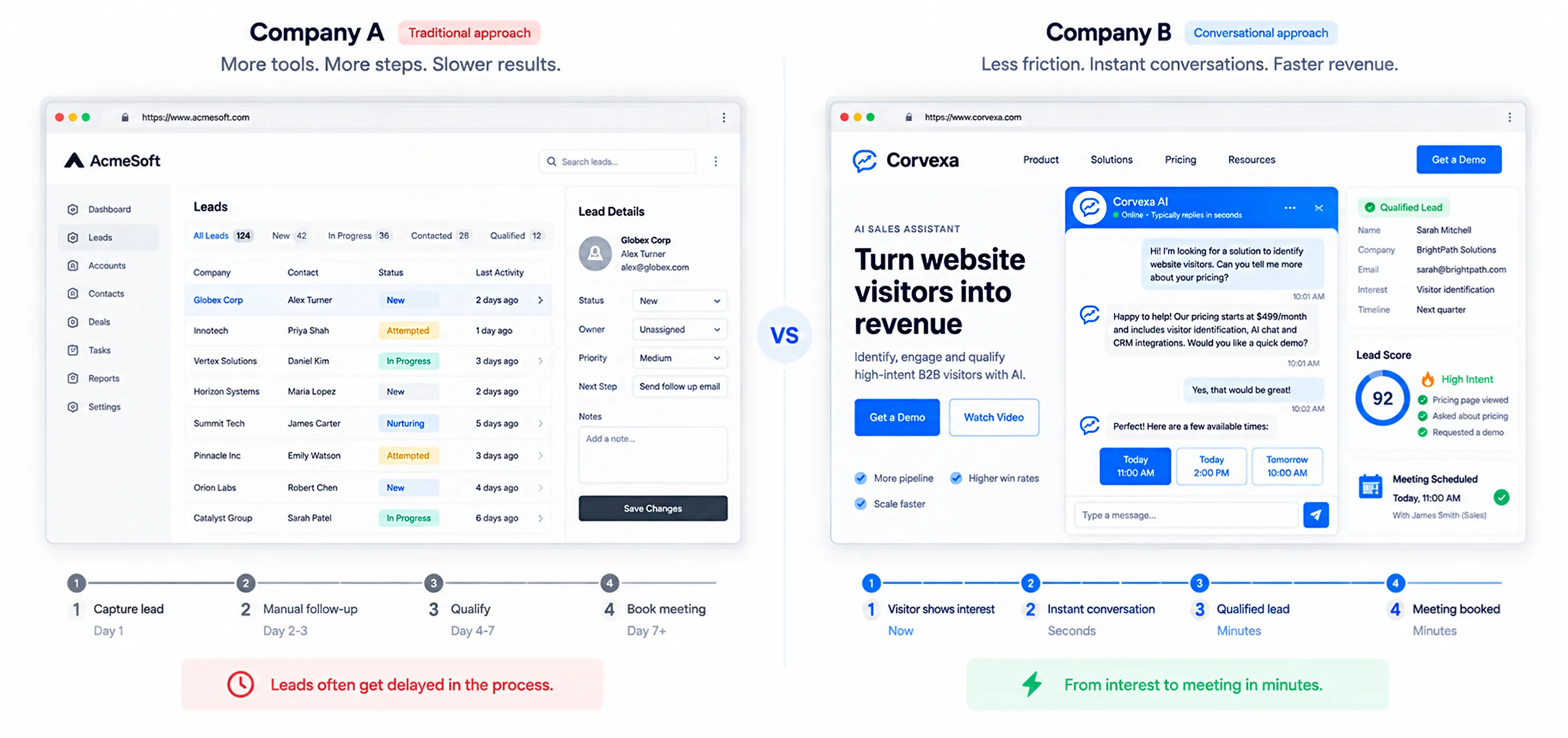
That’s the part worth sitting with. This particular race isn’t won by whoever has the bigger sales team, the bigger ad budget, or the longer track record. It’s won by whoever removes the wait between a buyer’s curiosity and a real conversation. That’s a genuinely levelable field, and for most B2B companies, it’s still wide open.
 Winning the Conversational Sales Race in B2B
B2B customer acquisition gets harder as a business grows. More website visitors, more leads, more conversations, and more follow-ups can...
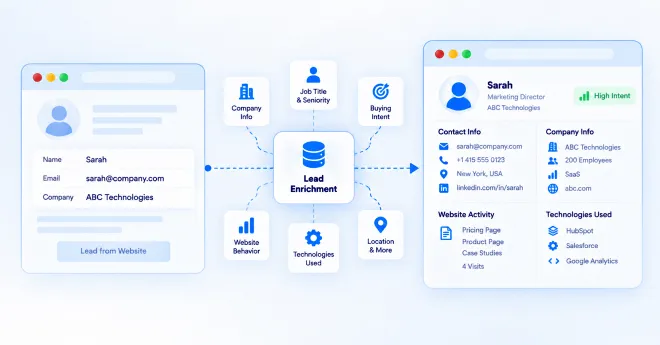
A website visitor can leave behind very little information. They may read a few pages, check your pricing, download a...
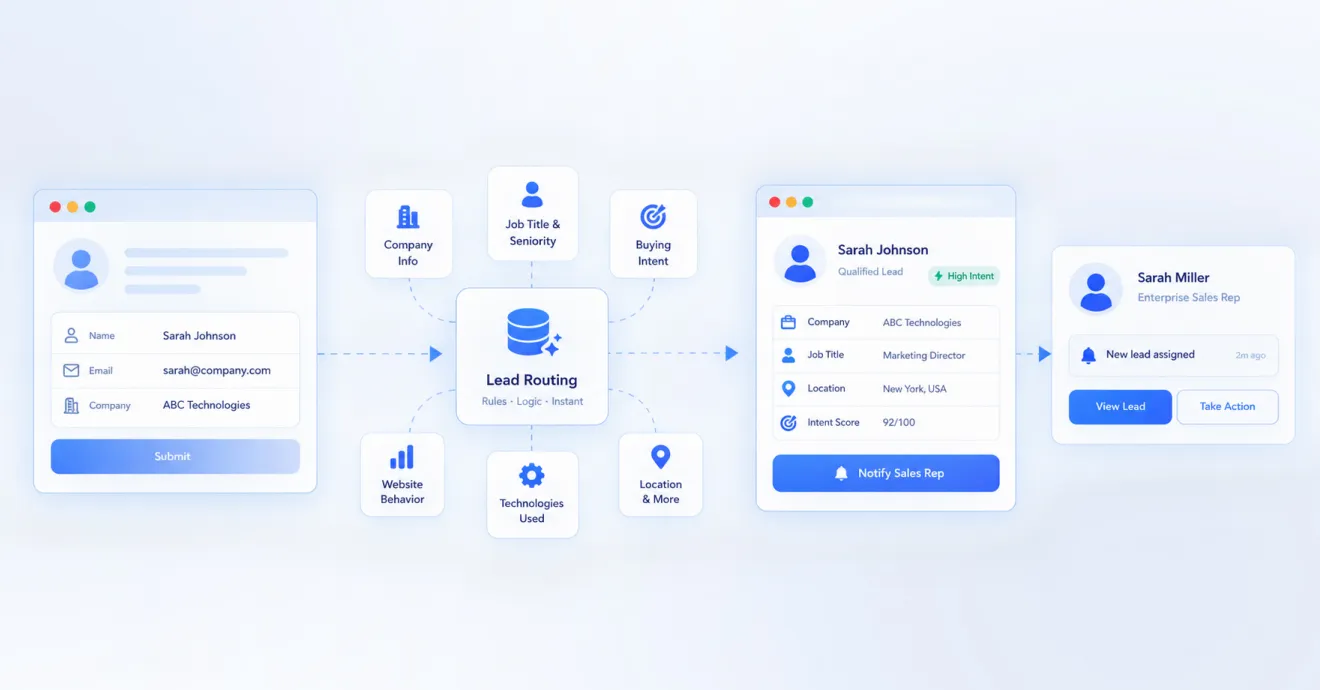
A great lead that sits in an inbox for six hours is barely better than no lead at all. Here’s...