
Scaling Customer Acquisition with B2B Sales Software
B2B customer acquisition gets harder as a business grows. More website visitors, more leads, more conversations, and more follow-ups can...

 8 Mins Read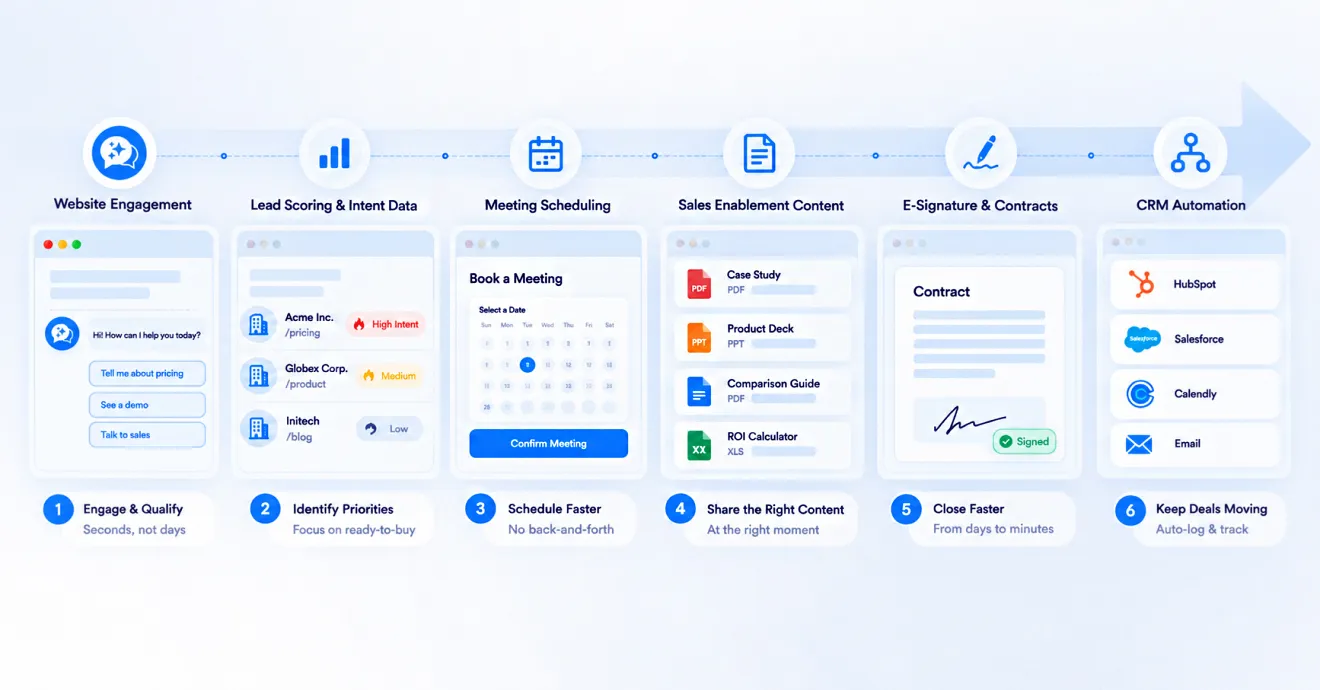
Every extra day a deal sits untouched is a day it can go cold, get deprioritized, or lose to a faster competitor. Here’s where B2B sales cycles actually lose time, and the tools built to close each gap, starting with the one hiding on your own website.
Ask any B2B sales leader what they’d change about their pipeline, and “make the deals move faster” comes up almost every time. Not more leads. Not a bigger team. Just less time between “interested” and “signed.” That’s the premise behind sales acceleration tools. Once you see where a typical sales cycle loses days, it’s obvious why they’ve become one of the highest-leverage investments a B2B company can make.
This guide walks through where time really disappears in a B2B sales cycle, the categories of tools built to win it back, and how to think about building an acceleration stack that doesn’t just look good in a demo but actually moves your numbers.
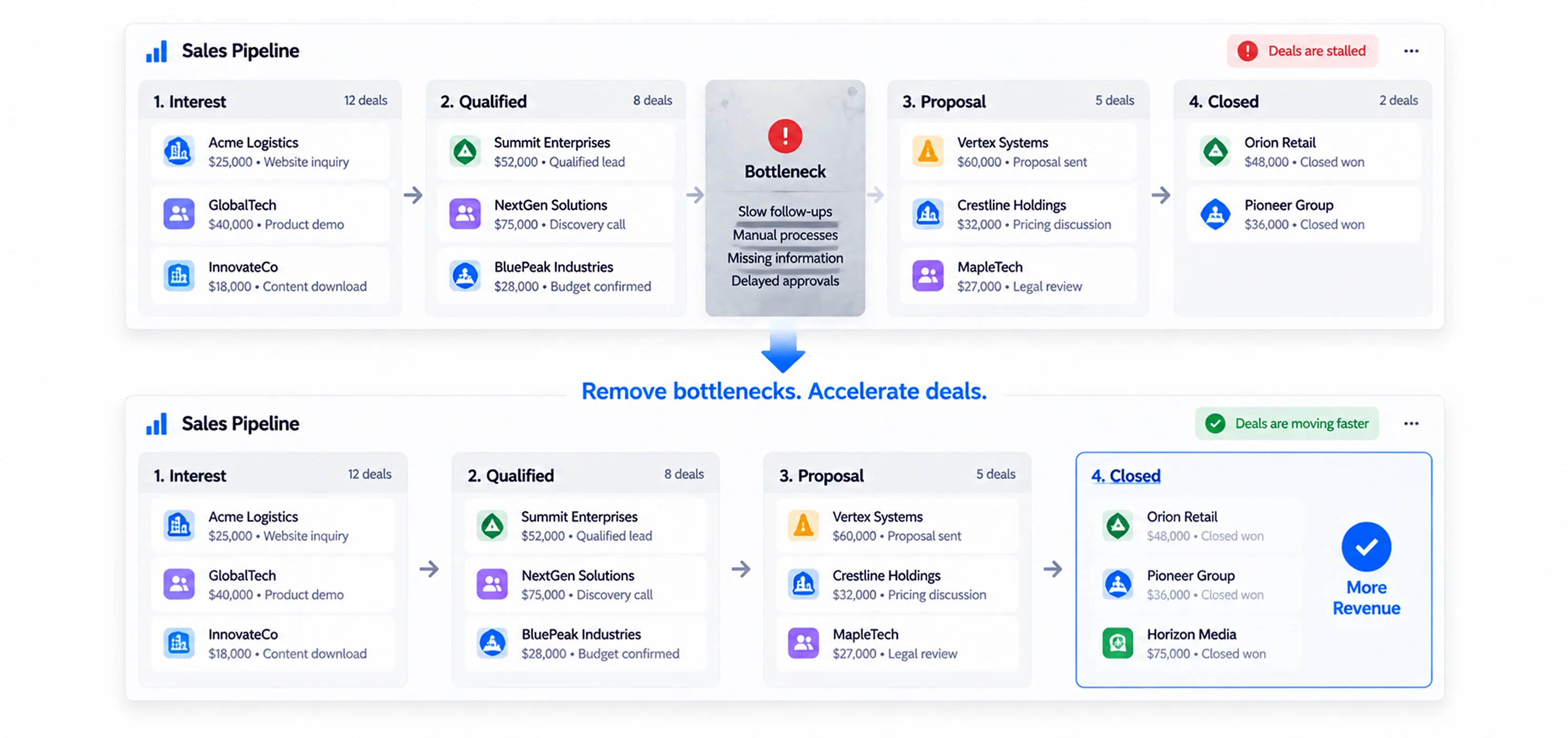
Sales acceleration isn’t one product category it’s a goal that a handful of very different tools all work toward: compressing the time between a prospect’s first sign of interest and a closed deal, without lowering the quality of who ends up in the pipeline.
That distinction matters. It would be easy to “accelerate” a sales cycle by lowering standards and rushing unqualified prospects through it faster. Real acceleration does the opposite: it removes the dead time, the manual busywork, and the delays that have nothing to do with whether a buyer is actually a good fit so reps spend their hours on selling, not on chasing.
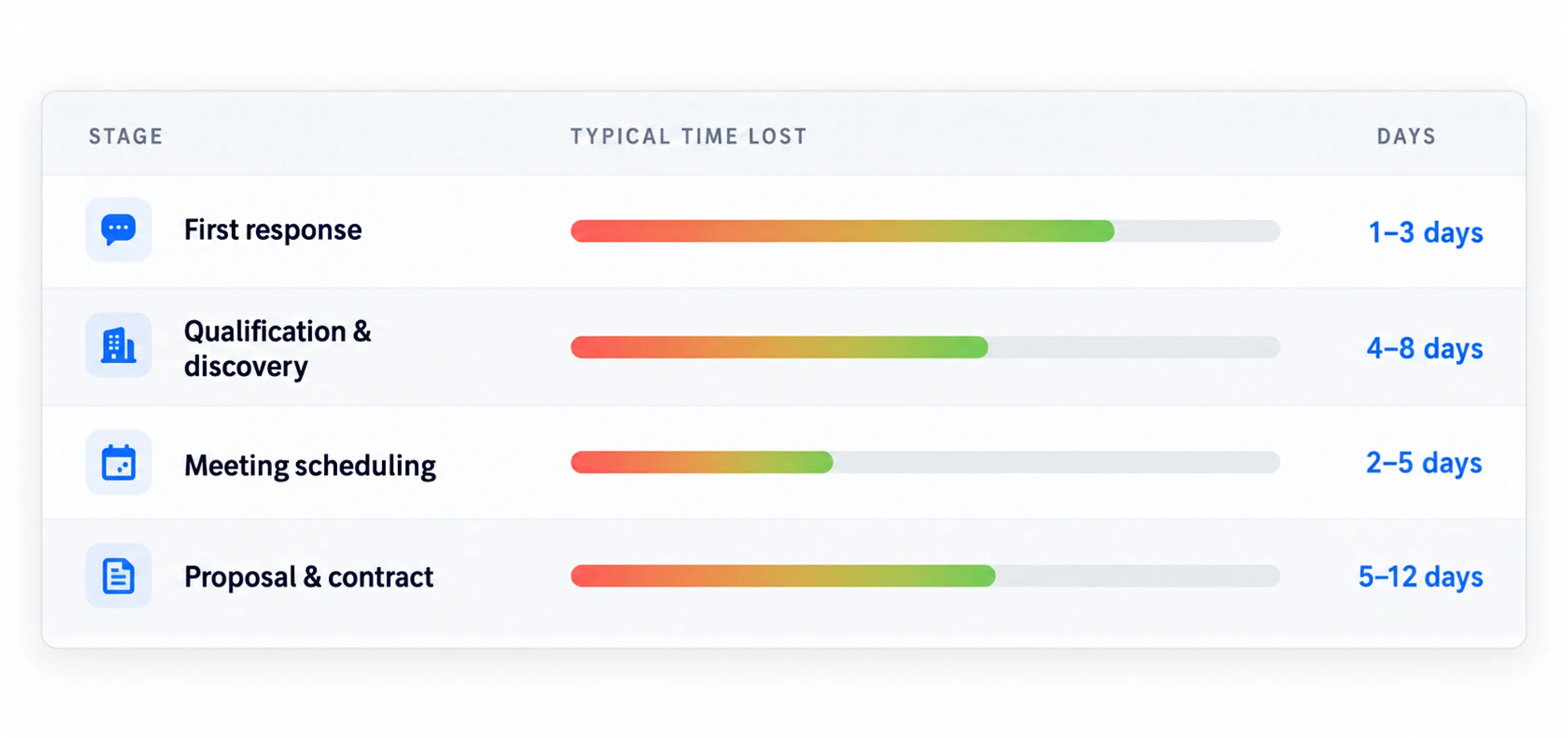
Before comparing tools, it helps to see where the days actually go. Most B2B sales cycles break down into four stages and the two earliest ones are almost always where the most time quietly disappears, long before a rep ever gets blamed for a “slow deal.”
Notice that the first stage, simply responding to interest, can eat up as much time as negotiating an actual contract. That’s not a training problem or a talent problem. It’s a structural one: a lead comes in, sits in an inbox or a form queue, and waits for a human to notice it, prioritize it, and reach out. Every hour in that queue is an hour a competitor could be having the conversation instead.
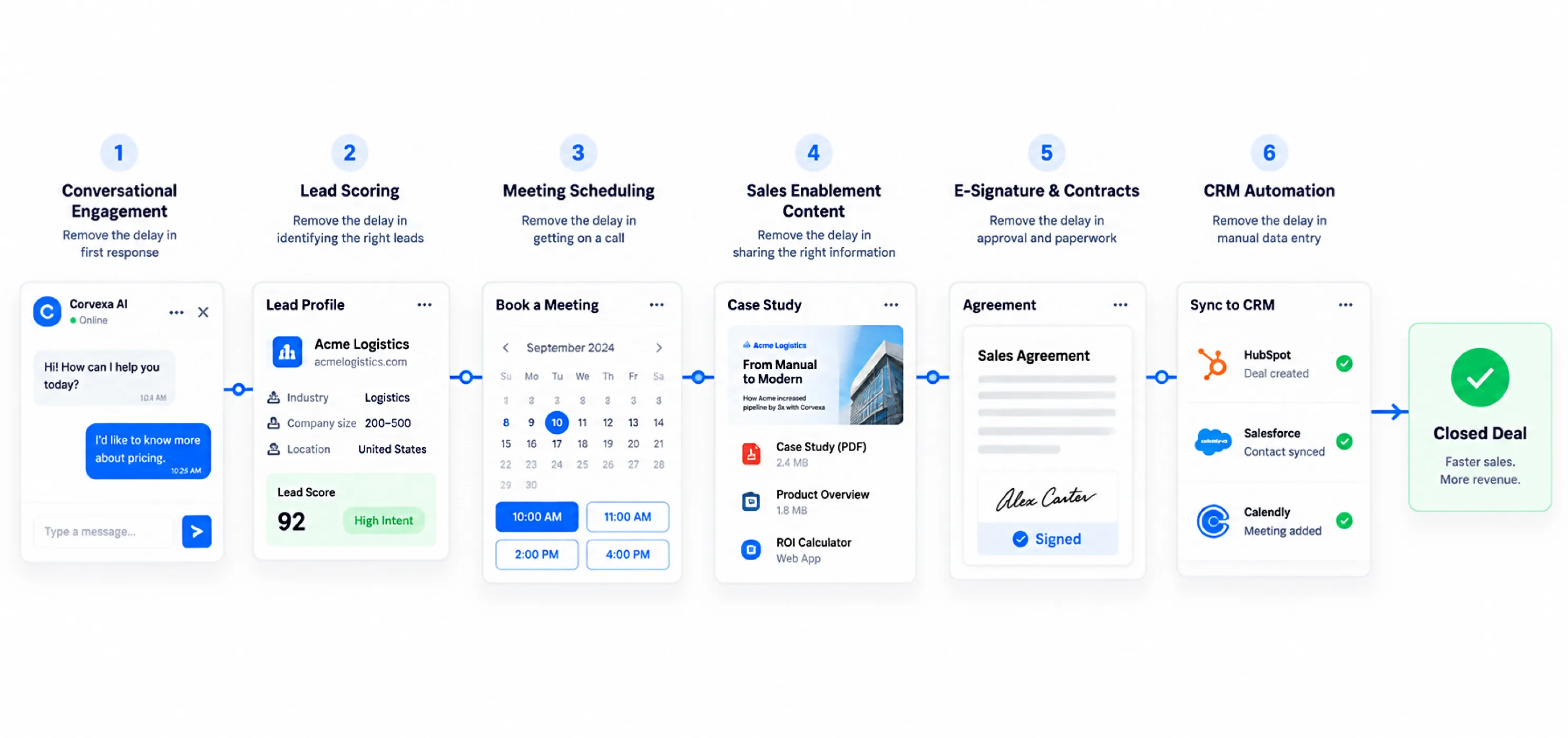
Sales acceleration isn’t a single tool you buy once. It’s a stack, with a different category solving each stage’s specific delay.
Conversational Engagement
Engages and qualifies visitors the moment they show interest on your website, collapsing the first-response gap to seconds instead of days.
Lead Scoring & Intent Data
Ranks who’s actually ready to buy, so reps spend their limited hours on the leads most likely to close, not the whole list equally.
Meeting Scheduling
Removes the back-and-forth email thread of finding a time, letting a qualified lead book a slot in the same conversation that qualified them.
Sales Enablement Content
Puts the right case study, deck, or comparison sheet in front of a rep at the right moment, instead of a five-minute search through a shared drive.
E-Signature & Contracts
Cuts the days a signed agreement used to sit in a printer, an inbox, or a legal review queue with no visibility into where it’s stuck.
Sales Intelligence & CRM Automation
Auto-logs activity, updates deal stages, and flags stalled opportunities, so momentum doesn’t quietly die from a missed follow-up.
Every category here shortens the cycle by removing a specific kind of waiting: waiting for a response, waiting for a scheduling link, waiting for the right document, waiting for a signature. Stack enough of those removals together and a sales cycle that used to take six weeks can genuinely close in three.
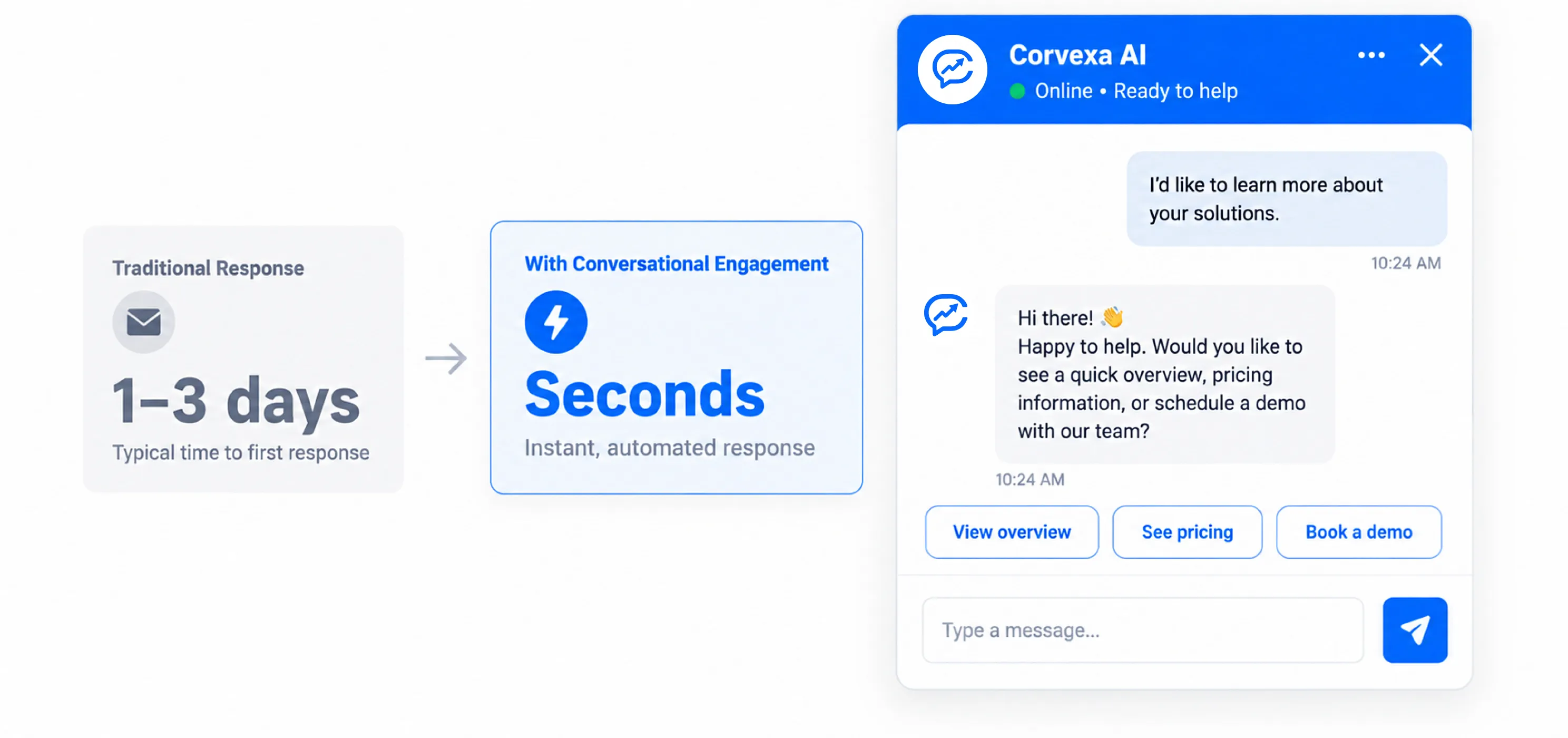
Of all six categories, conversational engagement tends to produce the fastest, most visible acceleration because it attacks the single biggest gap in the whole timeline: the time between a visitor’s first sign of interest and any response at all.
Speed to first response isn’t a nice-to-have metric. It’s one of the strongest predictors of whether a lead converts at all. A prospect who’s actively comparing vendors right now doesn’t wait around for a callback tomorrow they simply move to whichever company answered first. A conversational engagement tool collapses that response time from days to seconds, without adding a single person to the team.
It also does something the later-stage tools can’t: it starts the qualification process before a human is even involved, so by the time a rep does step in, they’re not starting cold. They’re picking up a conversation that’s already told them who the buyer is, what they care about, and how ready they are to move.
Worth remembering
You can’t accelerate a stage of the sales cycle that hasn’t started yet. Fixing the first-response gap doesn’t just save time at that one step, it pulls the start line for every stage after it forward by however many days used to sit in an inbox.
Corvexa
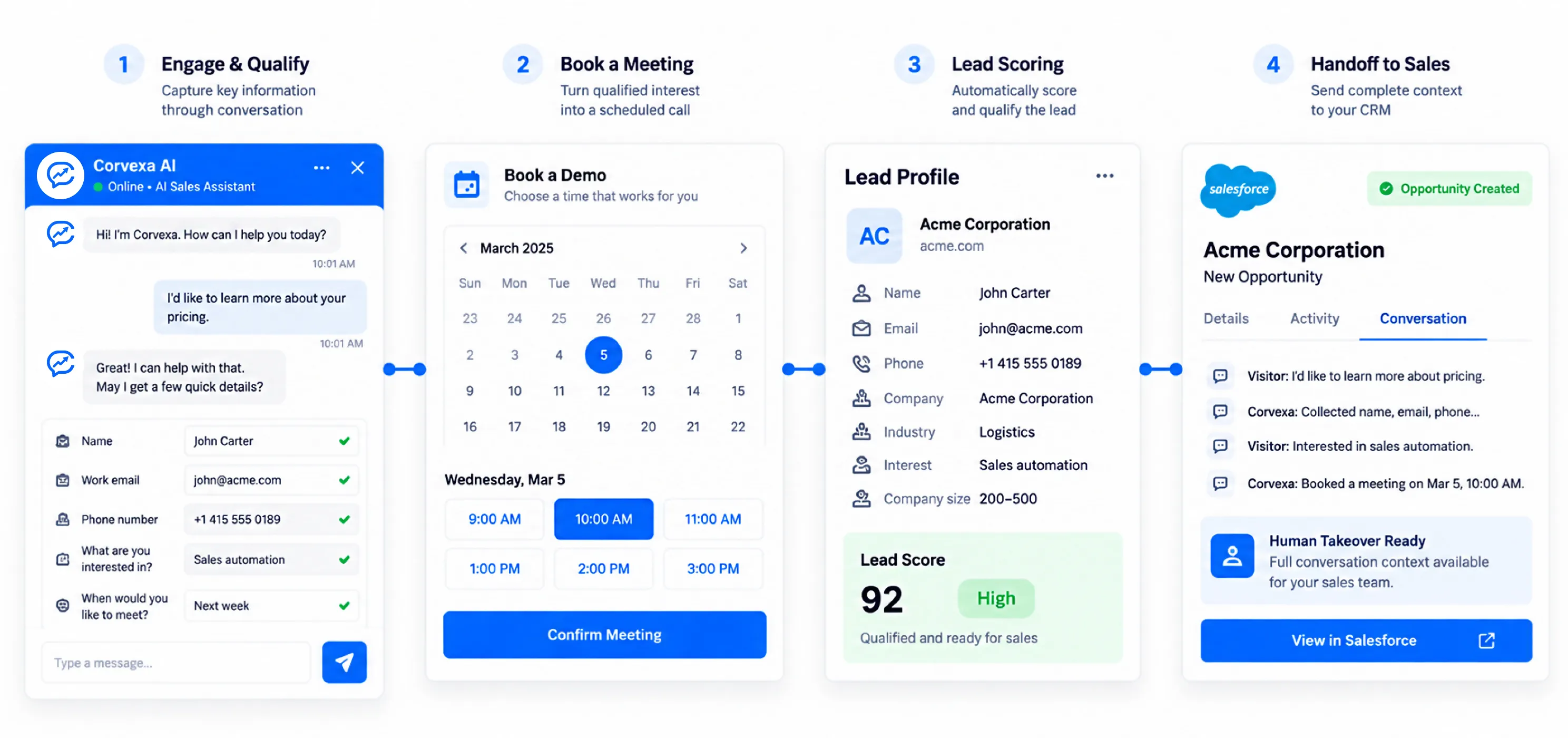
Corvexa sits at the very front of the acceleration stack the stage where most B2B sales cycles quietly lose their most time. Instead of a lead waiting in a queue, Corvexa engages a website visitor the moment their intent shows up, and does the qualification work a rep would otherwise spend the first call doing.
- Instant first response: conversations start proactively, in seconds, 24/7, closing the single biggest gap in the timeline above.
- Qualification happens in the same conversation: name, email, phone, interest, and preferred time are captured naturally, without a separate discovery call just to get basics.
- Meeting booking is built in: a qualified lead can book directly through a connected Calendly link, skipping the scheduling back-and-forth entirely.
- Every lead lands pre-scored: reps open a High, Medium, or Low tagged lead with full conversation history, instead of a cold name in an inbox.
- Human takeover keeps momentum: the instant a conversation is ready for a real sales judgment call, a rep can step in without the visitor repeating anything.
Paired with a CRM automation tool downstream to keep deals from stalling, and an e-signature tool to close out the finish line, that’s a lean, three-piece acceleration stack that touches every stage in the timeline without requiring a sales team to grow headcount to keep up with more traffic.
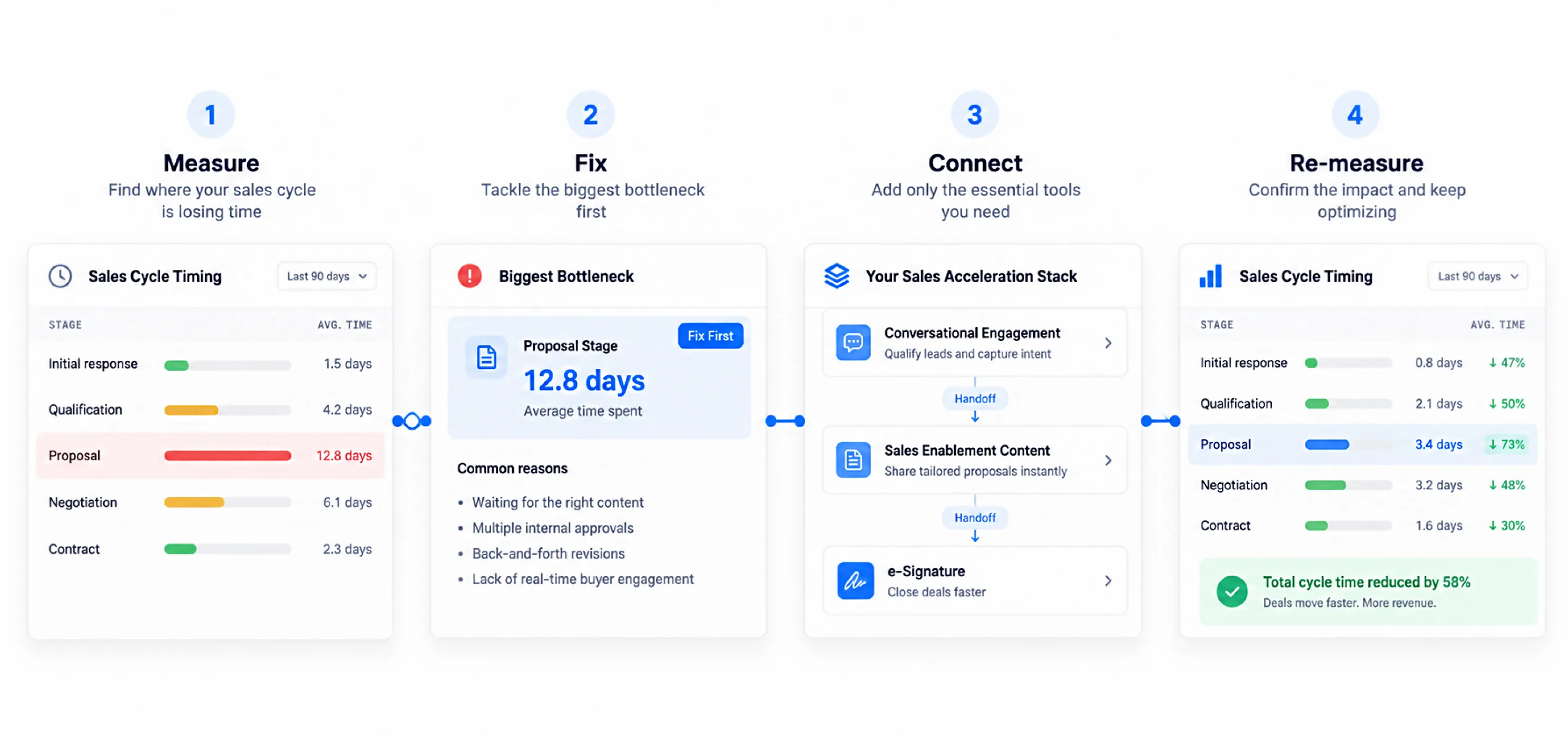
It’s tempting to buy a tool for every stage at once. Resist that. The teams that see the fastest results start with the single biggest bottleneck, prove it out, and expand from there.
Before buying anything, measure how long leads actually sit at each stage today. You can’t fix a bottleneck you haven’t located.
It’s usually first response. Start there — the return on closing a two-day gap is bigger than shaving an hour off a stage that was already fast.
A fast first-response tool that dumps leads into a CRM nobody checks doesn’t accelerate anything. Every tool needs a clear handoff to the next one.
Acceleration should show up in your numbers, not just your tool list. Re-time your stages and confirm the gap actually closed.
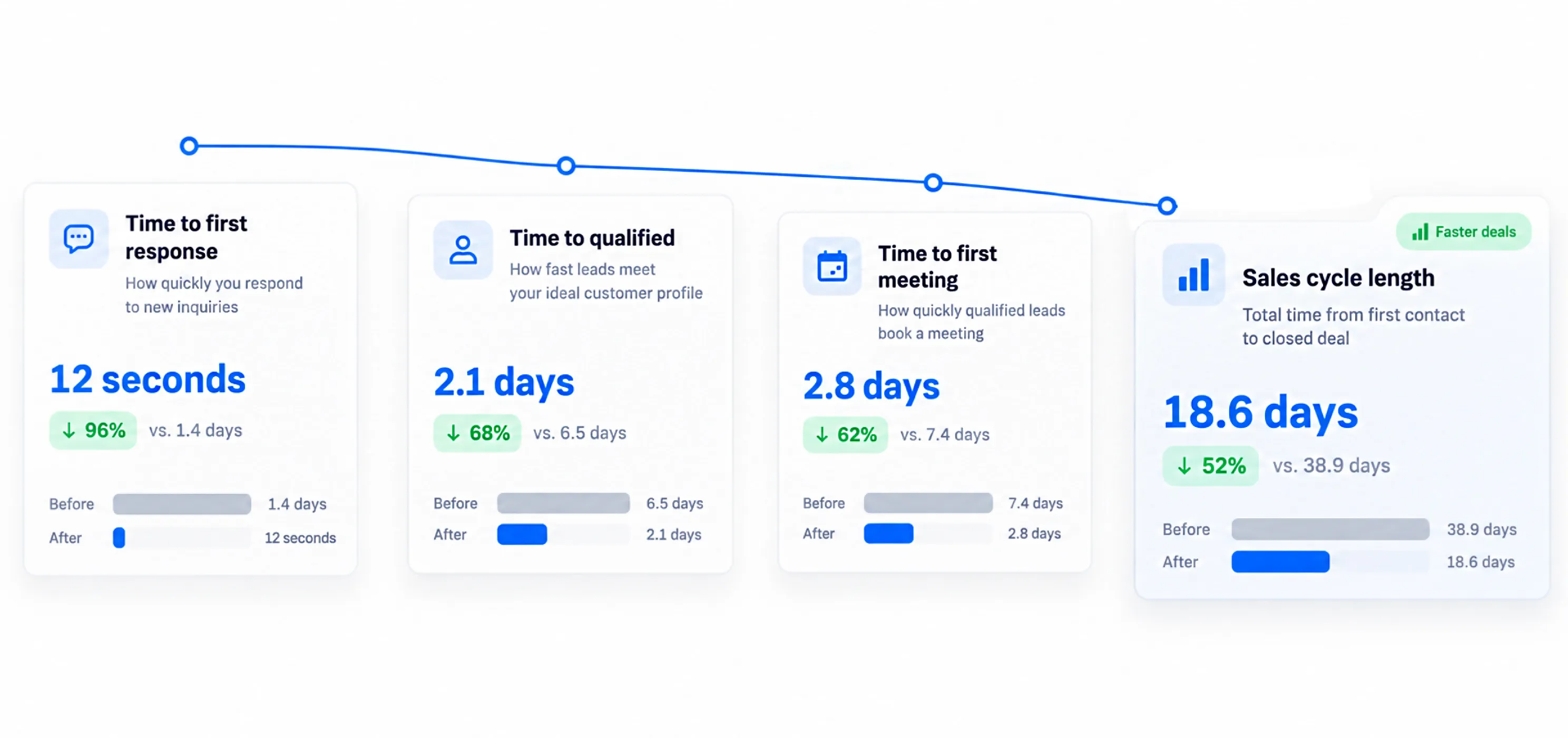
Track these four numbers before and after any acceleration tool goes live, they’ll tell you honestly whether the cycle actually got shorter.
If the first three numbers drop, the fourth one almost always follows. That’s the entire mechanism behind sales acceleration: it’s not one dramatic change; it’s several small delays removed from a chain, each one pulling the whole cycle shorter.
A shorter sales cycle isn’t about pushing buyers to decide faster than they’re comfortable with. It’s about removing every delay that has nothing to do with the buyer’s actual decision the hours a lead spends unanswered, the days a meeting takes to schedule, the week a contract sits in a review queue. Sales acceleration tools exist to strip those delays out, stage by stage, starting with the one most B2B companies overlook: the gap between a visitor showing interest and someone actually saying hello back.
 Sales Acceleration Tools: Shortening Your Sales Cycle
B2B customer acquisition gets harder as a business grows. More website visitors, more leads, more conversations, and more follow-ups can...
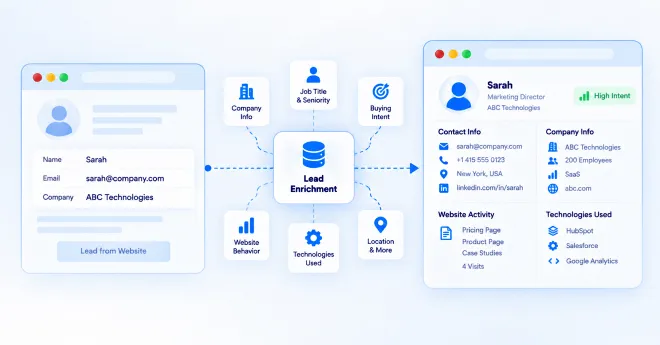
A website visitor can leave behind very little information. They may read a few pages, check your pricing, download a...
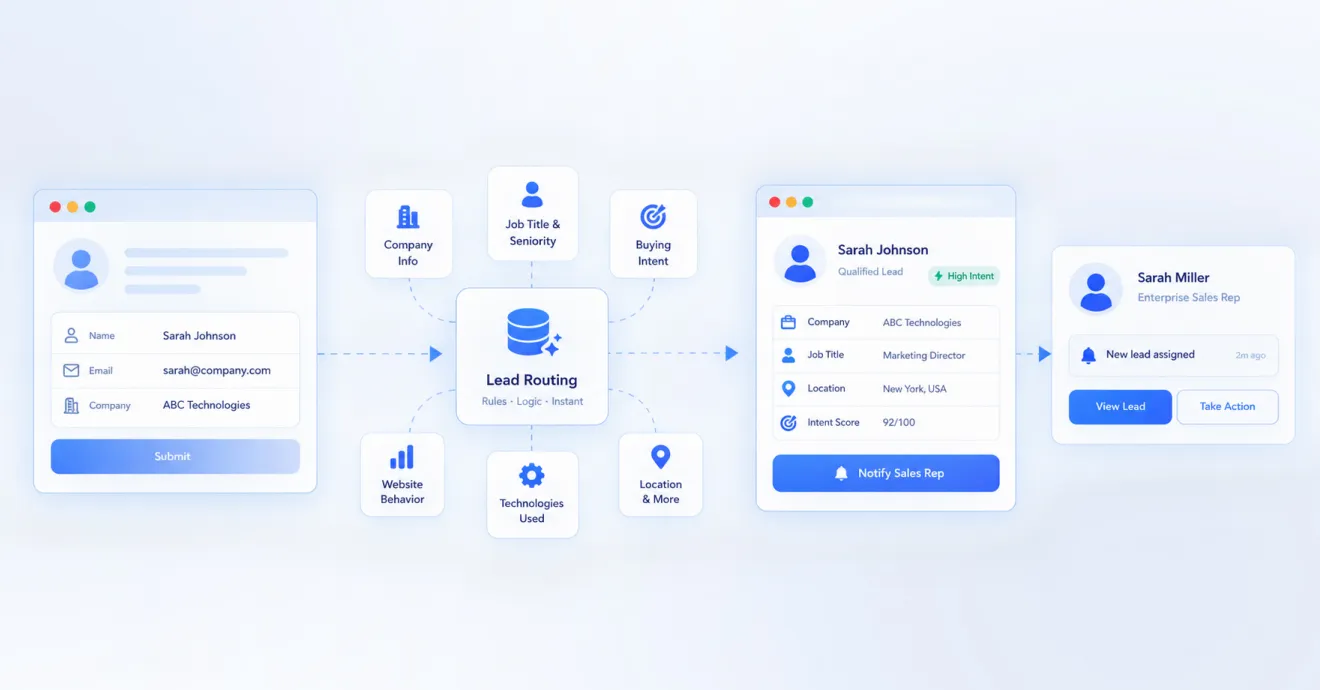
A great lead that sits in an inbox for six hours is barely better than no lead at all. Here’s...