
 12 Mins Read

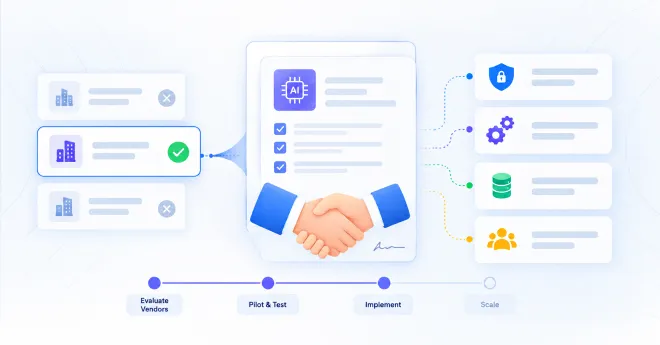
The Enterprise Guide to Hiring an AI Automation Partner (Without Wasting 6 Months)
Choosing the wrong vendor is the single biggest reason enterprise AI automation projects stall, blow past budget, or quietly die...

In this guide, we’ll break down how automated lead qualification works, what signals software should look at, how AI can qualify visitors through conversations, how lead scoring fits into the process, when a lead should be handed to sales, what mistakes to avoid, and how to build a qualification process that helps your team focus on buyers rather than chasing every inquiry.
The goal isn’t to automate qualification just because you can. The goal is to help your sales team know who deserves attention first while the visitor is still interested.
Getting a lead from your website feels like a win. Until your sales team opens the inbox and finds 40 new leads, and only three of them are actually worth calling. The problem isn’t always lead generation. Sometimes, the bigger problem is what happens after someone raises their hand.
A visitor downloads something.
Someone submits a form.
Another person asks for pricing.
Someone else spends 20 minutes reading your website.
Your system may call all four of them “leads.” But they’re clearly not the same.
That’s where automated website lead qualification software becomes useful.
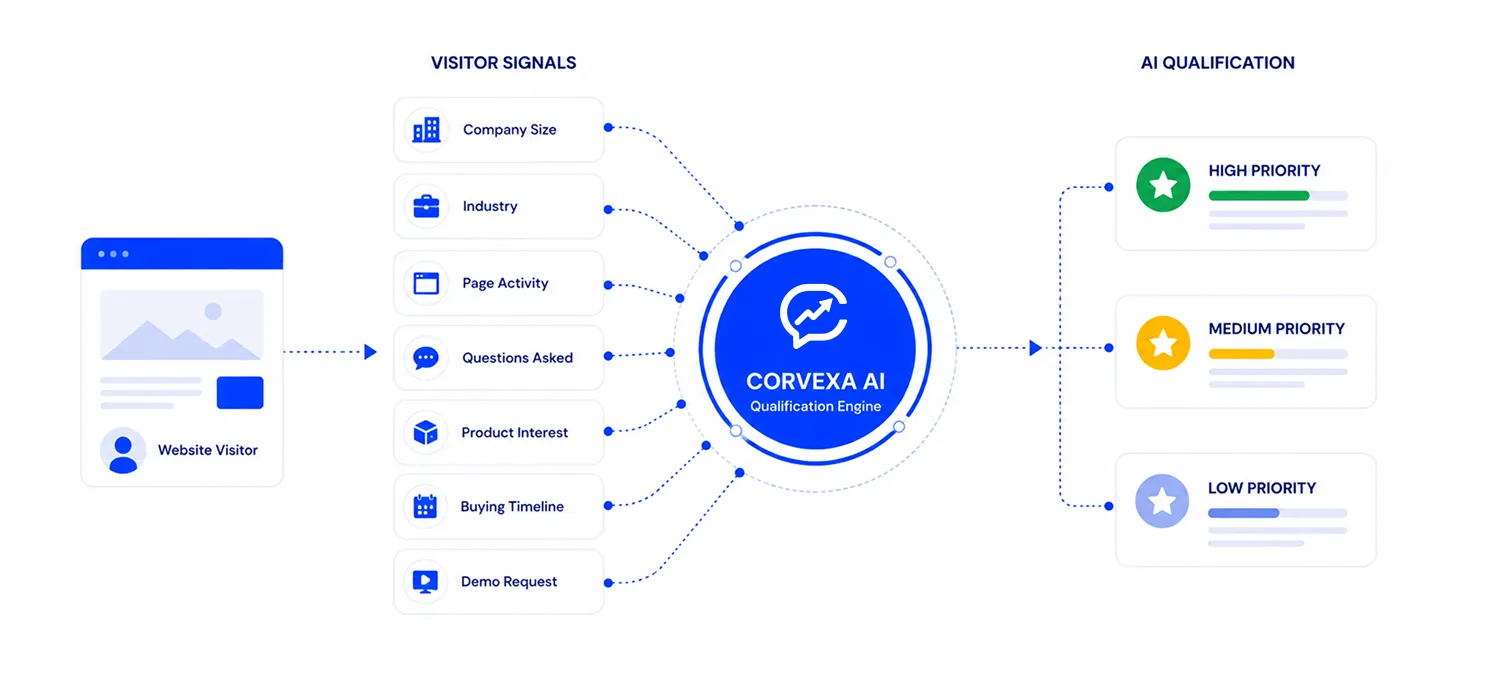
At its simplest, automated website lead qualification software helps determine whether a website visitor is likely to be a good sales opportunity. Instead of someone from sales manually reviewing every inquiry, the software can evaluate information such as:
It can then assign a qualification level or score.
| For example: |
|---|
| High intent → Sales should respond quickly Medium intent → Continue nurturing Low intent → Don’t prioritize yet This sounds simple. But the real value comes from how the system determines those categories. |

Let’s say your website generates 200 leads this month. Your sales team starts reviewing them.
Lead #1: “Can you send me your pricing?”
Lead #2: “I’m a student researching AI.”
Lead #3: “We’re a 500-person company and need a solution this quarter.”
Lead #4: “How does your product work?”
Lead #5: “I’d like to book a demo tomorrow.”
All five technically qualify as “leads.” But they clearly shouldn’t receive the same sales response.
A basic lead capture system sees: Name + email = lead
A better qualification system asks: “Is this person actually showing signs that they could become a customer?”

This distinction is worth remembering.
Answers: Who gave us their information?
Answers: Is this person worth pursuing right now?
You need both. But if you capture 1,000 leads and don’t know which 50 matter, your sales team still has a problem.
A useful system should move you
from: More leads
to: More useful leads.

Start with your ideal customer profile.
Ask: Who are we actually trying to sell to?
For example:
Now imagine two website visitors.
Visitor A
A 200-person SaaS company with an inbound sales team.
Visitor B
A freelancer looking for a free tool for a personal project.
Both might ask questions.
Both might provide an email address.
But only one matches your ideal customer.
Fit matters.
Fit alone isn’t enough. A company can be a perfect fit and still have zero intention of buying. That’s why you also need to understand intent.
Some useful intent signals include:
Compare:
“What does your platform do?”
with:
“We currently use another chatbot and want to replace it this quarter. Can I see a demo?”
The second visitor is telling you much more.
Timing can completely change lead priority.
Consider: “We’re researching options for next year.”
versus: “We need to choose a solution before the end of this month.”
Both could be good prospects. But the second one deserves faster attention.
Your qualification process should therefore look for signals around:
You don’t necessarily need to force visitors to select a timeline from a dropdown. An AI conversation can often uncover it naturally.
What does the visitor actually do on your website?
Someone who:
has shown some interest.
But someone who:
is showing much stronger engagement.
No single signal proves someone will buy. But several signals together can become meaningful.

Traditional lead qualification usually depends heavily on forms.
The visitor fills in:
Company
Job title
Budget
Timeline
Then the system scores the lead. The problem? People don’t always want to fill out a form before they’ve received any value. An AI agent can qualify through conversation instead.
For example:
Visitor “I’m looking for something to help us qualify inbound leads.”
AI “Sure. Are you currently handling qualification manually, or are you already using a chatbot?”
Visitor “We have a basic chatbot, but our sales team still has to review almost everything.”
AI “Understood. Roughly how large is your sales team?”Now the system is learning: Problem → existing solution → pain point → company context
That’s much richer than a form submission.

This is one of the biggest mistakes businesses make. They install an AI chatbot and immediately configure it to ask:
“What’s your name?”
“What’s your email?”
“What’s your company size?”
“What’s your budget?”
“What’s your phone number?”
The result?
A chatbot that feels exactly like a form. Instead, think about qualification as a conversation.
Understand first.
Qualify naturally.
Capture when there’s a reason to continue.

There isn’t one perfect list. The questions depend on your business. But most B2B qualification processes need to understand a few things.
Problem “What are you trying to improve?”
Current situation “How are you handling this today?”
Fit “What type of company are you?”
Scale “How large is your team?”
Timing “Are you looking to solve this soon or just researching?”
Next step “Would you like to speak with someone?”
The important thing is not to ask all of these every time. Only ask what is useful based on the conversation.
Once you have the relevant information, the system can assign a score. A simple model might look like this:
| Signal | Example points |
|---|---|
| Target industry | +15 |
| Target company size | +15 |
| Pricing question | +20 |
| Demo request | +30 |
| Buying this quarter | +25 |
| Strong pain point | +20 |
| Poor-fit industry | -30 |
These numbers are only an example. Your actual scoring model should reflect your sales process.
The important idea is: Different actions should carry different levels of importance.

A score can help prioritize. But don’t blindly trust a number. Imagine a visitor receives a score of 85.
Why? If your sales team can’t see the reason, the score isn’t very useful. A good qualification system should provide context.
For example: High intent
Why:
Now the salesperson understands why the lead is important.
The score tells you where to look. The conversation tells you why.

When a qualified lead reaches sales, don’t send only:
Name: Sarah
Email: [email protected]
Send useful context.
For example:
Lead: Sarah
Company: ABC Software
Company size: 250 employees
Interest:AI lead qualification
Pain point: Too many unqualified inbound leads
Timeline: This quarter
Intent: High
Conversation: Asked about HubSpot integration
Next step: Wants a demo
Now the salesperson doesn’t need to start from zero. They already know why the person reached out.

Don’t make the visitor wait. Give them a clear next step.
That could be:
For example: “Based on what you’ve shared, it sounds like our solution could be a good fit. Would you like to book a 20-minute conversation with our team?”
That’s much more useful than: “Thanks for contacting us. Someone will get back to you.”

Not everyone is ready to talk to sales. That’s okay. Someone might say:
“We’re just researching right now.”
Don’t force the demo.
Instead:
The goal is not to force conversion. It’s to move the visitor to the right next step.

Automated qualification is also valuable because it can help your sales team avoid wasting time.
For example:
A visitor is outside your target market. Or they’re looking for a service you don’t provide. Or they’re simply researching for an academic project. The system can answer their question without sending an unnecessary sales alert. This creates a healthier pipeline.

How Corvexa approaches automated website lead qualification
Corvexa is designed around website conversations that help businesses identify buying intent rather than simply collect contact information.
You can configure the agent around your own business and ideal customer profile.
Teach it your business
Corvexa can use selected website pages, products, pricing and FAQs as knowledge. You can also add information to the Knowledgebase and upload PDFs.
Define your ideal customer
You can configure:
- Industries
- Company sizes
- Pain points
- Disqualifiers
- Qualification signals
Capture information during the conversation
Instead of forcing visitors through a static form, Corvexa can collect details such as:
- Name
- Phone
- Interest
- Preferred follow-up time
Recognize hot intent
You can define hot keywords such as:
“Book a demo”
When a visitor uses a defined high-intent signal, the lead can receive greater priority.
Let humans take over
Sales teams can watch conversations through the Chat Sessions inbox and take over when the conversation needs a human.
Send qualified leads where sales works
Corvexa supports integrations with HubSpot, Salesforce, Calendly and email, while also providing its own leads dashboard with lead scores and conversation history.
Your first qualification model will probably be imperfect. That’s normal. Start with what your sales team already knows. Then look at actual conversations.
Ask:
Which questions do qualified prospects ask? Add those signals.
Which leads turned into meetings? Look for common characteristics.
Which leads became customers? Find patterns.
Which leads wasted sales time? Identify disqualifiers.
Which conversations ended without a clear next step? Improve those flows.
Over time, your qualification system becomes more accurate because it’s learning from your actual buyers, not a generic B2B template.
This matters more than having an impressive dashboard. If sales sees: Lead score: 92 and thinks: “I have no idea why this is 92.” they won’t trust it.
But if they see: High-intent SaaS company, 180 employees, looking to replace current chatbot this quarter, asked about Salesforce integration and requested a demo.
That’s actionable.
Your sales team can immediately understand the opportunity. Automation should reduce uncertainty, not create another layer of it.
The goal isn’t necessarily to maximize the number of qualified leads. The goal is to maximize the number of good opportunities your sales team can act on.
If automation changes your pipeline
from: 500 leads → 100 qualified → 20 opportunities
to: 300 leads → 120 qualified → 35 opportunities
you may actually have a better system even though you generated fewer total leads.
Why? Because the noise decreased. And the useful conversations increased.
Website visitors constantly give you signals, the pages they visit, questions they ask, and problems they describe. Traditional forms capture only a fraction of this. An automated website lead qualification system captures the full context, understands buyer intent, and brings in the right salesperson while interest is still high.
The shift is simple: From “Fill out this form” → “Tell us what you’re trying to solve.”
Corvexa helps B2B businesses move beyond basic lead capture by combining AI conversations, qualification, lead scoring and sales handoff.
Your visitors can ask questions, get useful answers, share their requirements and move toward a meeting while your sales team gets the context they need to prioritize the right opportunities.

 Mastering Automated Website Lead Qualification Software

Choosing the wrong vendor is the single biggest reason enterprise AI automation projects stall, blow past budget, or quietly die...
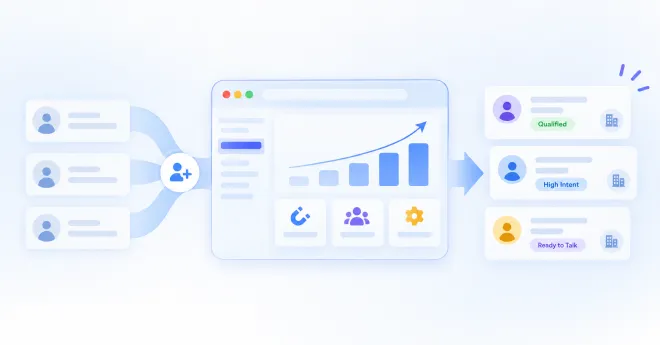
B2B customer acquisition gets harder as a business grows. More website visitors, more leads, more conversations, and more follow-ups can...
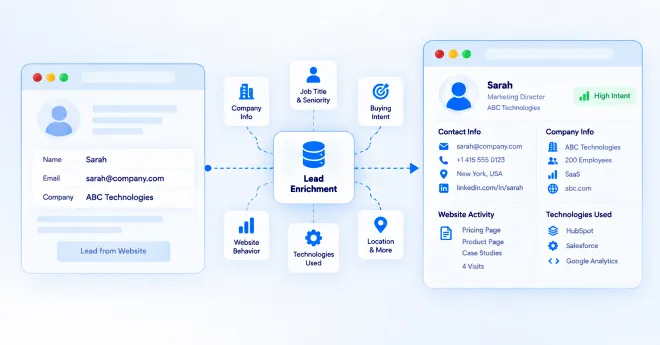
A website visitor can leave behind very little information. They may read a few pages, check your pricing, download a...