
 10 Mins Read

The Enterprise Guide to Hiring an AI Automation Partner (Without Wasting 6 Months)
Choosing the wrong vendor is the single biggest reason enterprise AI automation projects stall, blow past budget, or quietly die...

A simple, friendly guide to why automated lead scoring software is taking over and every big trend behind it, explained in plain words. A spreadsheet can only tell you where a lead was last Monday. It can’t tell you where they are right now, and “right now” is exactly when your sales team needs to know.
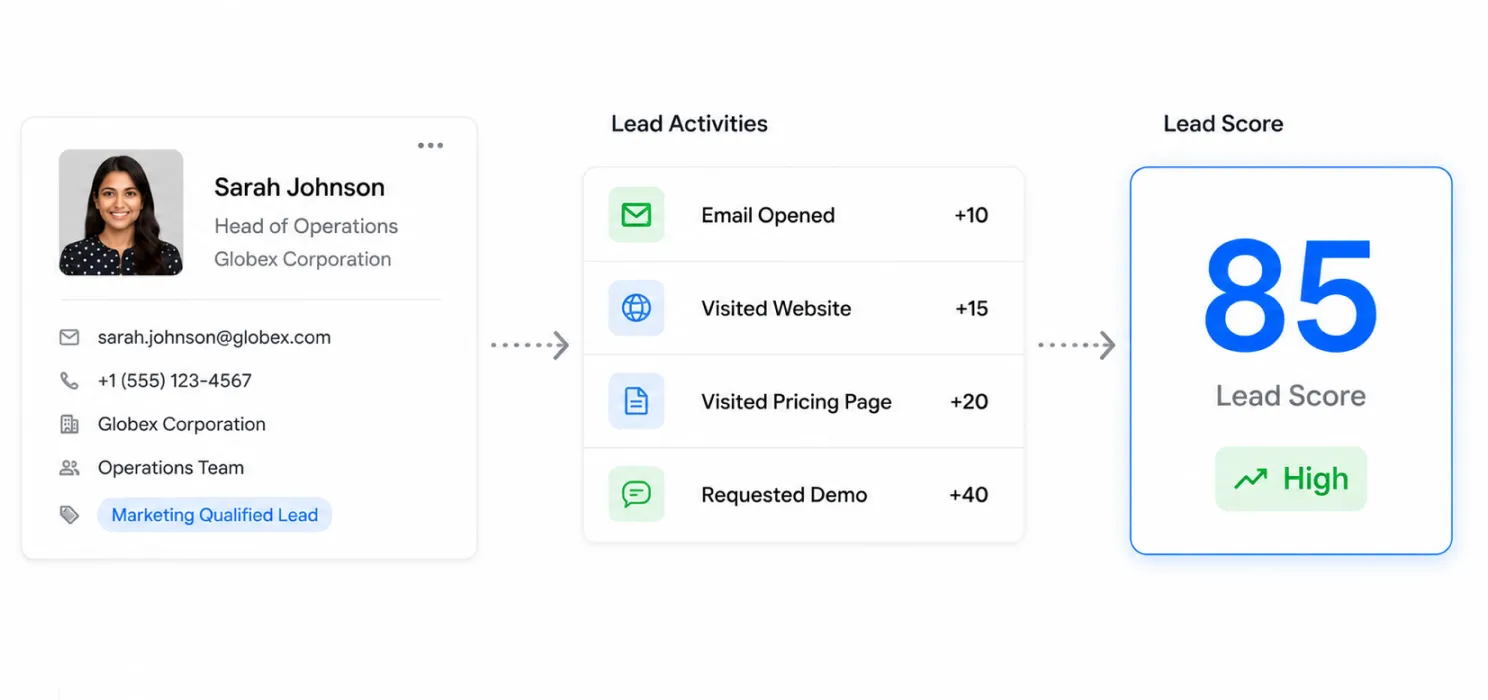
Imagine you run a small shop, and every day, ten people walk in. Some are just browsing. Some are ready to buy right now. If you’re smart, you’d want to walk straight up to the ones ready to buy, and let the browsers look around on their own for a bit.
That’s really all “lead scoring” is. A company gets a big list of possible customers called “leads,” and it needs a way to tell which ones are actually close to buying, and which ones are just curious. So it gives each lead a “score,” kind of like a grade. A high score means “this person looks ready.” A low score means “this person is still just browsing.”
For a long time, people did this scoring by hand. Someone in the sales or marketing team would sit down, look at a big spreadsheet, and decide: “This lead opened three emails, so I’ll give them 10 points. This one visited the pricing page, so 20 points.” Add it all up, and you get a score. That’s manual scoring.

Because it simply can’t keep up anymore. Here’s the easy way to picture it. Ten years ago, a person might have three or four ways to tell if a lead was interested: did they open an email, did they visit the website, did they ask a question? A human could track that by hand without too much trouble.
Today, a single person might interact with a company in twenty different ways before they ever talk to a salesperson. They visit the website. They read a blog post. They watch a video. They chat with a bot. They click an ad. They open five emails but ignore two. They check the pricing page at midnight. All of that is useful information, but there’s simply too much of it for one person to track, write down, and turn into a fair score every single day.
On top of that, spreadsheets go stale fast. Someone builds a scoring system this year, and it feels fine, but customer habits change, new channels show up, and nobody goes back to update the old rules. So the score keeps being calculated using rules that don’t really match reality anymore. It’s a bit like using an old paper map after all the roads have changed; you’ll still get somewhere, just probably not where you meant to go.
Note: This isn’t about people doing a bad job. A spreadsheet works perfectly fine for a small business with a handful of leads a week. The trouble starts once a company grows and the number of leads — and the number of ways they interact- grows faster than any one person can watch.

Instead of a person adding up points by hand, a piece of software does it for you, automatically, all the time, in the background. It looks at everything a lead does every click, every visit, every email and turns that into a score, updated instantly.
But there’s something even more clever going on. Automated tools don’t just copy the old point system into a computer. Many of them actually learn. They look back at hundreds or thousands of past leads and notice: “Leads who did these five things usually ended up buying. Leads who did these other three things usually didn’t.” Then it uses that pattern to score new leads based on what has actually worked before, not just someone’s best guess.
And because it’s software, it never gets tired, never forgets to update the sheet, and never plays favorites. Every lead gets scored the same fair way, day or night, weekday or weekend.

Here are the main trends shaping automated lead scoring today, explained in the simplest way possible.
The biggest shift is speed. Old-style scoring got updated once a week, maybe once a month. New tools update the score the second something happens like the moment a lead visits the pricing page twice in one hour.
Newer tools look at what actually led to real sales in the past, and build the scoring rules from that evidence instead of a person just guessing which actions matter most.
Many B2B sales involve several people from the same company a manager, a director, a finance person. New tools now score the whole account together, so a team gets the full picture, not just one person’s activity.
Tools now also look at hints from outside your own website like someone researching a topic across the internet, or a company posting a job that hints they’re about to buy new software. This is often called “intent data.”
It’s not only about spotting good leads. Smart tools also lower a score when someone shows signs of not being a fit, like using a personal email address or unsubscribing from every email. This saves sales teams from chasing dead ends.
You used to need a data expert to build a scoring model. Now, many tools let anyone on the marketing team set things up with simple menus and toggles, no coding needed at all.
Instead of being a separate app, scoring now lives right inside the CRM and inbox tools sales teams already use, so a rep sees the score right next to the lead’s name, with no extra clicks.
| What we’re comparing | Manual (old way) | Automated (new way) |
|---|---|---|
| How often it updates | Weekly or monthly | All the time |
| How many clues it uses | 4 to 8, hand-picked | 30 to 50+, weighed by real results |
| Is it fair and the same for everyone | Can change by opinion | Same rules for every lead |
| How fast a hot lead gets noticed | Hours to days | Within minutes |
| Does it improve on its own | Only if someone rebuilds it | Keeps learning from new results |
“We weren’t bad at scoring leads. We were just trying to do a same-minute job using a once-a-week tool.”~ a line almost every sales team says once they finally switch

Picture a small software company with about 40 people. Every Monday morning, someone on the sales team sat down and re-sorted a shared spreadsheet of leads by hand. If a lead went quiet on a Friday afternoon, nobody looked at them again until the next Monday, by which time plenty of them had already talked to a competitor, or simply lost interest.
Once they connected an automated scoring tool straight into their CRM, everything changed. The moment a lead did something interesting, the score updated on the spot, and the hottest leads were sent straight to the right salesperson’s list. The time between “a lead shows real interest” and “a salesperson actually calls them” dropped from about three days down to under two hours. Reps also said they spent far less time wondering who to call next; the tool had already sorted that out for them.
Note: Going automated doesn’t mean human judgment disappears; it just moves. A salesperson still uses their own judgment on tricky, unusual accounts a tool might not fully understand. And none of this works well if the underlying data is messy: duplicate contacts, old email addresses, and empty fields will quietly confuse even the smartest tool. Clean data is still the boring but important job nobody wants to skip.

Not every automated lead scoring tool works the same way, so it helps to know what actually matters before picking one. Here are the simplest things worth checking.
Does it connect easily to what you already use? A tool that plugs directly into your CRM and email is far more useful than one that lives on its own, disconnected from where your team actually works every day.
Can you see why a lead got its score? A tool that just shows a number without any explanation is hard to trust. Look for one that shows the top few reasons behind each score, so your team can understand it at a glance.
Does it learn and adjust over time? The best tools keep improving as they see more results, instead of staying frozen with the same rules forever. Ask whether the scoring model retrains itself, and how often.
Is it easy enough for your team to actually use? A powerful tool that nobody understands or bothers to open is worse than a simple one everyone actually checks every day. Simplicity usually wins in the long run.

Manual lead scoring isn’t going away because it was ever a bad idea. It’s going away because the way people research and buy things moved faster than any single person can track with a shared spreadsheet and a free afternoon. Automated lead scoring software is quickly becoming the normal, expected way to do this, not a fancy extra, just the basic standard.
If your team is still ranking leads by hand this week, that’s usually the clearest sign it might be time for a change.
| Next step: See how a live, always-on score changes your pipeline review before your next Monday spreadsheet. |
Will this replace my sales team?
No. Think of it like a helpful assistant, not a replacement. The tool just points to who to call first. A real person still does the actual talking, the actual selling, and the actual relationship-building. The tool simply saves them from guessing who to talk to.
Is this only for huge companies?
Not anymore. It used to be that only large companies with big budgets and data teams could afford this kind of setup. Today, plenty of simple, affordable tools exist that a small team can turn on in an afternoon, with no technical background needed at all.
What if the score gets something wrong?
It will, sometimes no tool is perfect. That’s exactly why it’s called a “score” and not a final decision. It’s meant to guide attention, not replace a person’s common sense. If a rep sees a lead scored low but knows something the tool doesn’t, they should absolutely still follow their own judgment.
How do I know if I actually need this?
A simple test: if your team is spending more than an hour or two a week manually sorting or arguing about which leads to call first, that’s usually a clear sign a tool would save real time and catch leads that are quietly slipping through the cracks.

 The Death of Manual Scoring: Automated Lead Scoring Trends

Choosing the wrong vendor is the single biggest reason enterprise AI automation projects stall, blow past budget, or quietly die...
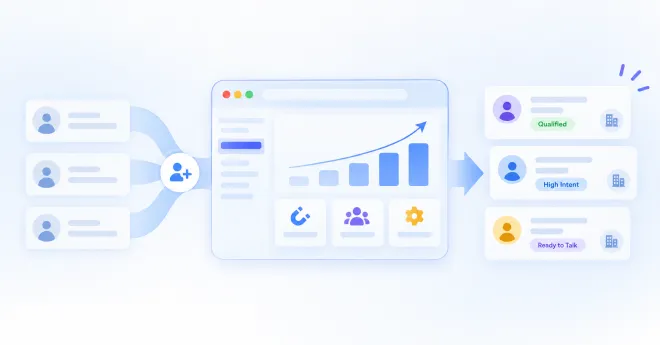
B2B customer acquisition gets harder as a business grows. More website visitors, more leads, more conversations, and more follow-ups can...
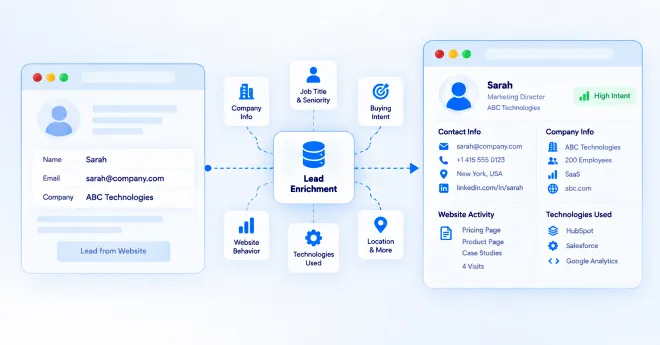
A website visitor can leave behind very little information. They may read a few pages, check your pricing, download a...