
 10 Mins Read
AI Chatbot vs Lead Capture Chatbot: What’s the Difference for B2B Sales?
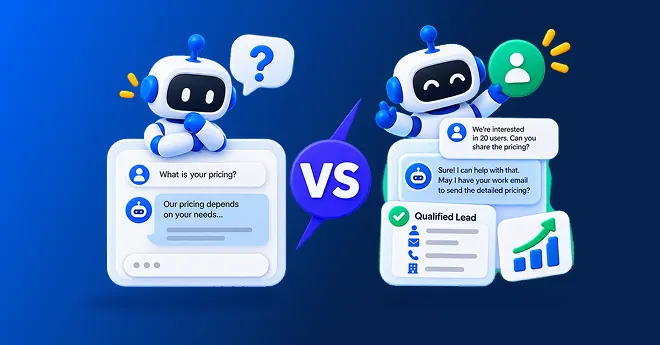
Quick summary Both live in the same chat bubble, but they do very different jobs. An AI chatbot answers questions....

| Quick summary A long lead list is not a useful lead list. AI lead scoring rates every website visitor by how well they fit and how ready they are to buy, so your team calls the right people first. This guide explains how it works, how it differs from rule-based scoring, and how to set it up and check it. |
Two leads arrive on the same morning. Both are marketing managers. Both work at companies your size. Both gave you a work email.
The first spent four minutes asking about pricing for 25 users and wants to start next month. The second downloaded a guide and asked what you do.
In a list sorted by date, they look the same. Your rep might call the second one first. AI lead scoring exists to stop that. Let’s look at how it works and how to use it well.
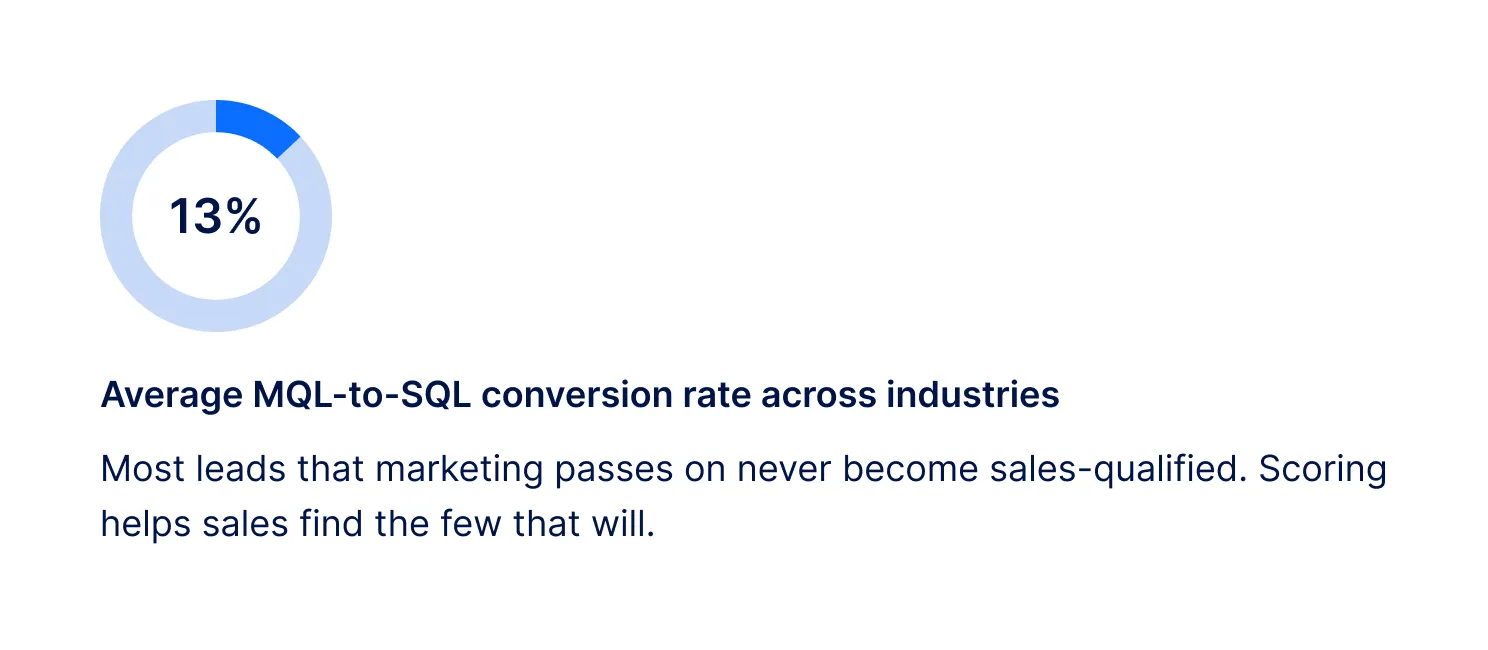
Because most leads are not ready to buy, and treating them equally wastes your best hours. One benchmark roundup fromLandbase reports an average MQL-to-SQL conversion rate of just 13% across industries. That means about 87% of marketing-qualified leads fail to meet sales criteria for active pursuit.
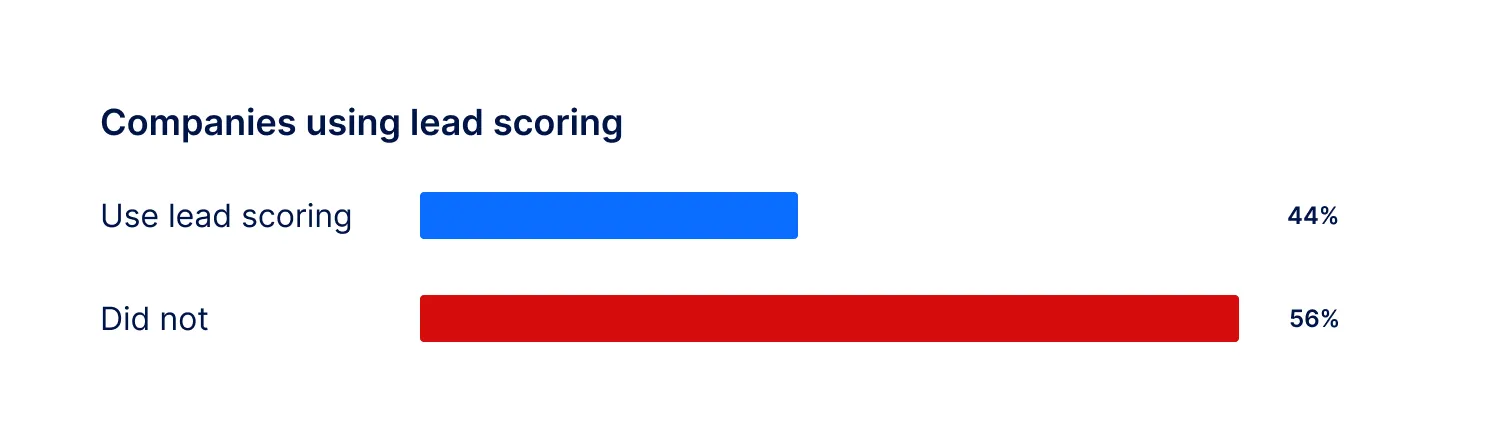
The same roundup reports that only 44% of companies use lead scoring, which leaves more than half without a systematic way to spot their best prospects.
Speed makes scoring matter even more
Harvard Business Review analyzed 1.25 million leads and found that firms who contacted a lead within an hour werenearly seven times as likely to qualify it as those who waited one hour longer. You cannot reply to everyone within the hour. But you can reply to your High scores.
| Did you know? Behavioral scoring is often credited with lifting MQL-to-SQL conversion by up to 40%. ButData-Mania adds an important caveat: scoring only sorts the people you already attract. If your ideal customer definition is loose, a scoring model will confidently rank the wrong people. Define your ideal customer first, then score. |
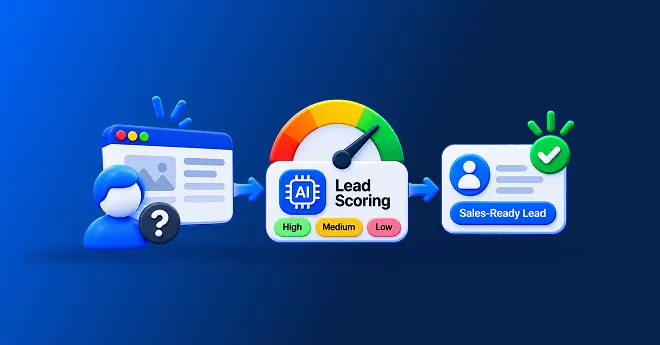
AI lead scoring is the use of AI to rate how likely each lead is to buy, based on how well they fit your ideal customer and how strong their buying signals are.
The result is usually a simple label or number, such as High, Medium, or Low, so a rep can see at a glance who to contact first. You may also see it called AI sales lead scoring or automated lead scoring. The goal is the same: rank people by readiness, without a person reading every enquiry.
Traditional scoring happens after someone fills in a form. Website lead scoring happens while the visitor is still on your site. A chatbot reads their questions, asks a few smart follow-ups and scores them in real time, so your team can act while interest is warm.
Automated lead scoring comes in two main forms. Both have a place. The difference is how they read a visitor.
| What matters | Rule-based scoring | AI lead scoring |
| How it works | Fixed points for set actions, like a job title or a page view | Reads the meaning of what a visitor says, plus behavior and fit |
| Understands natural language | No | Yes |
| Works in real time | Often after the fact | Yes, during the conversation |
| Adapts to new phrasing | Only if someone updates the rules | Handles new wording more easily |
| Easy to explain | Yes, every point is visible | Needs clear reasons to build trust |
| Depends on a clear ideal customer | Yes | Yes |
| Tip Whatever you choose, insist on being able to see why a lead scored the way it did. A score nobody can explain is a score reps will quietly ignore. |
Good scoring blends four kinds of signals. Think of them as a simple recipe.
A single number hides an important idea. Every lead answers two questions. Do they fit us, and are they ready? Here is how the four combinations usually play out.

This is why scoring on intent alone can mislead. A very keen visitor from the wrong kind of company still takes up a rep’s day.
Here is the path one visitor takes.
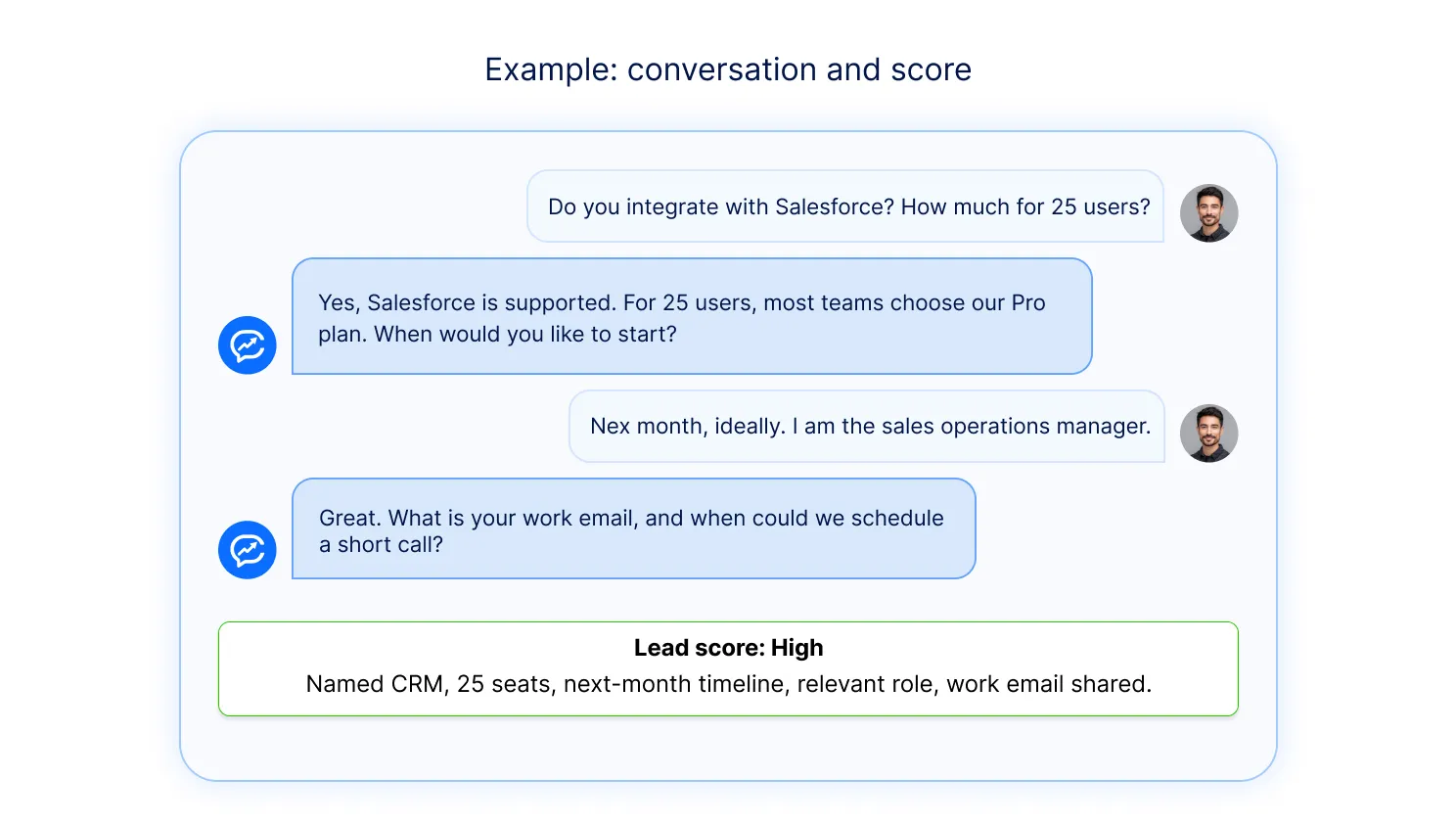
Notice that the score has reasons behind it. Your rep can see them and start the call with them.
A score only helps if it changes what happens next. Here is a simple playbook.
In Corvexa, each lead arrives in theleads dashboard with a High, Medium, or Low score, contact details, the page they came from, and the full chat. High-priority leads trigger instant email alerts, and leads move through Open, 1st Follow-up, 2nd Follow-up, and Closed.
Before you switch anything on, get these basics right. Use this checklist.
Corvexa’slead qualification profile is where you set most of this: industries, company sizes, budget signals, pain points and disqualifiers, plus hot keywords like “book a demo”. See thefeatures page for more.
Not every tool scores well. These questions cut through the marketing.
A score is a prediction. Test it against reality.
Track four numbers each month.
Conversion by score band shows whether High really means ready. Sales acceptance rate shows how many leads your team agrees are worth pursuing. Time to first contact for High leads shows how fast you act. Meetings booked from each band show real movement.
See ourcase studies for real B2B examples, and remember results vary and are not guaranteed. Lead scoring is part of Corvexa’s Pro plan and above, with plans listed on thepricing page.

Every lead list has a few people who are ready and many who are not. AI lead scoring helps you tell them apart while the conversation is still happening, so your team spends its time where it counts.
Define your ideal customer first. Score on fit and intent together, keep the reasons visible, and act quickly on High leads. Then compare scores with real outcomes every month and improve. That is how good AI lead scoring software earns its place.

FAQ
Learn how AI lead scoring works, how it differs from rule-based scoring, and how to identify, prioritize, and convert sales-ready website visitors.
AI lead scoring uses AI to rate how likely each lead is to buy, based on how well they fit your ideal customer and how strong their buying signals are, so your team knows who to contact first.
It scores visitors as they interact with your site or chatbot, using signals such as the questions they ask, the pages they view, the details they share and how well they match your ideal customer. The score updates in real time instead of after a form is submitted.
Rule-based scoring adds fixed points for set actions, such as a job title or a page view. AI sales lead scoring can also read the meaning of what a visitor writes, so it picks up intent that fixed rules miss. Both work best when built on a clear definition of a good lead.
Look for real-time scoring, rules you can see and control, fit and intent signals, negative scoring for poor-fit leads, alerts for hot leads, CRM sync and reporting that shows how each score band converts.
Not always. Rule-guided scoring built on a clear ideal customer profile can work well from day one. Models that learn from past deals need more history, so many small teams start with rules and refine them from real outcomes.
Compare score bands with real outcomes. High leads should book more meetings and close more often than Medium and Low leads. If they do not, adjust your rules and review them regularly.
Yes. Corvexa scores each lead High, Medium or Low based on intent and the quality of the visitor’s responses, using the rules you set in your lead qualification profile. Lead scoring is part of the Pro plan and above.
 AI Lead Scoring for Websites: How to Identify Sales-Ready Visitors Automatically

Quick summary Both live in the same chat bubble, but they do very different jobs. An AI chatbot answers questions....

Quick summary Should you put a person or an AI behind your website chat? This guide compares AI chatbot vs....
Quick summary Not all AI lead capture software does the same job. Many tools answer questions and stop there. This...