
 9 Mins Read
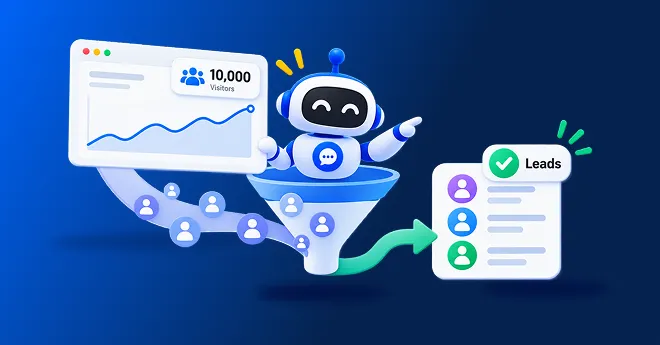
Your Website Traffic Is Not the Problem. Your Conversion Gap Is
Quick summary More website traffic feels like progress, but if only 2% to 3% of visitors ever become leads, extra...

| Quick summary Both live in the same chat bubble, but they do very different jobs. An AI chatbot answers questions. A lead capture chatbot finds buyers. This guide explains the difference in plain English, shows both in action, and helps you pick the right one for your B2B sales goals. |
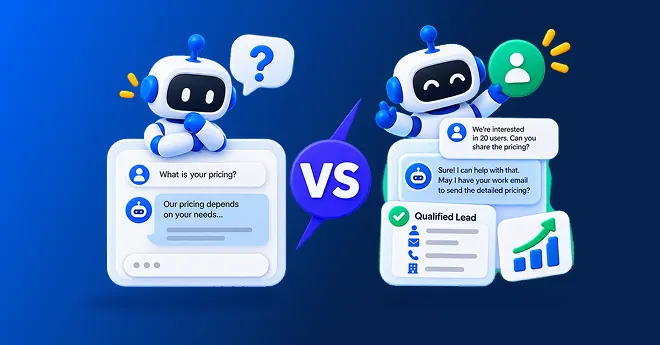
Two chat bubbles sit in the corner of two different websites. They look almost identical. Both say, “Hi, how can I help?”
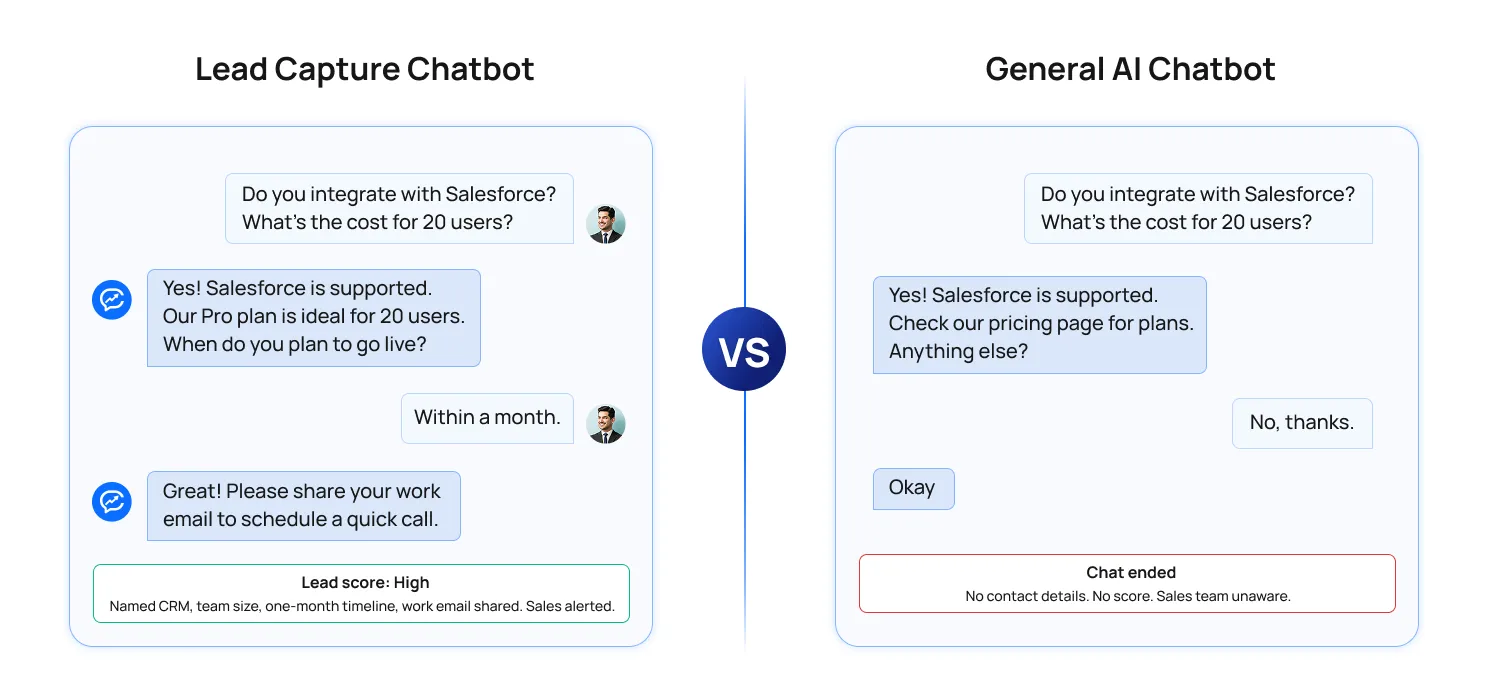
On the first site, a visitor asks about pricing for 20 users and gets a friendly paragraph. Then the chat ends. Nothing is captured, and nobody on the sales team ever hears about it.
On the second site, the same question gets an answer, a follow-up about timing, a request for a work email, and a scored lead in the sales inbox before the visitor closes the tab.
That gap is the whole story of the AI chatbot vs lead capture chatbot debate. Let’s break it down.
What is the short answer?
An AI chatbot is built to answer questions. A lead capture chatbot is built to find, qualify and capture buyers, then hand them to your sales team.
Both can use the same kind of AI underneath. What differs is the goal, and everything designed around it: the questions asked, the signals watched, the data collected and where it all goes afterwards.
A general AI chatbot is designed to respond well. It reads a question, finds the answer in its knowledge, and replies in natural language. It is usually judged by how many questions it resolves without help.
Customer support, help center questions, order status, password resets, and FAQs. Here, a fast and correct reply is the win, and a resolved ticket is the metric.
It usually does not know who is a buyer and who is not. It rarely scores a lead, and it may never ask for contact details. When a prospect asks a buying question, it treats it like any other question.
What is a lead capture chatbot?
A lead capture chatbot is designed to turn visitors into sales conversations. It answers questions too, but every reply is shaped by a second goal: understand the visitor’s intent and fit, and collect what your team needs to follow up.
It watches which page the visitor is on, reads the words they use, asks a few smart questions, and captures details like name, work email, phone, interest, and preferred follow-up time. Then it scores the lead and routes it. This is what people mean by a B2B lead qualification chatbot.
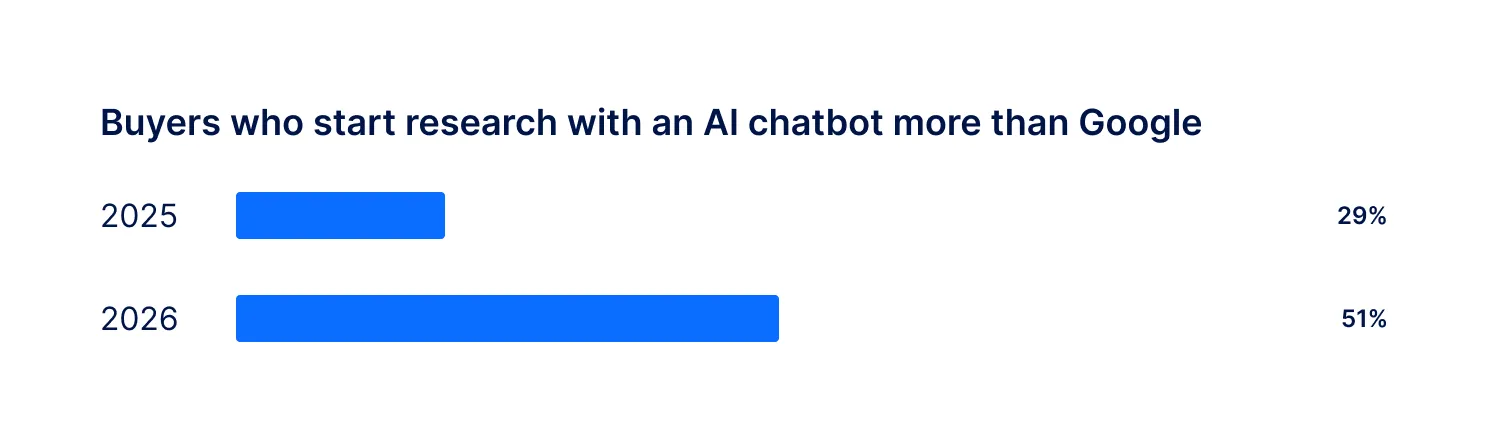
| Did you know? Buyers are already using chat to research. G2’s 2026 survey of 1,076 software buyers found that 51% now start research with an AI chatbot more often than Google, up from 29% the year before. Your website chat is meeting buyers in the middle of their decision. |
Here is the clearest way to see the difference in an AI chatbot vs lead capture chatbot comparison.
| What matters | General AI chatbot | Lead capture chatbot |
| Main goal | Resolve questions | Find and qualify buyers |
| Typical visitor | Existing customer | Prospect on a marketing page |
| Success metric | Tickets resolved | Qualified leads and meetings |
| Reads buying intent | Rarely | Yes, in real time |
| Asks qualifying questions | Not by design | Yes, woven into the chat |
| Captures contact details | Only if set up manually | Built in, inside the conversation |
| Scores the lead | No | High, Medium, or Low |
| Handoff to sales | Often just a transcript | Full record with score and context |
| Tip Ask any vendor one simple question: “What does my sales rep see after a visitor chats with your bot?” A transcript is a chatbot answer. A scored lead with contact details and next steps is a lead capture answer. |
Here is one visitor and one question, handled two ways.
Because B2B buying is slow, careful and mostly private. Gartner surveyed 632 B2B buyers and found that61% prefer a rep-free buying experience. They will chat with you before they ever talk to a person, and what that chat captures may be your only chance to follow up.
The usual alternative is a contact form, and forms leak. Data from Zuko, reported byCueFully, shows contact forms have a view-to-completion rate of only about 9%. A chat that asks one question at a time is a gentler path to the same details.
Harvard Business Review analyzed 1.25 million leads and found that firms who contacted a lead within an hour werenearly seven times as likely to qualify it as those who waited one hour longer. A lead capture chatbot creates that first touch instantly, at any hour.
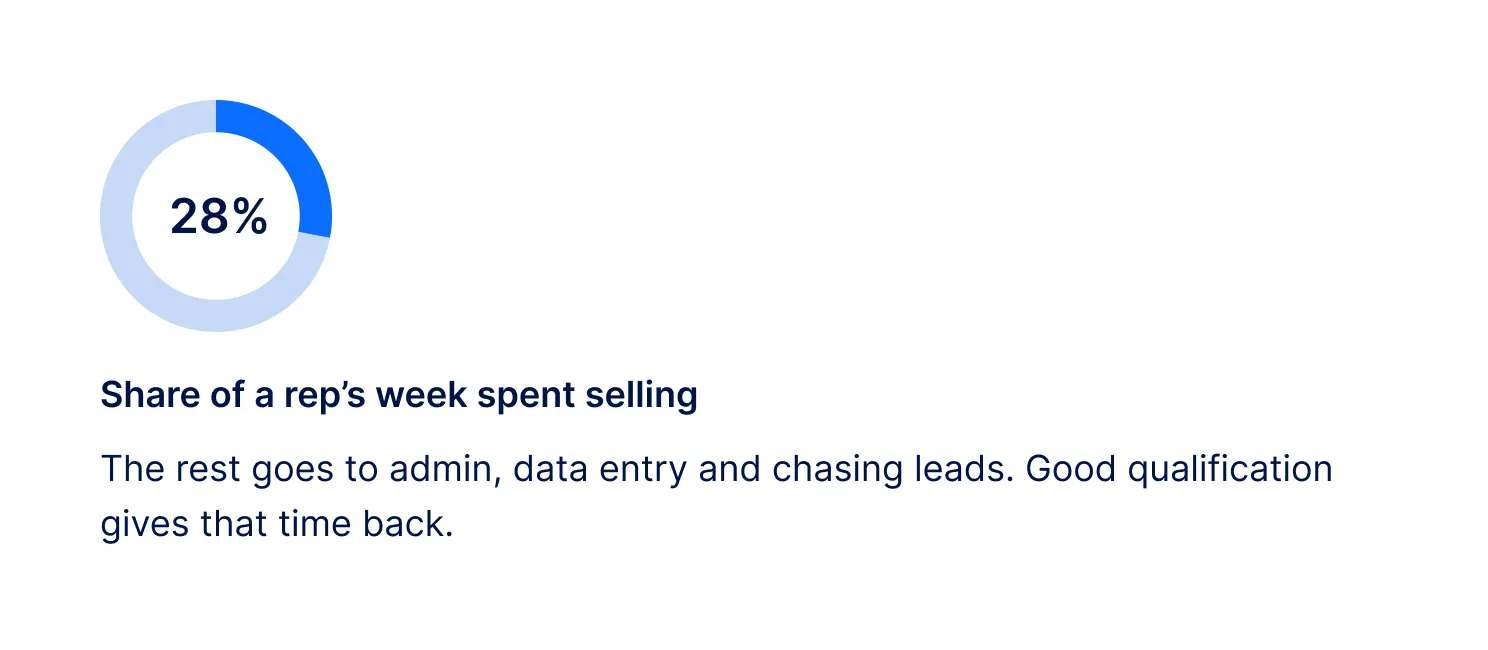
Salesforce found that sales reps spend only28% of their week actually selling. Every unscored lead steals a little of that time. Scoring tells reps where to spend it first.
Here is the path one visitor takes through a lead capture chatbot.
Hot keywords such as “book a demo” or “pricing for 50 users” skip the queue. When a visitor says one, the chatbot moves straight to capture.
If pipeline is the goal, judge sales chatbot software on whether it produces leads your team can work, not on how human it sounds. Use this checklist.
Corvexa was built around this list. See thefeatures page and theintegrations for HubSpot, Salesforce, Zoho, Calendly, and Google Calendar.
The answer depends on the job you want done first.

Some platforms try. Many are strong at one side and average at the other. A support-first tool often lacks scoring and intent detection. A lead-first tool is not a help desk.
When you compare a lead capture chatbot vs. a chatbot from different vendors, marketing pages often sound the same. These questions cut through it.
“Show me what happens when a visitor says they want a demo.”
A lead capture chatbot should move straight to collecting details. A general chatbot will often keep answering questions.
“How is a lead scored?”
Look for a clear answer about intent signals, fit, and timing. “The AI decides” is not an answer.
“What lands in my CRM?”
The best answer is a full record: contact details, score, source page, the conversation, and a suggested next step. Not a raw transcript.
“Who helps me set it up?”
Tools work best when someone helps define your buyers and rules. Corvexa starts with an onboarding call about your buyers, competitors, and qualification rules, and it is included with every plan.
Whichever tool you test, run the same test on your own pricing page. It is the fastest way to see the real difference between a lead capture chatbot vs. a chatbot built for support.
Buying a support tool for a sales problem: If your goal is meetings booked, do not judge the tool by tickets resolved.
Capturing an email and calling it qualified; A name and an email are not enough. You need intent, fit and timing to know who to call first.
Asking too many questions too soon: Help first, then ask. If a visitor says “book a demo,” go straight to capture.
Hiding that it is AI: Tell visitors upfront, and make it easy to reach a real person. Trust is easier to keep than to win back.
Never reviewing chats: Read a few conversations each week. You will find missing answers and new buying phrases to add.
Track outcomes, not chat counts.
Qualified leads show real fit.
Meetings booked show real movement.
Response time to hot leads shows how fast you act.
Cost per qualified lead shows efficiency.
Days 1 and 2: define a qualified lead: Write down your ideal customer, budget signals and disqualifiers, and list the buying phrases your best leads use.
Days 3 and 4: train and connect: Let the chatbot learn from your website, add PDFs and exact answers, and connect your CRM and calendar.
Day 5: launch and learn: Add one script tag, go live on pricing and product pages, and set alerts for High leads. Plans start at $39 a month.
In the AI chatbot vs lead capture chatbot question, neither is bad. They are built for different jobs. A general chatbot answers. A lead capture chatbot answers and also finds the buyer, scores the lead, and gives your team something ready to work.
If your goal is pipeline, choose the tool built for it. Test it on your own website, ask what your sales rep will see afterwards, and let qualified leads decide.

FAQ
Learn how AI chatbots differ from lead capture chatbots, how B2B lead qualification works, which features sales teams need, and how quickly you can launch a lead capture chatbot.
An AI chatbot is built to answer questions and resolve issues. A lead capture chatbot is built to find buyers: it detects intent, asks qualifying questions, collects contact details, scores the lead and passes it to sales with full context.
It can collect an email if you set it up to, but most general chatbots do not score leads, read buying intent or sync a full lead record to your CRM. That gap is why teams add a lead-focused tool.
For pipeline goals, usually yes. B2B sales need qualification, scoring and clean handoffs. A general chatbot is often better for support volume. Many teams use each where it fits best.
It is the process of using a chatbot to decide whether a website visitor is a good fit and ready to buy, by reading their questions and asking about needs, budget, team size and timeline, then scoring the lead.
Look for intent detection, lead scoring, hot keyword triggers, a knowledge base built from your own content, human takeover, CRM and calendar integrations, and reporting on qualified leads, not just chat counts.
Not always. If your main goal is pipeline, a lead capture chatbot may be enough. If you also handle heavy support volume, you may keep a support bot and add a lead-focused tool on your marketing pages.
Installation is one script tag. Corvexa can go live within 48 hours of your onboarding call, and plans start at $39 a month.
 AI Chatbot vs Lead Capture Chatbot: What’s the Difference for B2B Sales?

Quick summary More website traffic feels like progress, but if only 2% to 3% of visitors ever become leads, extra...
Quick summary Most home searches start online, and many on a phone. An AI chatbot for real estate websites answers...
Quick summary: People who need a lawyer often search late at night and contact the first firm that answers. This...