
 5 Mins Read

24/7 Lead Generation: How to Capture Visitors While You Sleep
It’s 11:47 PM. Someone is on your website. They’ve read your services, checked your pricing, and they’re seriously considering reaching...

A practical guide to AI lead capture for websites – why visitor traffic never actually stops at 5 pm, what it costs you when nobody’s watching, and how to set up automated lead capture that works while you sleep.

| WHAT THIS GUIDE COVERS This guide explains why website lead capture can’t run on a 9-to-5 schedule, what it actually costs a business when after-hours visitors go unanswered, and how AI-powered lead capture works around the clock. It closes with a step-by-step setup process and a look at the mistakes that most often undermine it |
A website doesn’t close at 5 pm, but most lead-response processes still do. Research compiled by Zendesk shows that 28 to 38% of support and sales inquiries arrive outside standard business hours a meaningful share of every day’s traffic that a 9-to-5 team simply isn’t there to answer.
That gap is widening, not narrowing. Salesforce’s State of Service research found that 64% of customers now expect a business to be reachable at any time, up from 48% just a few years earlier. Buyers increasingly treat round-the-clock availability as a baseline expectation, not a premium feature.

B2B buyers specifically are part of that shift. A DesignRush study of 950,000 U.S. search queries on B2B transactional pages found weekend traffic climbing 23%, with senior decision-makers CEOs, CFOs, and other executives more active on Saturdays and Sundays than the study expected, often browsing with longer sessions and higher intent than their weekday visits.
What Happens When You Miss an After-Hours Lead?
The visitor doesn’t wait. Microsoft’s Global State of Customer Service research found that 72% of customers have abandoned a purchase or cancelled a service because they couldn’t get a response when they needed one and 43% of those specific cases happened outside standard business hours.
There’s a quality cost too, not just a volume one. Companies with no after-hours coverage average a 12-point drop in customer satisfaction scores compared to peers who maintain some form of round-the-clock response, according to benchmarks from Zendesk and Gartner.

“The purpose of a business is to create and keep a customer.”
Peter Drucker, management consultant and author
A visitor who lands on a website at 11 pm on a Saturday is no less of a real buyer than one who arrives at 11 am on a Tuesday. The gap isn’t interest; it’s coverage.
An automated lead capture system runs the same sequence at 3 am as it does at 3 pm, since it doesn’t rely on a person being at a desk. The mechanics are straightforward once broken into steps.

The part that matters most is step three. Gartner research shows AI chatbots now fully contain 42 to 58% of after-hours contacts without ever needing a human to step in, meaning close to half of overnight conversations reach a useful outcome, like a booked meeting or a captured lead, before anyone on the team is even awake.


Getting from “we have a chatbot” to “we have working 24/7 lead capture” usually takes a handful of deliberate steps, not just installing a script tag.
Most platforms, including Corvexa, Chatbot.com, and Intercom, can technically run around the clock. The differences that matter for 24/7 coverage specifically are narrower than a general feature list: does the tool handle multiple time zones correctly, does it distinguish urgent from routine after-hours messages, and does it hand off cleanly to a human once the team is back online?
Installing a chatbot doesn’t automatically fix the coverage gap. A few recurring mistakes quietly cancel out the benefit.

FAQ
Yes, that’s the core advantage; once configured, it runs the same conversation flow at any hour without needing someone to be logged in or on shift.
Most modern tools install with a single script tag or platform plugin, and qualifying questions can usually be set up through a visual editor rather than code.
Not if it’s configured well. A chatbot that opens with a soft, non-intrusive prompt and only asks qualifying questions after answering the visitor’s own question tends to feel helpful rather than pushy.
Effectively instantly within a few seconds of a visitor landing or opening the chat window. Any noticeable delay undermines the main advantage over a static contact form.
Good tools can, by detecting a visitor’s local time and adjusting messaging or escalation rules accordingly, rather than assuming every visitor shares the business’s own working hours.
No, smaller teams often benefit more, since they’re least likely to have staff covering evenings or weekends, which is exactly when a meaningful share of visitors show up.
 How to Capture Leads From Your Website 24/7 With AI

It’s 11:47 PM. Someone is on your website. They’ve read your services, checked your pricing, and they’re seriously considering reaching...
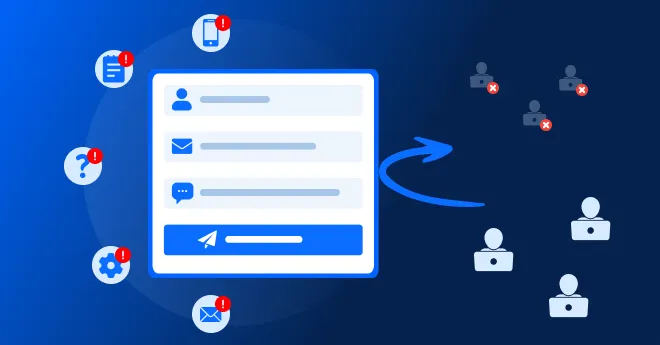
Quick summary Contact forms convert views into submissions at only around 9%, one of the lowest rates of any form...

Research consistently shows that lightning-fast follow-up drives dramatic gains: contacting a new lead within 5 minutes makes you 100× more...