

 8 Mins Read
 Best AI Chatbot for Lead Generation: What B2B Buyers Should Compare
A practical, evidence-based look at how AI chatbots for lead generation actually work, what they cost, and the specific things a B2B buyer should compare before choosing one not just a features list.
| WHAT THIS GUIDE COVERS This guide explains what an AI chatbot for lead generation actually does, why B2B teams are adopting one instead of relying on static forms, and what it costs to run. It also walks through a real qualifying conversation and closes with a straightforward comparison table you can use when evaluating vendors, including questions worth asking before you sign a contract. |
What Is an AI Chatbot for Lead Generation?
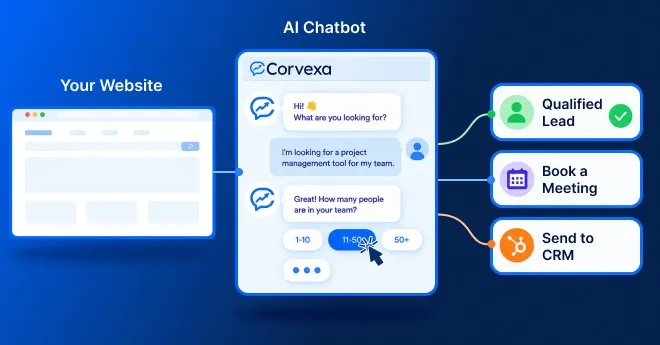
An AI chatbot for lead generation is software that engages website visitors in a live conversation, asks qualifying questions, and identifies which visitors are worth passing to sales instead of waiting for someone to fill out a static form.
Unlike a support chatbot, which mainly answers existing customers’ questions, an AI lead generation chatbot is built around a sales outcome. It asks about company size, budget range, or timeline, scores the answers, and routes qualified leads directly to a CRM, a calendar, or a sales rep directly.
Why Are B2B Teams Adopting AI Chatbots for Lead Generation?
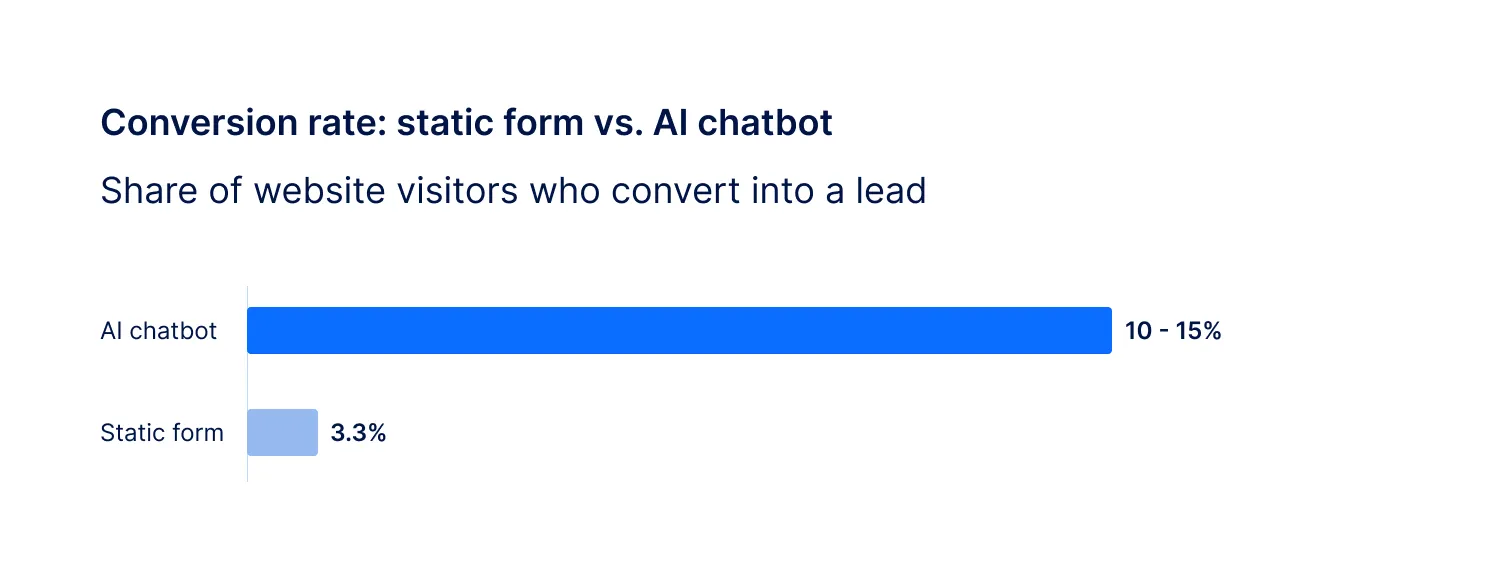
The short answer is conversion rate. According to Drift’s State of Conversational Marketing research, the average website converts visitors at around 3.3% through a static form, while AI chatbots on the same traffic typically convert at 10–15%, up to seven times higher.
The gap isn’t really about the chatbot being “smarter.” It’s about timing. A form asks someone to commit before they’ve had their question answered. A chatbot answers the question first, and only then asks for contact details, by which point the visitor already has a reason to give them.
There’s also a measurable downstream effect. Salesforce’s 2026 State of Sales research found that B2B companies using AI-powered lead generation reported a 73% average increase in qualified leads within six months of adoption not just more conversations, but more conversations worth having.
How Does a Website Chatbot for Lead Generation Actually Work?
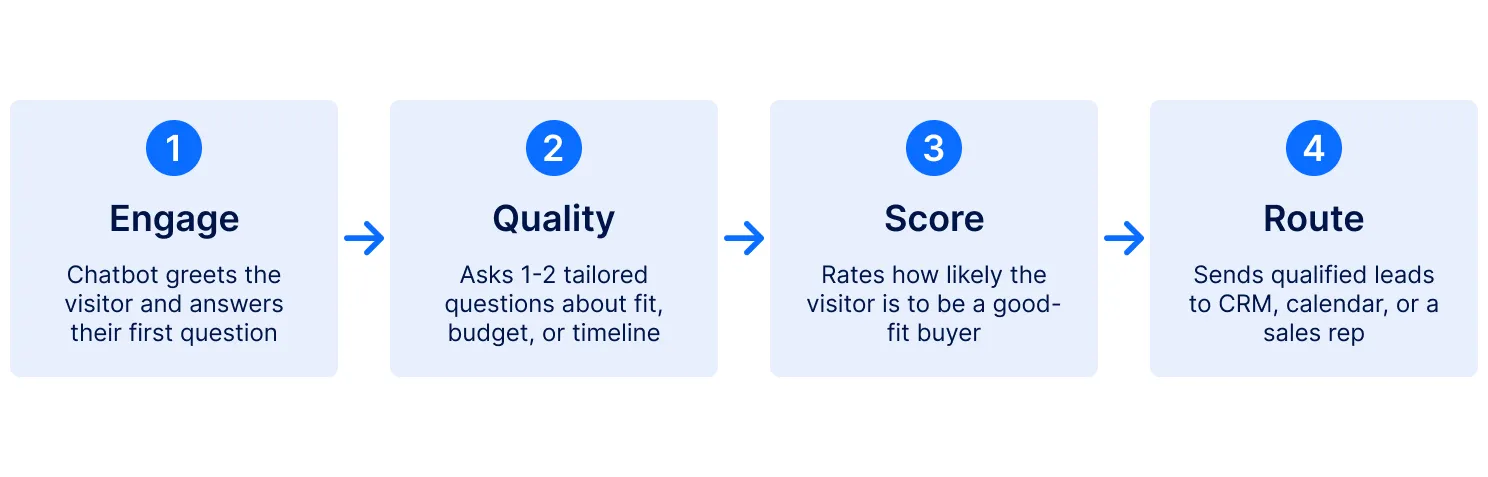
Most AI chatbots for lead generation follow the same basic sequence, even if the interface looks different from vendor to vendor.
First, the chatbot greets a visitor and answers whatever they came to ask: pricing, features, integrations.
Then it asks one or two qualifying questions, tailored to the answers already given, rather than a fixed script everyone sees.
Based on those answers, it scores the visitor’s likelihood of being a good fit.
Finally, it routes qualified visitors to a CRM, books a meeting directly on a calendar, or alerts a sales rep in real time, while lower-intent visitors are simply left with useful information and a way to come back later.
That last step is where a lot of the cost advantage comes from.
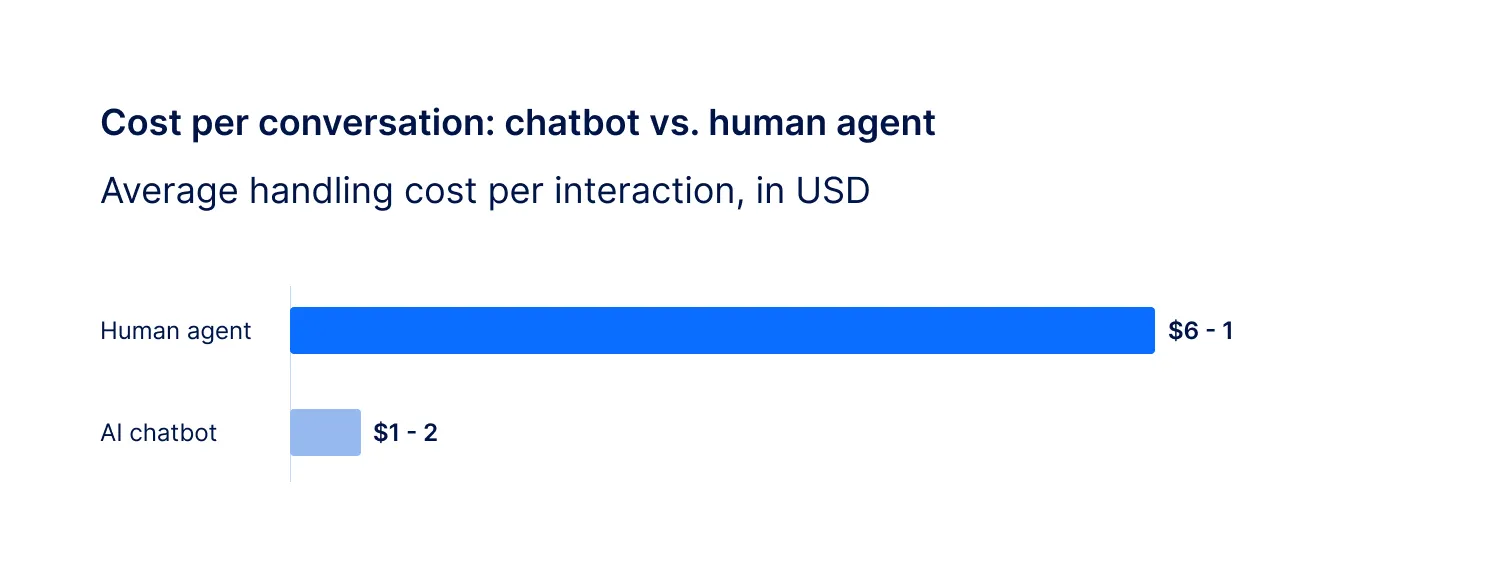
According to data compiled by Persana, a single chatbot interaction typically costs between $1 and $2, compared to $6 to $14 for the same conversation handled by a human agent. A website chatbot for lead generation isn’t just faster; it’s meaningfully cheaper per conversation, especially for companies fielding repetitive early-stage questions.
Why speed matters more than most teams assume
Timing compounds the cost advantage. A chatbot responds the moment a visitor lands, rather than after a support queue or a next-business-day email. Since qualification quality tends to drop the longer a lead waits for a first response, instant engagement isn’t just a convenience feature; it directly protects the pipeline value that a slower process would otherwise lose.
A Real Example: What a Qualified Conversation Looks Like
Consider a mid-size SaaS company evaluating project management tools. A visitor lands on the pricing page, and instead of a form, a chatbot opens with a simple question about what they’re currently using. The visitor mentions a competitor’s tool and says their team has grown past what it can handle.
From there, the chatbot asks about team size and current monthly spend two details a sales rep would ask anyway then offers to book a 15-minute call with someone who handles migrations from that specific competitor. The visitor books it on the spot, without leaving the page or waiting for a follow-up email.
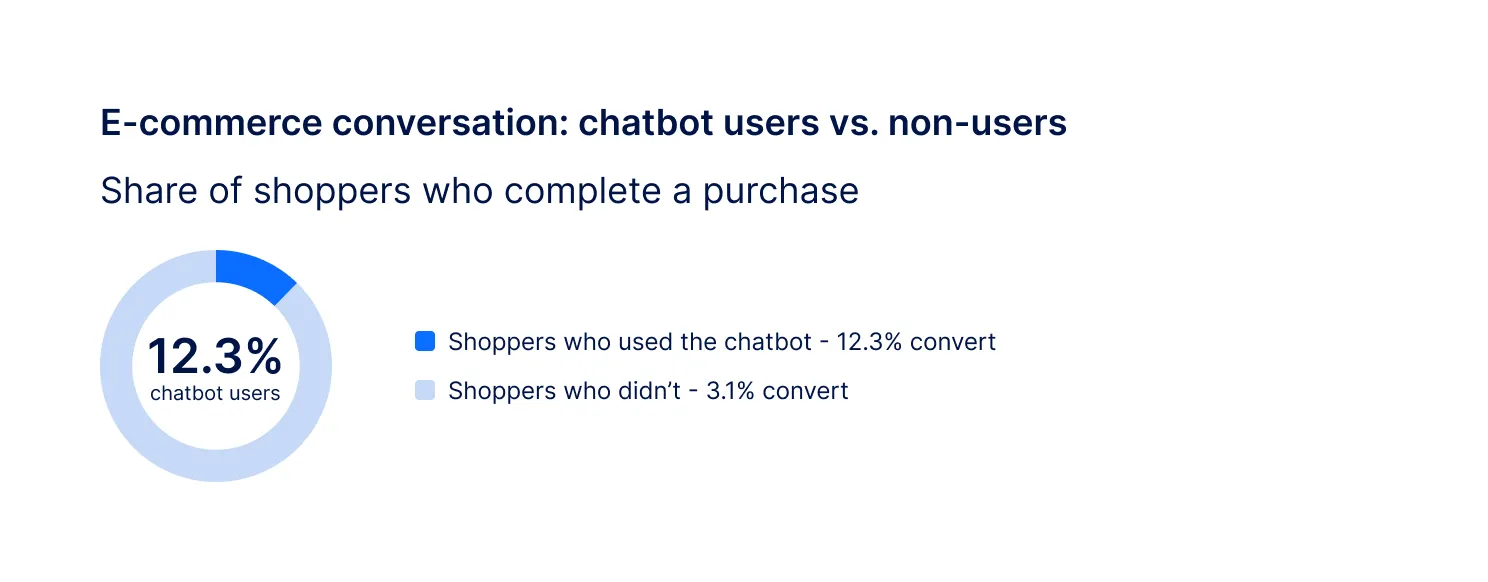
| CROSS-INDUSTRY EVIDENCE This pattern isn’t limited to B2B software. In e-commerce, data compiled by TailorTalk shows shoppers who engage with an AI chatbot convert at 12.3%, compared to 3.1% for shoppers who don’t roughly four times higher. The mechanism is the same one at work in the SaaS example above: answering a real question, at the moment it’s asked, moves people toward a decision faster than a form ever could. |

AI Chatbot for Lead Generation vs. Website Chatbot for Lead Generation: Is There a Difference?
In most conversations, these terms are used interchangeably, and for good reason, they usually describe the same product. The distinction, where there is one, is about emphasis rather than function.
“Website chatbot for lead generation” tends to describe where the tool lives, embedded on a site, engaging visitors as they browse.
“AI chatbot for lead generation” describes what it’s built to do: qualify and convert, using AI rather than a fixed decision tree.
A tool can be both at once, and most modern platforms are.
The practical takeaway for a buyer: don’t get anchored on the label. Judge the tool by whether it qualifies leads well, not by which of these two phrases its marketing page uses.
What Should B2B Buyers Compare Before Choosing an AI Chatbot for Lead Generation?
Most vendor pages look similar at a glance: live chat, AI-powered, 24/7. The differences that actually affect results show up in the details below. Use this table as a working checklist during vendor calls.
| What to evaluate | Why it matters | Question to ask the vendor |
|---|---|---|
| Qualification logic | Determines whether the bot asks questions that actually predict fit, or just collects an email | “Can we set our own qualifying questions and scoring rules?” |
| CRM and routing | A qualified lead is only useful if it reaches the right person without manual entry | “Does this sync natively with our CRM, or only through a third-party connector?” |
| Response speed | Qualification quality drops the longer a lead waits for a reply | “What’s the average response time under real traffic, not a demo environment?” |
| Human handoff | Some conversations need a person, and losing context there loses the lead | “What does the handoff look like for our sales team, step by step?” |
| Deployment effort | A tool that requires a developer adds delay and ongoing cost | “Can our team install and edit this without engineering support?” |
| Reporting | You need to see which conversations became real leads, not just chat volume | “Can we track conversation-to-lead-to-closed-deal, or just conversation counts?” |
What Does It Cost to Run an AI Lead Generation Chatbot?
Pricing varies by vendor, but the return tends to follow a consistent pattern. Industry-wide chatbot data compiled by Botpress and reported in Ringly’s 2026 chatbot statistics roundup puts average returns at roughly $8 for every $1 spent on chatbot tools, with the same research showing a 23% average lift in conversion rate for sites that added one, based on Glassix’s findings.
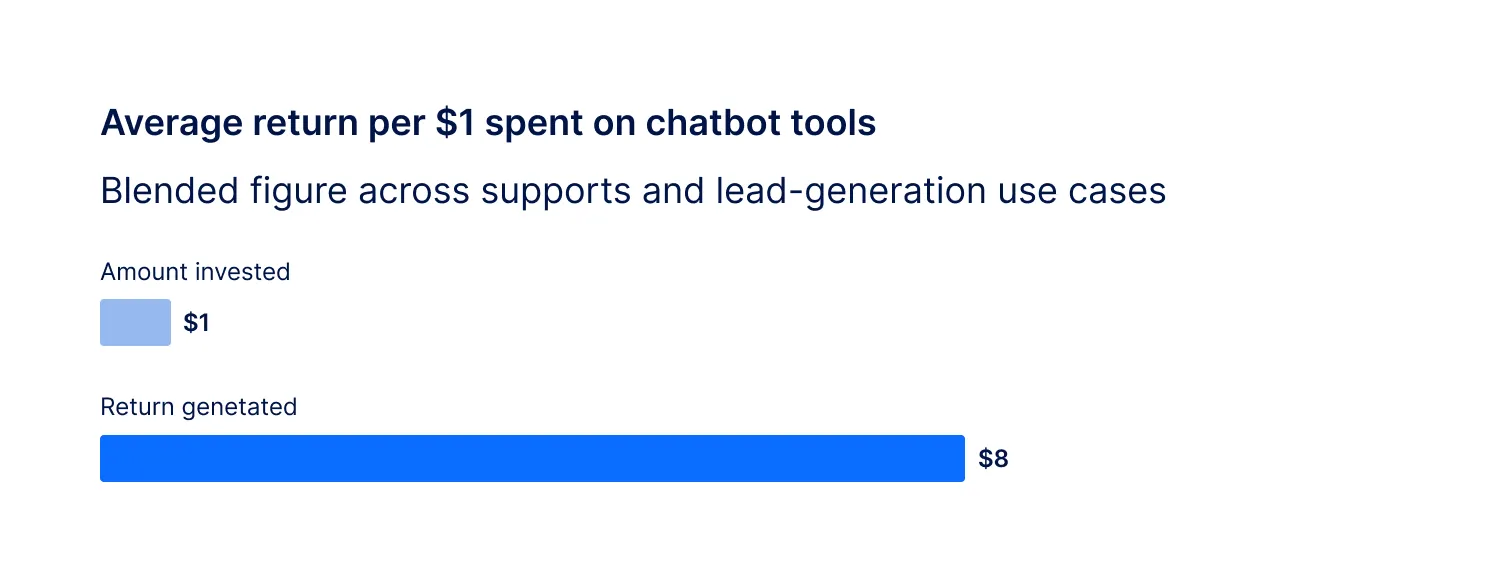
Those figures blend support and sales use cases, so a lead-generation-specific deployment with real qualification logic and CRM routing tends to perform better than the blended average, not worse, since it’s built around a revenue outcome rather than ticket deflection.
Corvexa
Corvexa is built specifically around the qualification step described throughout this guide, not as an add-on to a support chatbot, but as the core product. It engages visitors, asks qualifying questions tailored to their answers, scores intent, and routes qualified leads through CRM sync, Slack, email, or direct calendar booking, without a developer needed to set it up.
For teams evaluating tools against the comparison table above, that qualification-first design is the main thing to check for regardless of which vendor is ultimately the right fit.
WRITTEN BY
Corvexa
Corvexa builds AI lead-capture and qualification software for B2B websites. The team writes these guides using published product documentation and current third-party research, so readers can compare tools including Corvexa on the same criteria.
Visit corvexa.com →
FAQ
Frequently Asked Questions
What's the difference between a lead generation chatbot and a support chatbot?
A support chatbot mainly answers existing customers’ questions and resolves tickets. A lead generation chatbot is built around identifying and qualifying new visitors, then routing the ones worth pursuing to sales.
Do AI chatbots really increase lead volume, or just lead activity?
Both, but qualification is the part that matters. Research from Salesforce found a 73% increase in qualified leads within six months of adoption; the emphasis is on leads that are actually worth a sales rep’s time, not just more conversations.
How long does it take to set up an AI chatbot for lead generation?
For most script-tag-based tools, initial setup takes a few hours to a couple of days. Getting the qualifying questions and CRM routing genuinely dialed in usually takes a week or two of adjustment based on real conversations.
Can a lead generation chatbot integrate with our existing CRM?
Most modern tools support direct integration with platforms like HubSpot or Salesforce, plus webhooks or an API for custom CRMs. Confirm native support for your specific CRM before signing, since some “integrations” are really just CSV exports.
Is an AI chatbot for lead generation worth it for a small business?
Often, yes, the cost per conversation is typically a fraction of a human agent’s, and small teams benefit disproportionately from not missing after-hours inquiries. The key is choosing a tool sized to your traffic rather than an enterprise platform built for much higher volume.
Does an AI chatbot replace human sales reps?
No. It acts as a filter, handling repetitive early questions and identifying who’s worth a rep’s time, so the sales team spends its hours on conversations likely to close rather than on unqualified inquiries.