
 10 Mins Read

The Enterprise Guide to Hiring an AI Automation Partner (Without Wasting 6 Months)
Choosing the wrong vendor is the single biggest reason enterprise AI automation projects stall, blow past budget, or quietly die...

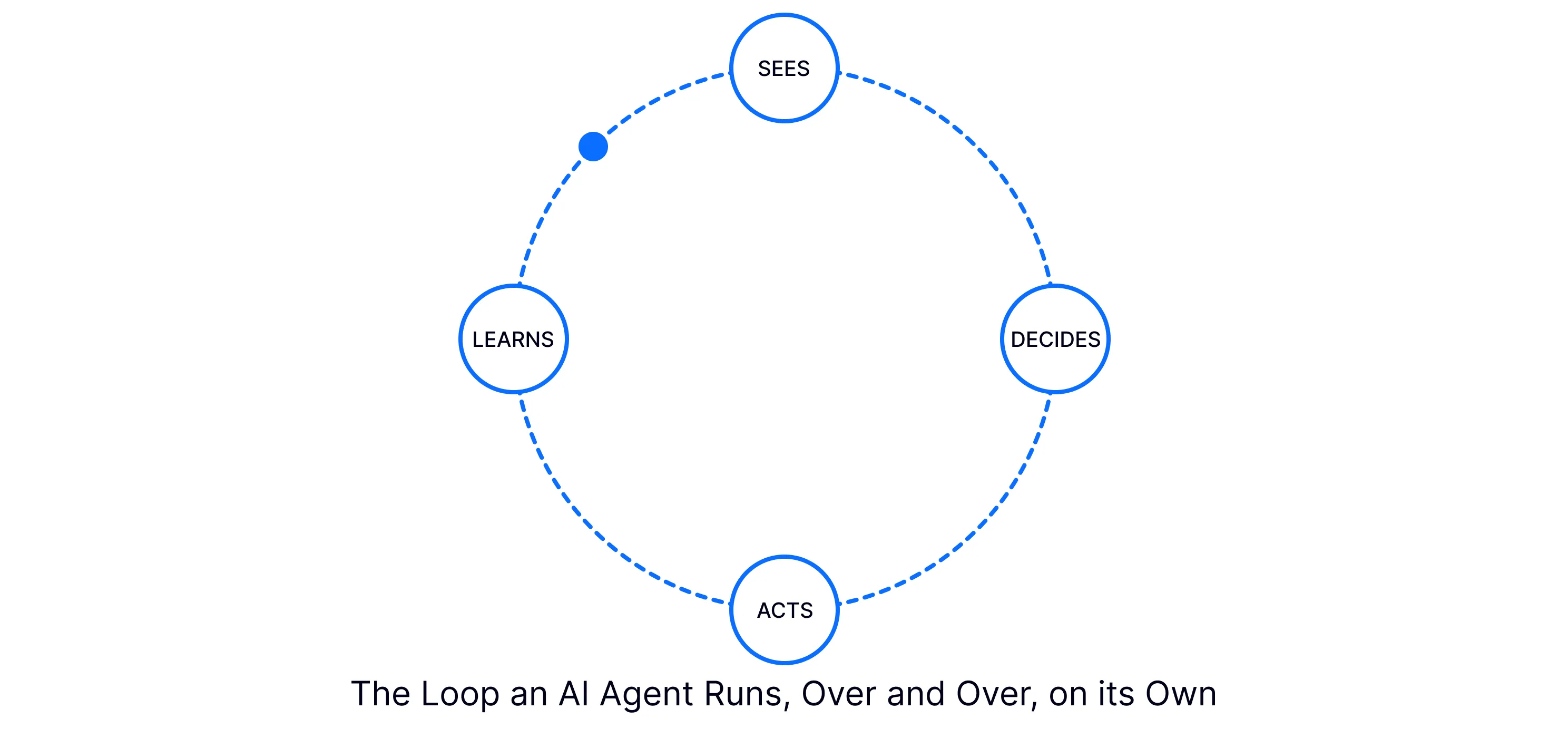
A simple explainer of why AI agents are quickly becoming the new standard for sales automation. A regular tool waits for you to press a button. An AI agent looks at a situation, decides what to do about it, and actually does it; then does that again and again, without anyone pressing anything.

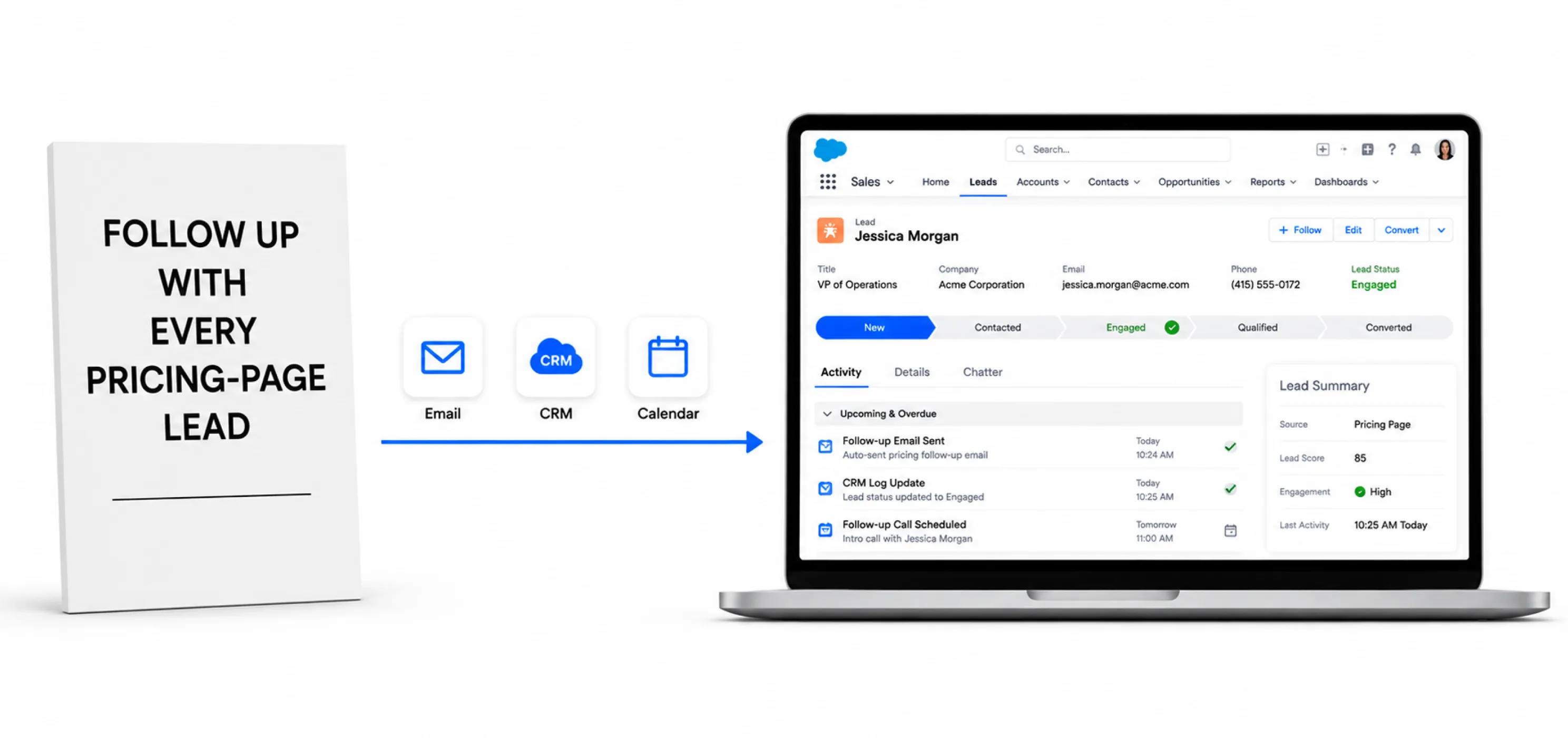
Imagine hiring a new assistant and giving them one simple instruction: “Follow up with every lead who visits our pricing page, and let me know who’s actually ready to talk.” You wouldn’t need to tell them every single step. A good assistant would figure out how to check the page visits, write a message, send it, wait for a reply, and report back all on their own.
An AI agent is a piece of software built to work the same way. Instead of following one rigid set of instructions like older tools do, you give it a goal in plain language. Then it figures out the steps, uses whatever tools it needs, like your email, your CRM, or your calendar, and keeps working until the goal is actually done, checking in with you only when it truly needs to.
This is different from a regular chatbot, which mostly just answers questions one at a time. It’s also different from old-style automation, which only ever does exactly what it was programmed to do, in the same order, every single time. An AI agent can actually think through a situation and choose what to do next.
| Old-style automation | An AI agent |
| Follows the exact same steps, every single time | Adjusts its steps based on what it actually finds |
| Breaks or gets stuck if something unexpected happens | Can handle a surprise or an unusual answer reasonably well |
| Needs a person to update the rules when things change | Learns and improves without needing every rule rewritten |
| Good for simple, repetitive, predictable tasks | Good for tasks with judgment calls along the way |
Here’s an easy way to remember it: old automation is like a train, stuck on one fixed track. An AI agent is more like a car with a GPS; it still needs a destination, but it can find its own way there and reroute if the road ahead is blocked.
| Note An AI agent isn’t magic, and it isn’t fully independent either. It still works within limits a person sets: which tools it’s allowed to use, which actions need a human’s approval first, and what “done” actually looks like. Think of it as a very capable assistant, not a replacement for having a plan. |
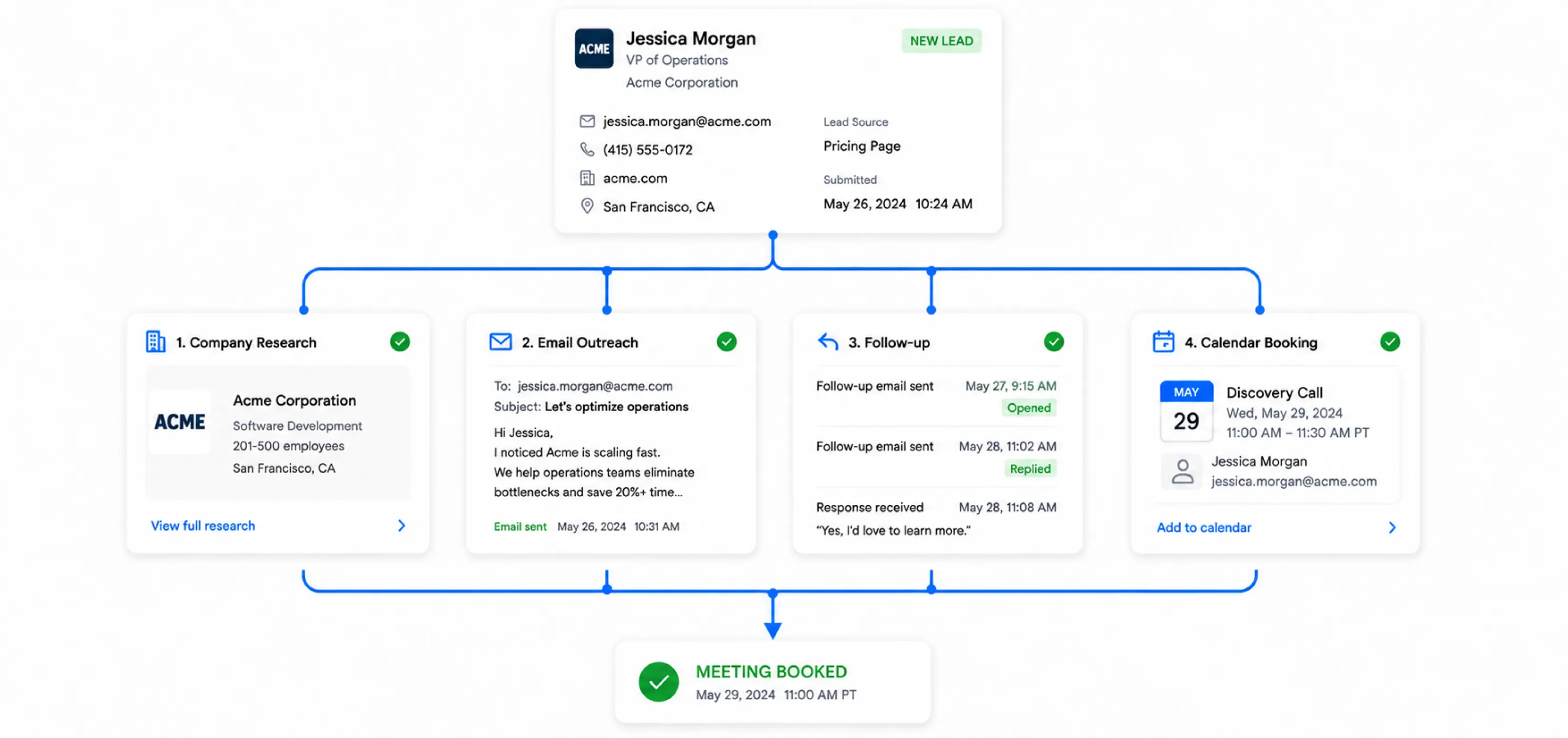
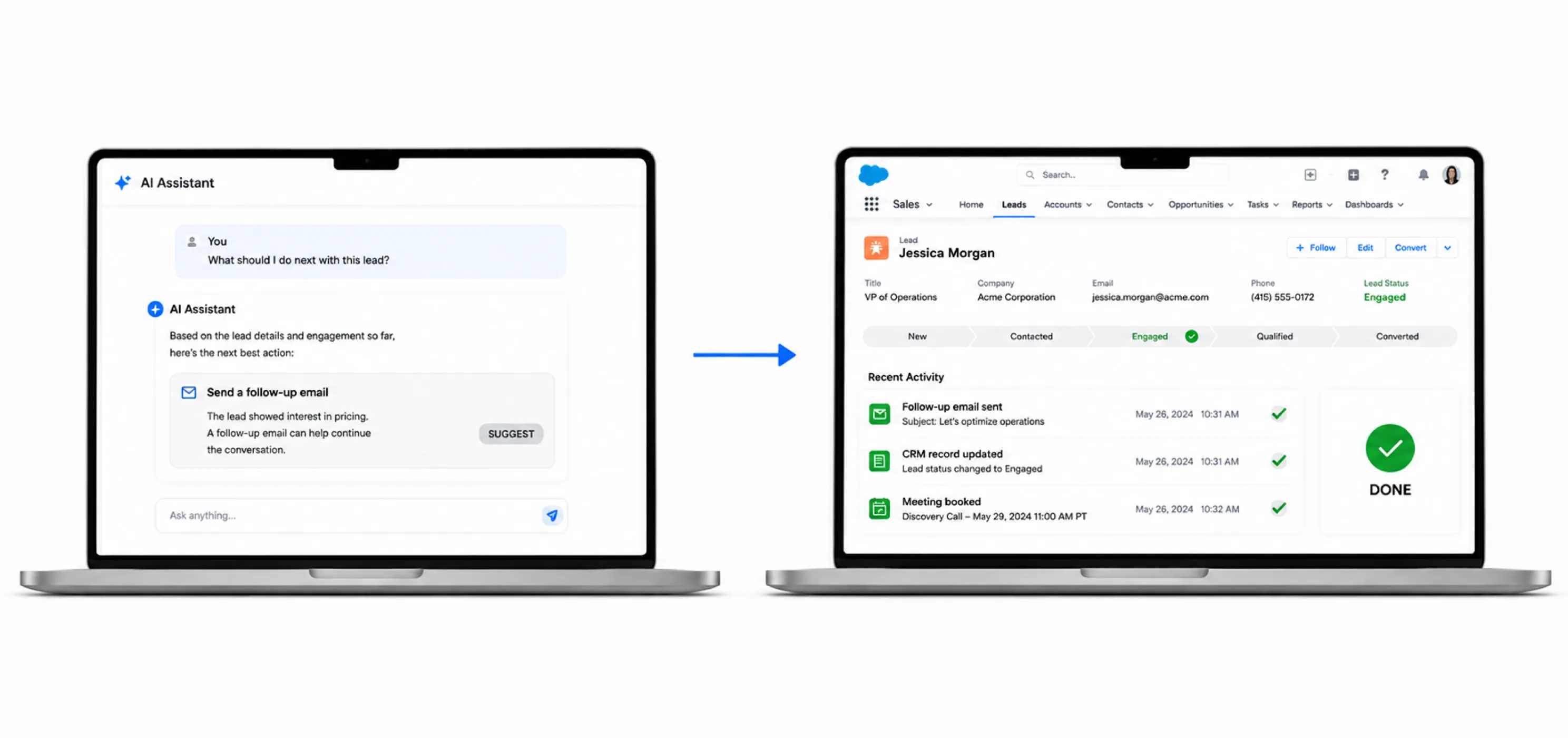
Sales has always involved a lot of small, repetitive steps: researching a company, sending a first message, following up if there’s no reply, updating notes in the CRM, booking a meeting once someone says yes. None of these steps are hard exactly; there’s just a lot of them, and they need to happen constantly for every single lead.
That’s exactly the kind of work an AI agent is good at. Give it a goal like “reach out to every new lead within five minutes and book a meeting with anyone ready,” and it can handle the research, the message, the follow-ups, and the scheduling, all without a person doing it step by step, all day long.
| What we’re comparing | Old-style automation | AI agent |
| Follows a fixed script | Always, no exceptions | Only as a starting point |
| Handles the unexpected | Usually breaks or stalls | Adjusts and keeps going |
| Setup effort | Detailed rules, one by one | A goal, in plain language |
| Uses outside tools itself | Rarely, needs custom code | Often, built right in |
| Improves over time | Only if a person edits it | Often learns as it goes |
“We didn’t ask it to send emails. We asked it to book meetings and it figured out that emails were part of the job.”
~ a common reaction from teams trying an AI agent for the first time
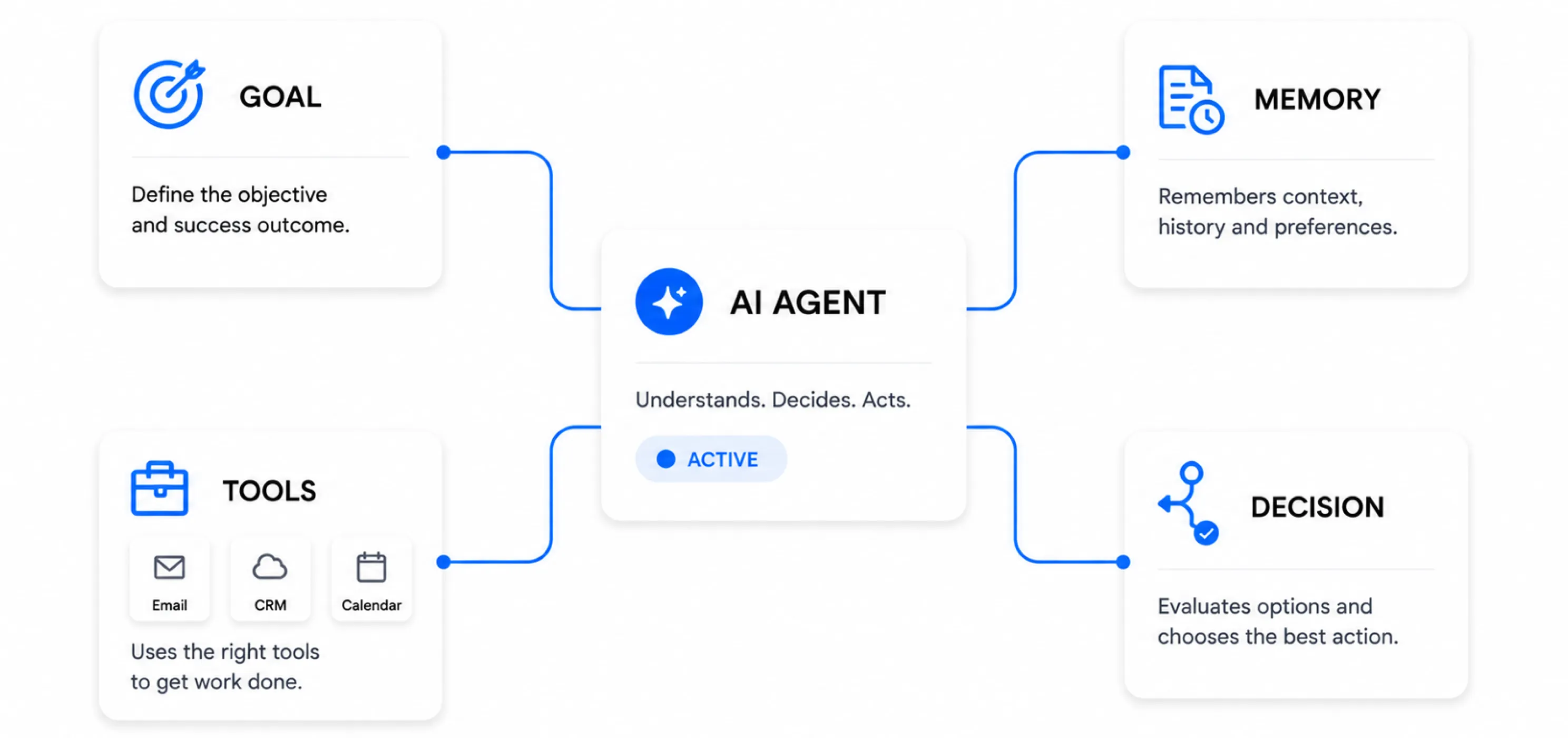
It helps to know the basic parts that make an agent actually work, without getting too technical about it.
The goal. This is the plain-language instruction you give it, like “qualify every inbound lead and book meetings with the good ones.” Everything else the agent does flows from this one starting point.
The memory. A good agent keeps track of what’s already happened, who it already messaged, what they said, and what’s still pending, so it doesn’t repeat itself or lose track halfway through a task.
The tools. These are the actual apps the agent is allowed to use, like your email, your calendar, or your CRM. Without tools, an agent could only talk about doing something. With tools, it can actually go do it.
The decision step. This is the part where the agent looks at what it knows and decides what to do next: reply, wait, escalate to a human, or mark the task done. This is the piece that makes it feel less like a fixed script and more like a helpful assistant thinking on its feet.
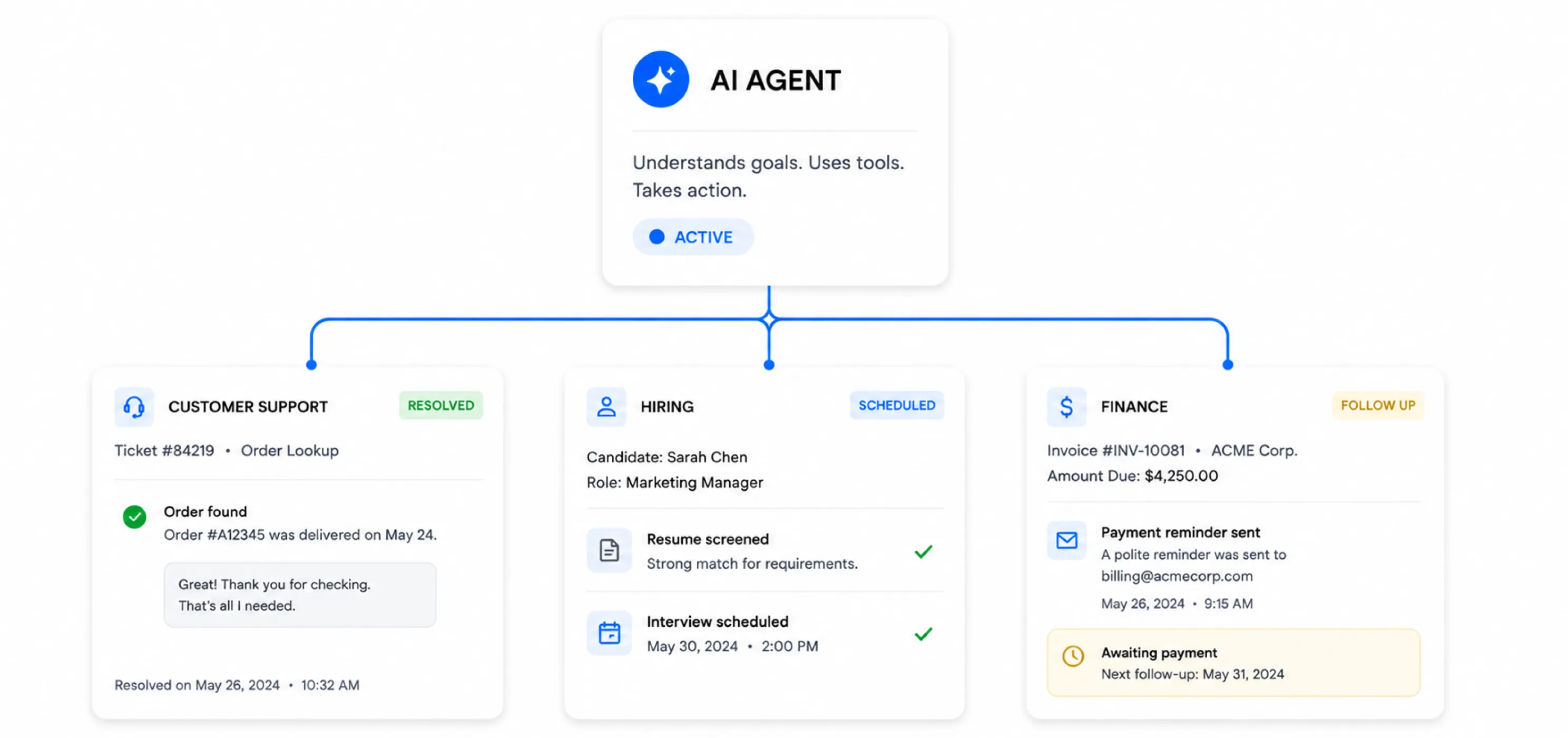
Even though this guide focuses on sales, it’s worth knowing that the same basic idea is showing up everywhere. A customer support agent can read an incoming ticket, look up the order, and answer or escalate it on its own. A hiring agent can screen resumes and schedule first interviews without a recruiter touching a calendar. A finance agent can chase down an overdue invoice with a polite reminder, then follow up again a week later if nothing’s changed.
The pattern is always the same: give it a goal, give it the right tools, and let it work through the repetitive middle steps that used to take up a person’s whole day.
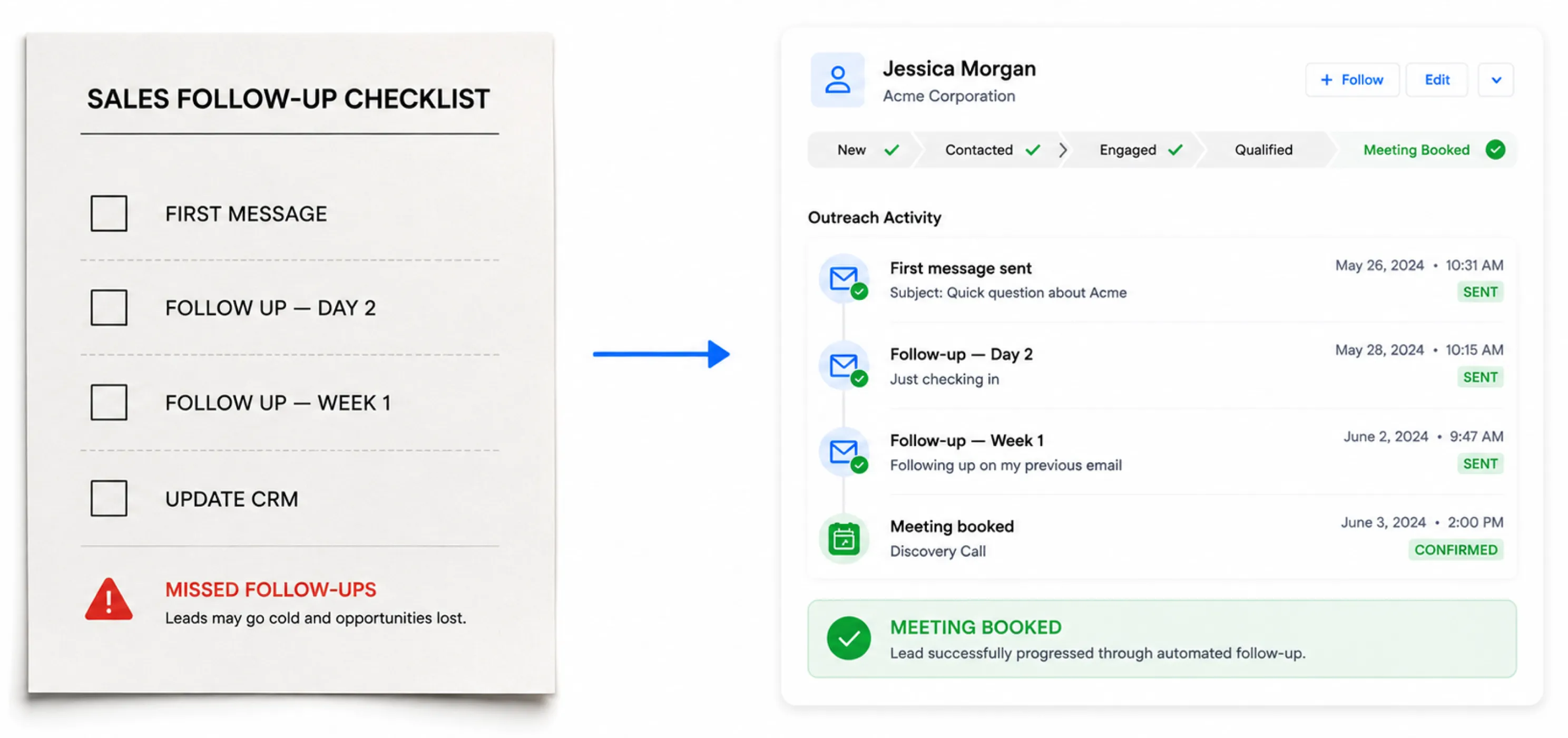
Picture a small sales team at a growing company. Every new lead needed the same handful of steps: a first message, a follow-up two days later if there was no reply, a second follow-up a week after that, and a note logged in the CRM either way. It was simple, but it ate up hours every week, and follow-ups sometimes slipped through the cracks on busy days.
They set up an AI agent with one plain instruction: reach out to every new lead, follow up automatically if there’s no reply, and book a meeting the moment someone says yes. The agent handled the entire back-and-forth on its own, only pinging a human rep once a lead was genuinely ready to talk. Missed follow-ups dropped to almost zero, and the team stopped spending their mornings working through a follow-up checklist by hand.
How Corvexa Uses AI Agents for Sales
Corvexa brings the idea of AI agents into your sales process by giving your website an AI-powered agent that can engage with visitors, understand their intent, qualify potential leads, and help move them toward the next step.
Instead of simply answering questions like a traditional chatbot, Corvexa can work through a conversation with a visitor and take action based on what it learns.
How Corvexa Works
- Engages website visitors: Corvexa starts conversations with visitors and helps them find the information they need.
- Understands lead intent: It can ask relevant questions during the conversation to understand whether a visitor is genuinely interested.
- Qualifies leads: The agent collects useful information and identifies which conversations are worth sending to the sales team.
- Captures lead information: Relevant details can be collected naturally during the conversation instead of relying only on traditional forms.
- Takes action: Once a visitor is qualified, Corvexa can help move the conversation toward booking a meeting or taking the next step.
- Connects with your existing tools:Corvexa integration included platforms such as HubSpot, Salesforce, Calendly, and email, allowing qualified lead information and actions to flow into the tools your team already uses.
- Works continuously: Unlike a sales rep who can only follow up during working hours, an AI agent can engage visitors whenever they arrive on your website.
Want to see what Corvexa can do?
If you’re looking to reduce the manual work involved in engaging and qualifying website visitors, Corvexa can act as an AI sales agent that works alongside your team.
You can check the Corvexa pricing to find the plan that fits your requirements, explore the Corvexa documentation for more details about how the platform works, or learn more about Corvexa and the team behind it.
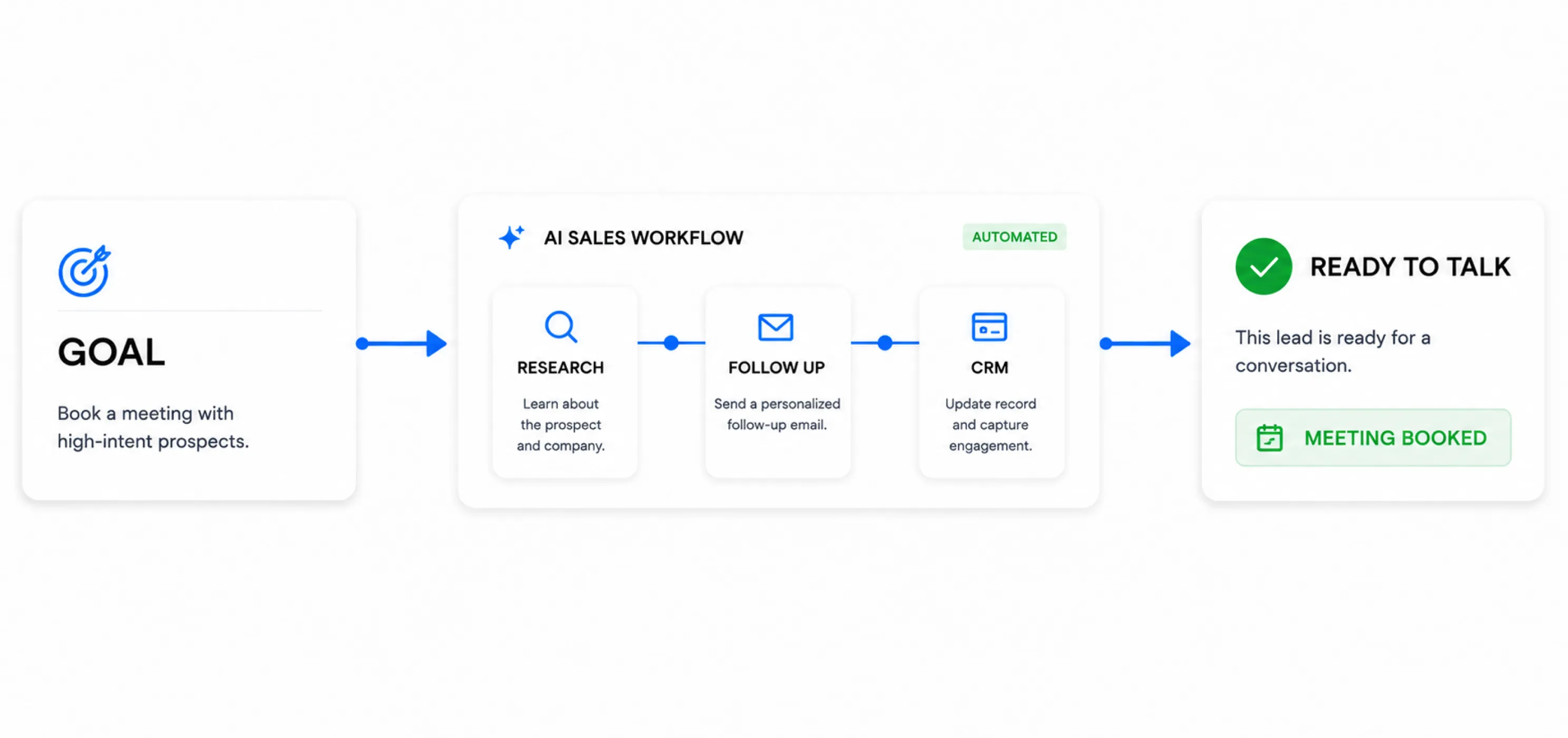
An AI agent isn’t just a smarter chatbot, and it isn’t the same as the rigid automation tools sales teams have used for years. It’s software that can take a goal, figure out the steps, use real tools to get there, and keep going without someone clicking a button at every stage.
That’s exactly why it’s quickly becoming the new standard for sales automation not because it replaces people, but because it finally handles the repetitive, in-between work that used to eat up so much of a sales team’s day.

 What is an AI Agent? The New Standard for Sales Automation

Choosing the wrong vendor is the single biggest reason enterprise AI automation projects stall, blow past budget, or quietly die...
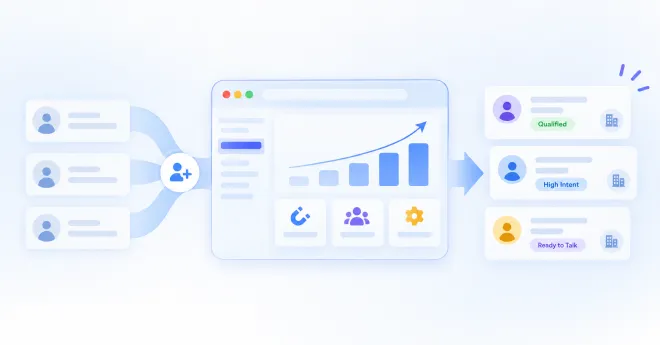
B2B customer acquisition gets harder as a business grows. More website visitors, more leads, more conversations, and more follow-ups can...
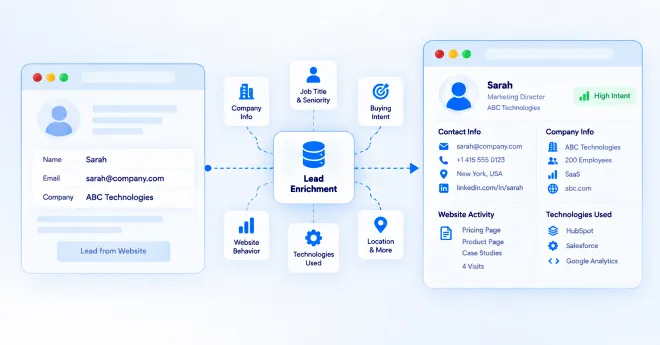
A website visitor can leave behind very little information. They may read a few pages, check your pricing, download a...