
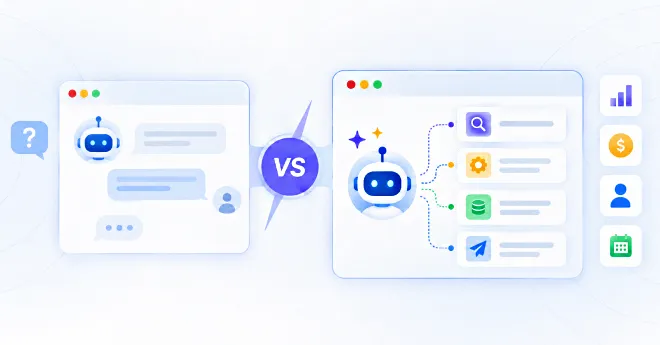
AI Agent vs Chatbot: Which One Actually Grows Revenue (And Which Is a Waste of Budget)?
This blog settles the AI agent vs chatbot debate with real 2026 data rather than marketing buzzwords. You’ll learn the...

 9 Mins Read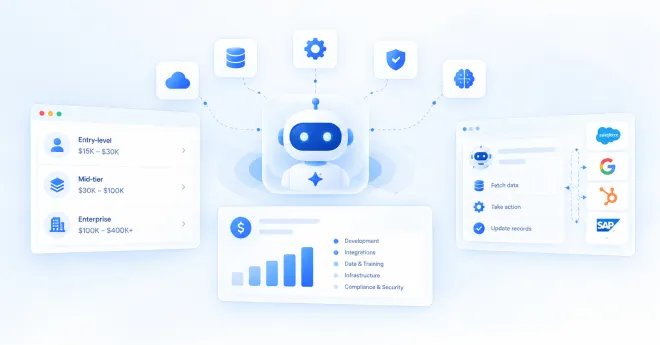
This blog breaks down real 2026 pricing for custom AI agent development, from simple single-task agents to full enterprise multi-agent systems. You’ll get actual dollar ranges, the seven factors that move the price most, how AI automation agency pricing models work, and a realistic ROI framework so you can budget with confidence instead of guessing. There’s a pricing tier table, a real-world cost example, and an FAQ section built to answer the questions buyers ask before they sign a contract.
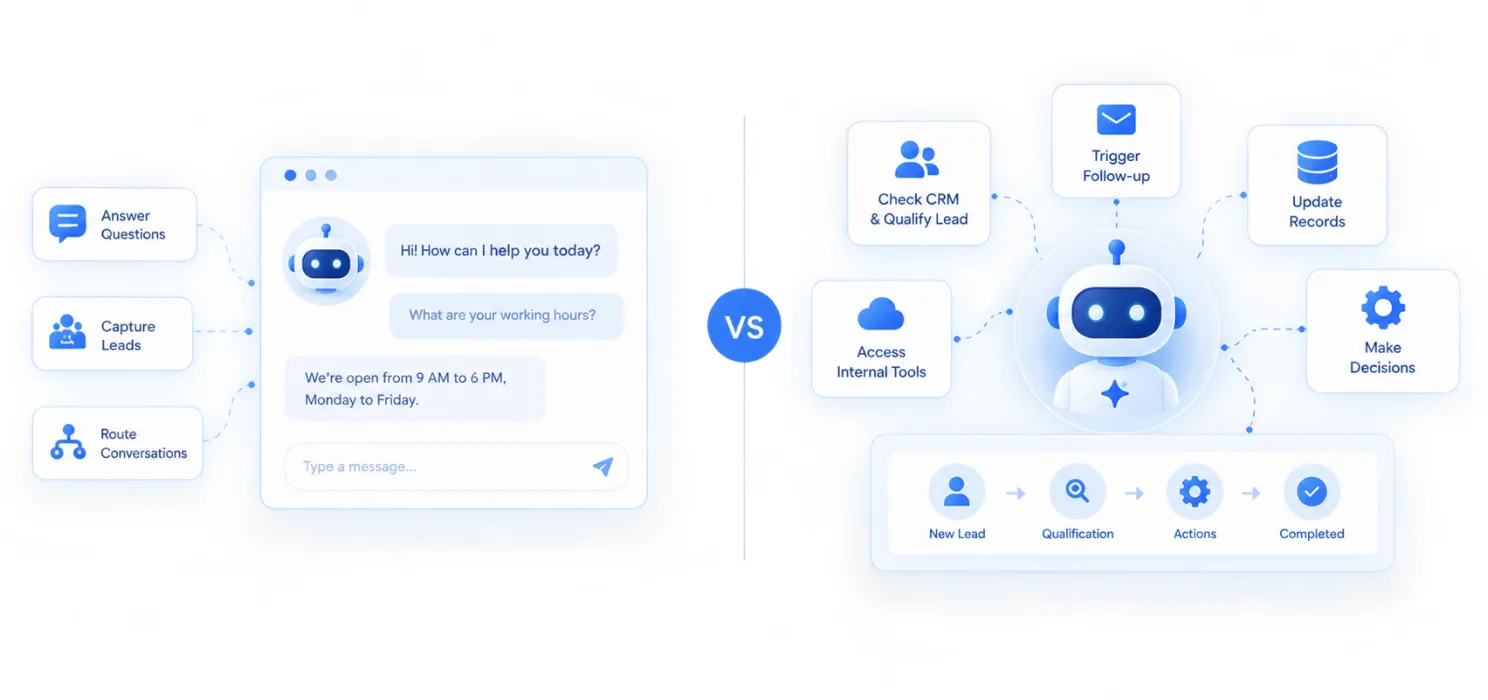
A chatbot answers questions. A custom AI agent takes action.
The difference matters more than it sounds. A standard AI chatbot for website visitors handles FAQs, captures leads, and routes conversations. A custom AI agent goes further; it can qualify a lead against your CRM data, trigger a follow-up workflow, update records, and make decisions without a human clicking anything.
If you just need conversational question-answering and contact-detail capture, you likely don’t need a fully custom build. Our AI chatbot pricing plans cover that use case at a fraction of custom development cost. This guide is for the next tier up: businesses that need an agent doing real work inside their systems.
This is the number everyone wants first, and the honest answer is: it depends heavily on complexity. But the ranges are consistent enough across the industry to budget against.
Most current estimates put custom AI agent development cost somewhere between $15,000 for a narrow, single-task agent and $400,000+ for a compliance-heavy, multi-agent enterprise system. The bulk of mid-market projects land between $40,000 and $150,000.
Here’s how that breaks down by tier:
| Tier | Typical Cost | What You Get |
| Entry-level | $15,000 – $30,000 | Single workflow, one or two integrations, existing AI models |
| Mid-tier custom | $30,000 – $100,000 | Multiple integrations (CRM, ERP), custom logic, moderate data prep |
| Enterprise / multi-agent | $100,000 – $400,000+ | Multi-agent orchestration, compliance architecture, custom model tuning |
Regulated industries push costs higher regardless of tier. Healthcare and finance-focused agents commonly run $70,000 to $250,000+ due to compliance and security requirements alone, while HR or internal-ops bots can come in as low as $20,000.
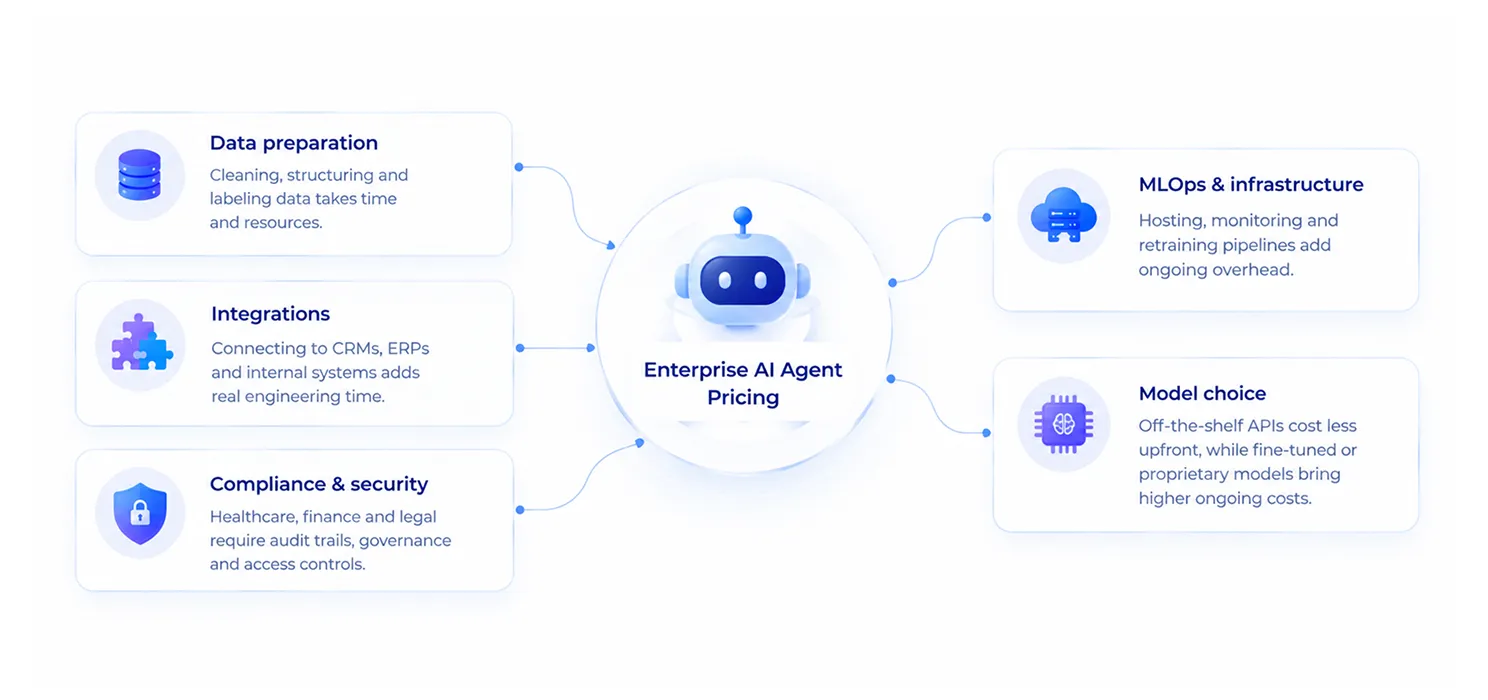
Buyers are often surprised by which line items move the budget most. It’s rarely the AI model itself.
The biggest cost drivers, in order of how often they blow past initial estimates:
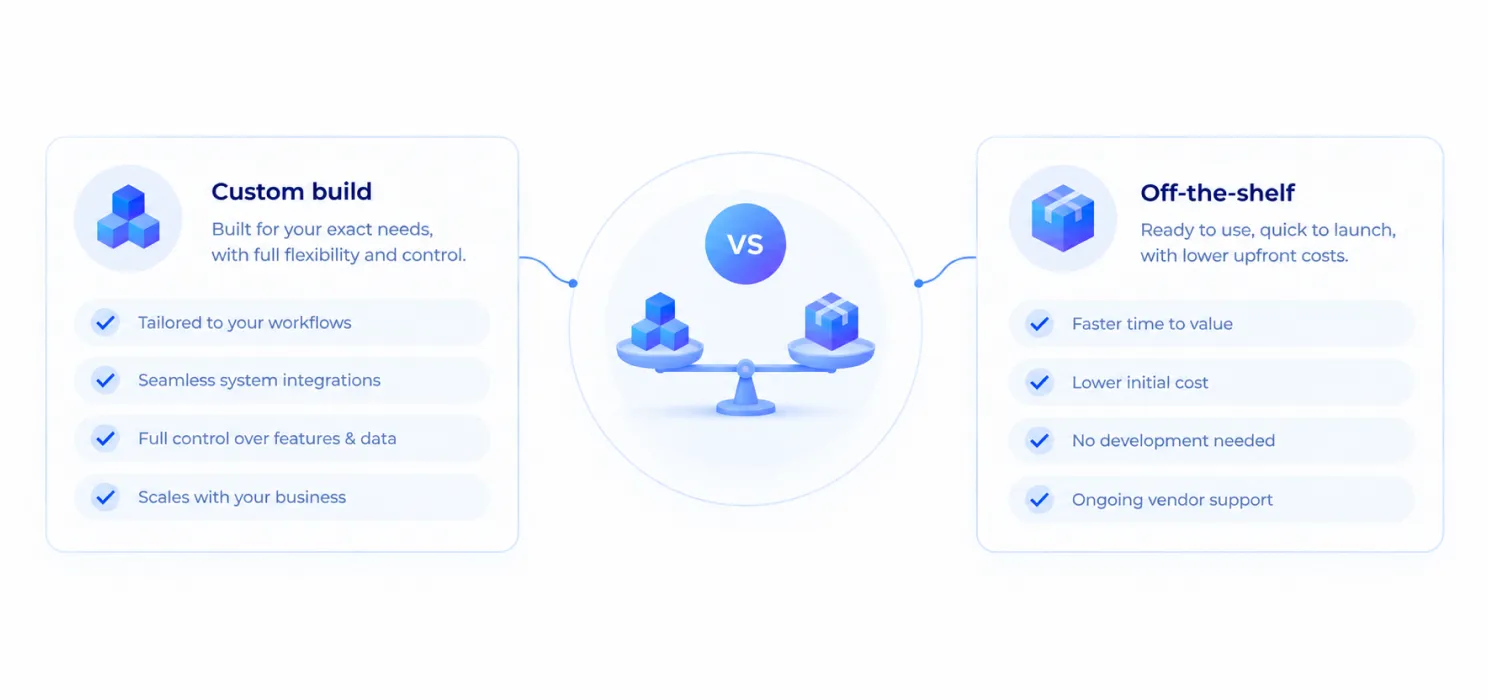
This is where a lot of budgets go wrong. An off-the-shelf platform looks cheaper on the surface, and often is for the first year.
A SaaS-based AI agent typically runs $500 to $5,000 per month, which sounds far more manageable than a $50,000 custom build. But subscription pricing scales with usage, seats, or volume, and customization is usually capped by whatever the platform allows.
A custom-built agent costs more upfront but becomes an owned asset. There’s no per-seat fee creeping upward as your team grows, and there’s no ceiling on what it can be trained to do inside your specific workflows. If you’re mainly automating lead qualification and scoring rather than something highly proprietary, it’s worth comparing against a purpose-built option first. Our AI lead qualification and AI lead scoring tools solve a large chunk of this without a custom build at all.
The right call usually comes down to one question: is this workflow generic enough that a platform already does it well, or specific enough to your business that customization pays for itself?
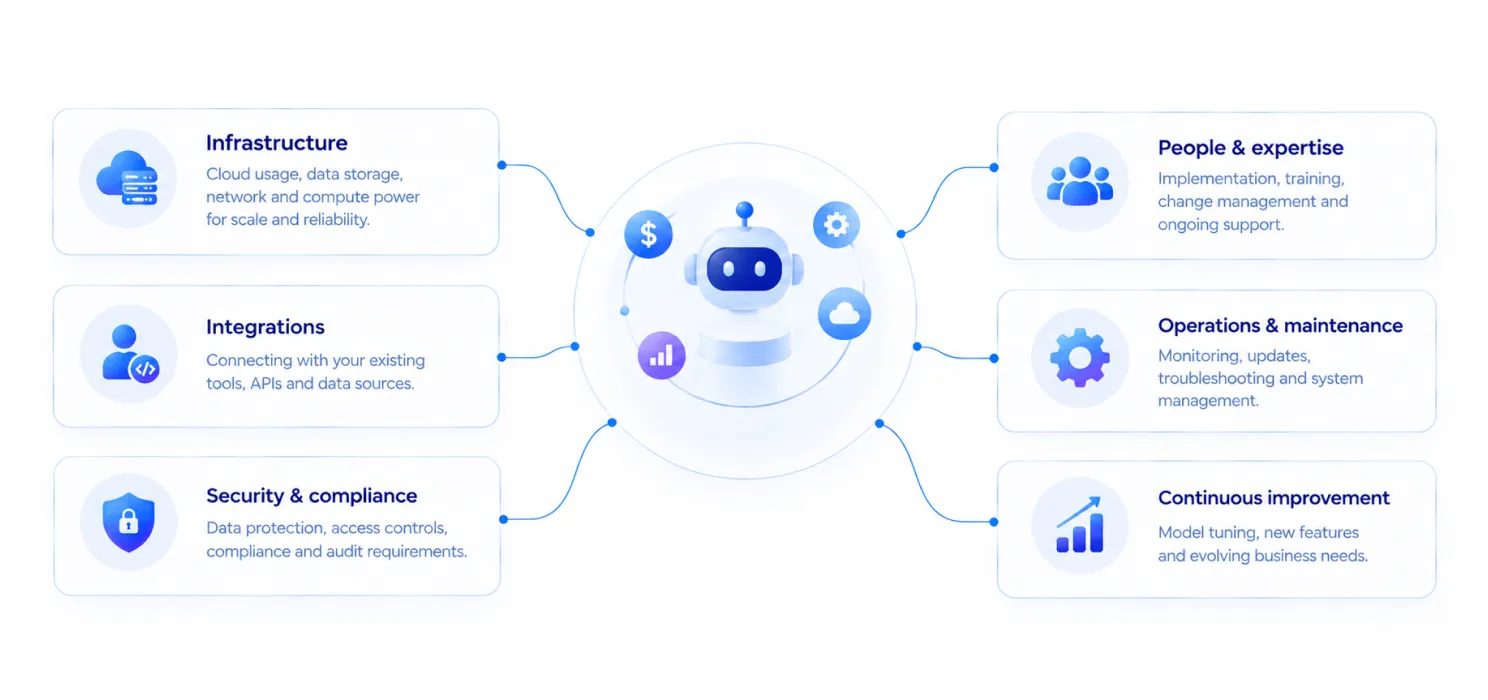
Development cost is only part of the bill, often a smaller part than people expect. Industry data suggests development cost represents just 25–35% of the three-year total cost of ownership for a custom AI agent.
The rest shows up as:
Budgeting for year one alone, a lean MVP-style deployment often lands around $160,000 in all-in cost once these ongoing expenses are included, while a mid-tier build can reach closer to $250,000 across the first year.
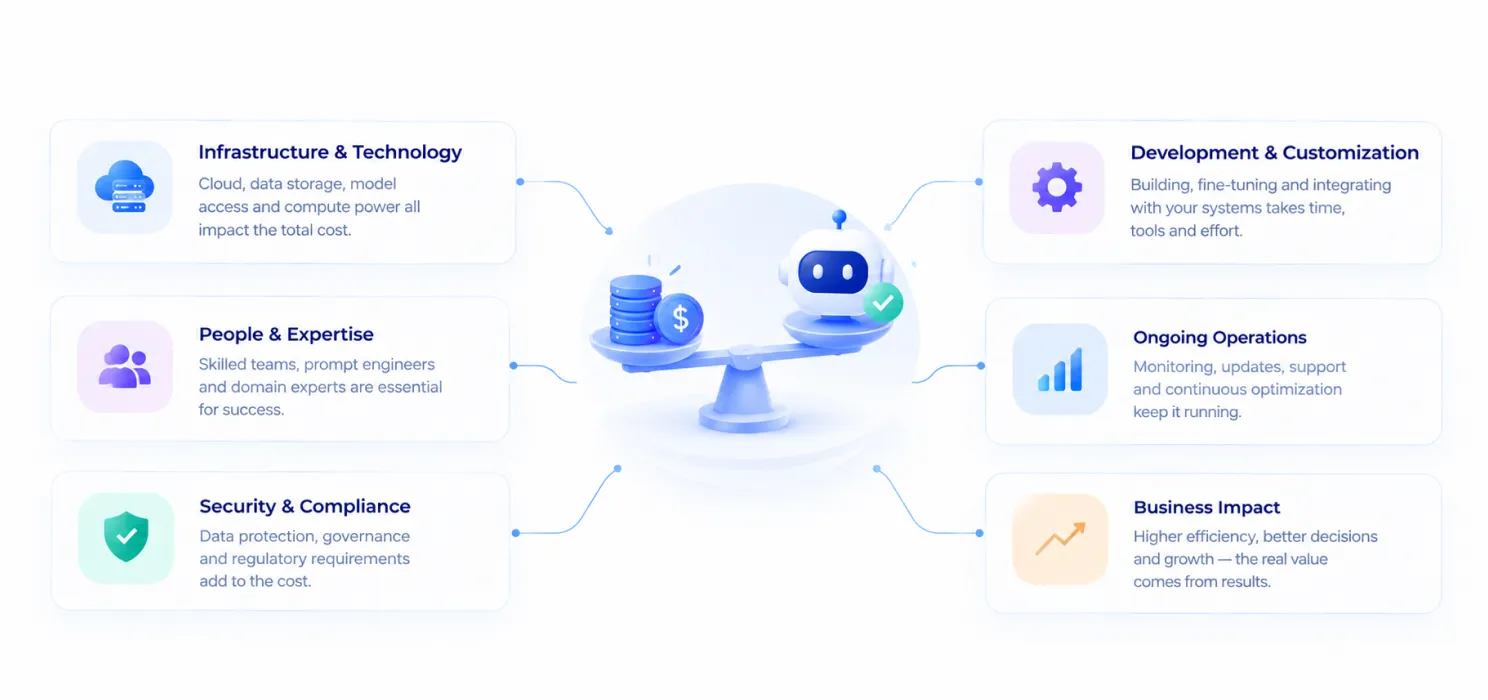
For the right use case, yes and the ROI data backs this up more consistently than most emerging tech categories.
McKinsey’s 2026 research found well-scoped enterprise AI agent deployments delivering a 5.8x return within 14 months, with average ROI across U.S. enterprises sitting around 192%. Roughly 74% of organizations that deploy AI agents see returns within the first year.
Sales and customer service automation tend to pay back fastest — often 200–500% ROI within six months while regulated industries like healthcare and legal see longer payback windows of 14 to 20 months due to compliance overhead.
If your use case is something like an AI sales agent qualifying and routing leads, or an AI sales automation workflow feeding your CRM, that faster payback window is the norm, not the exception.
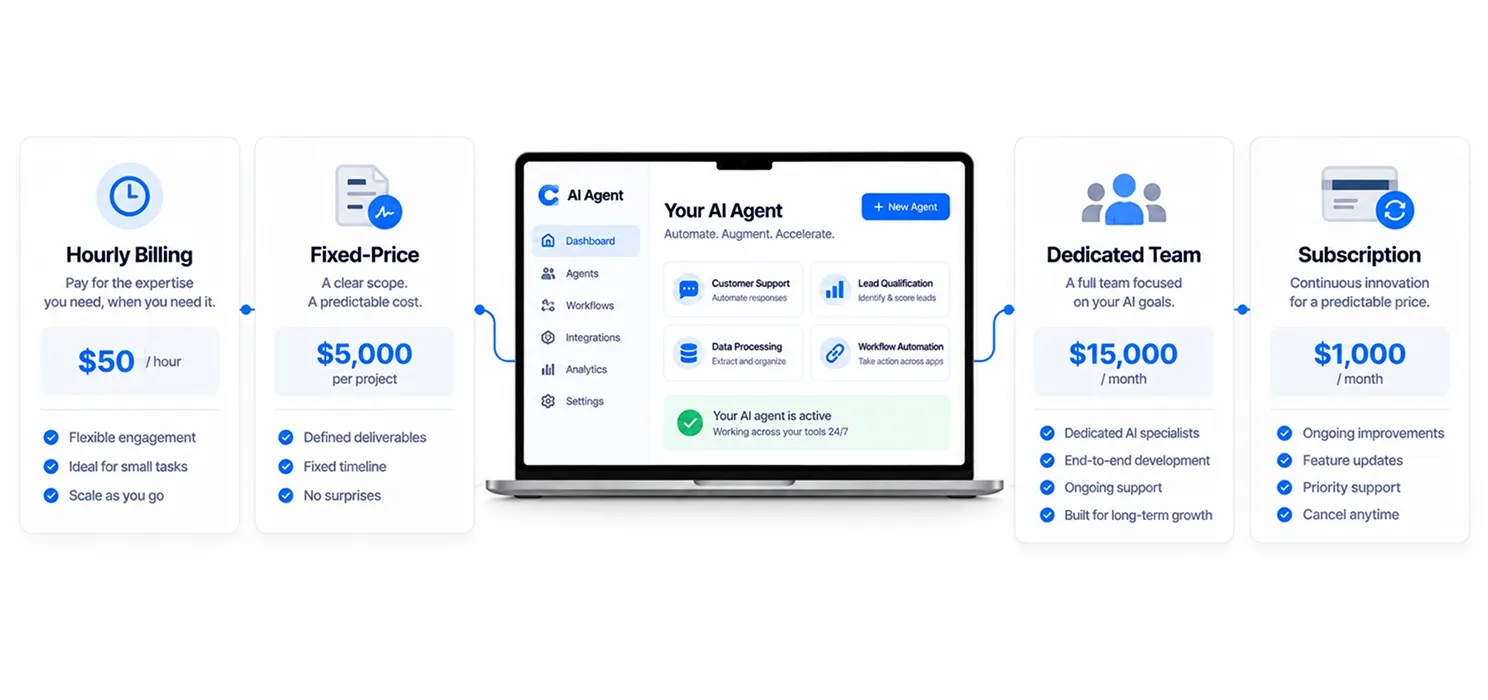
Agencies and dev shops generally price custom AI agent work one of four ways, and each shifts risk differently between you and the vendor.
Hourly / time-and-materials: Flexible, but the cost risk sits mostly with you if scope grows.
Fixed-price contracts: Budget certainty upfront, in exchange for less flexibility to change direction mid-build.
Dedicated team engagements: You get a continuous outsourced team, which balances scalability with ongoing cost — better suited to companies planning multiple agents over time rather than a single project.
Platform or subscription pricing: Lower upfront cost, faster deployment, but customization is bounded by what the platform supports.
Most enterprises get their initial budget wrong by 40 to 60%, not because vendors are dishonest, but because scope creep and hidden costs (data prep, integrations, compliance) surface after the contract is signed. Asking any agency to itemize these five drivers before you sign is the single best way to avoid that gap.
Picture a B2B company that wants an agent to qualify inbound leads, score them against ideal-customer criteria, and push qualified leads into their CRM automatically.
That’s a textbook mid-tier build: one core workflow, one CRM integration, moderate data prep to define scoring criteria, and no heavy compliance burden. Realistic pricing lands around $40,000 to $70,000 for development, plus $300 to $1,500 monthly in API and hosting costs once live.
Given that lead qualification and scoring automation typically falls into the fastest-payback category, most companies in this exact scenario see the investment recovered well within the first year assuming the agent is scoped tightly around one workflow rather than built as a do-everything system from day one.
A Simpler Option for AI lead Qualification and Capture
If your main goal is to capture, qualify, and route website leads, you may not need a fully custom AI agent. Corvexa is built for this specific use case, helping businesses engage website visitors, ask relevant questions, collect lead details, and identify high-intent prospects without building an AI system from scratch. It can also connect with tools such as HubSpot, Salesforce, Calendly, and email workflows, making it a practical option for businesses that want AI-powered lead capture without the cost and development time of a custom agent.
What is the average cost to build a custom AI agent?
Most mid-market custom AI agent builds fall between $40,000 and $150,000, with narrow single-task agents starting around $15,000 and enterprise multi-agent systems reaching $400,000 or more. Industry and compliance requirements are the biggest factors pushing costs higher.
How much does enterprise AI agent pricing typically run?
Enterprise-grade AI agents, especially those involving multi-agent orchestration, compliance architecture, and custom model tuning, generally range from $100,000 to $400,000+. Regulated industries like healthcare and finance often land at the higher end due to security and audit requirements.
What does it cost to build AI workflow automation compared to a simple chatbot?
A conversational chatbot for lead capture or FAQs typically costs a small fraction of a custom AI agent, often available through monthly subscription pricing rather than a custom build. Workflow automation that takes actions across systems (CRM updates, scoring, routing) costs significantly more because it requires integrations and logic a standard chatbot doesn’t need.
How do AI automation agencies price their services in 2026?
Agencies typically use one of four models: hourly/time-and-materials, fixed-price contracts, dedicated team engagements, or platform/subscription pricing. Each shifts cost risk differently: fixed-price offers budget certainty, while hourly offers flexibility at the client’s risk.
Is a custom AI agent worth the cost compared to off-the-shelf platforms?
It depends on how specific your workflow is. Off-the-shelf platforms cost less upfront and deploy faster, but customization is capped. A custom agent costs more initially but has no per-seat fees and no ceiling on what it can be trained to do, often worth it when the workflow is core to your business rather than generic.
How long does it take to see ROI on a custom AI agent?
Well-scoped deployments often see returns within 6 to 14 months, with sales and customer service use cases typically paying back fastest (within six months) and regulated industries taking longer due to compliance overhead. Roughly three in four organizations see ROI within the first year.
What hidden costs do most AI agent budgets miss?
Data preparation, ongoing API usage, cloud hosting, and annual maintenance (typically 15–30% of the original build cost per year) are the costs most quotes leave out. Development itself is often only a quarter to a third of the true three-year cost of ownership.
 How Much Does It Cost to Build a Custom AI Agent? (Real Pricing Breakdown)
This blog settles the AI agent vs chatbot debate with real 2026 data rather than marketing buzzwords. You’ll learn the...

Website traffic is one of the easiest marketing metrics to measure. You can see how many people visited your website,...

Not every website visitor is a potential customer. Some people are browsing. Some are researching. Some are comparing different solutions....