
 9 Mins Read

24/7 Lead Generation: How to Capture Visitors While You Sleep
It’s 11:47 PM. Someone is on your website. They’ve read your services, checked your pricing, and they’re seriously considering reaching...

| Quick summary Capturing a lead is only the first step. What happens in the days after the chat ends usually decides whether it converts. This guide covers how to automate website lead follow-up after an AI conversation, how the cadence should differ by lead score, and where a human still needs to step in. |
The chat went well. A visitor asked about pricing, mentioned a timeline, shared a work email. The chatbot scored it High and dropped it in the CRM.
Then nothing happens for four days, because everyone assumed someone else would follow up. This is one of the most common places a well-qualified lead quietly dies, and it has nothing to do with how good the original conversation was.
Capturing and scoring a lead is only step one. This guide covers step two: how to automate website lead follow up so nothing depends on someone remembering to check a dashboard.
Because very few B2B deals close on the first touch. Research fromRAIN Group on sales prospecting found it takes an average of 8 touchpoints to secure a first meeting with a new prospect, while top-performing sellers manage it in around 5, largely through more relevant, better-timed outreach rather than sheer persistence.
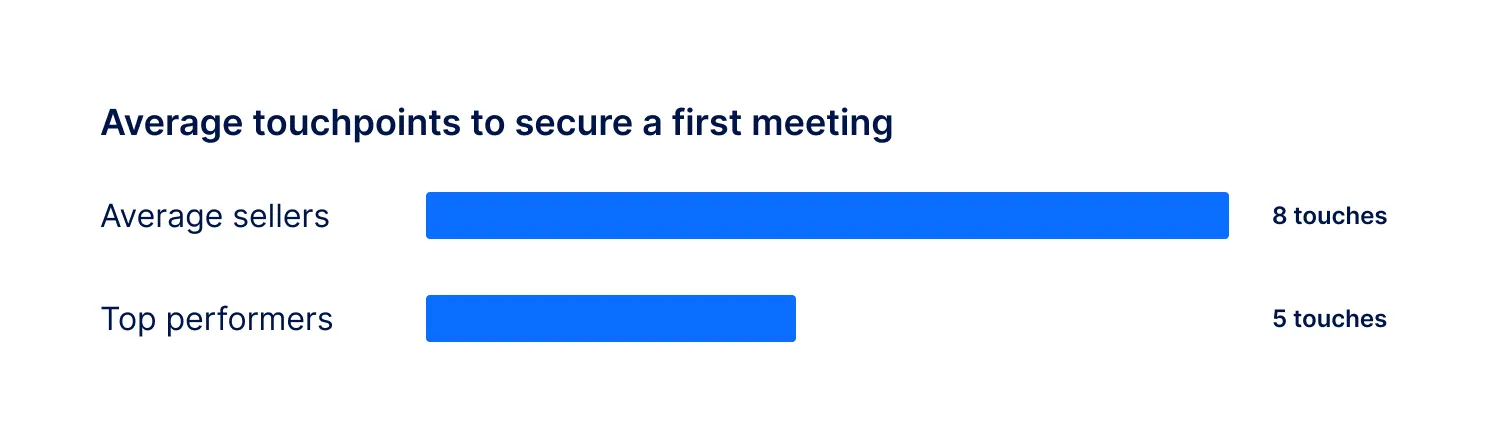
A single well-run chat is one touch. If nothing systematic happens after it, most leads never reach the number of touches they actually need to convert.
| Did you know? A widely repeated claim that “80% of sales need five follow-ups” traces back to a small 1942 survey of fewer than 40 people, according to research summarised by usecarly.com. The exact number is worth treating with skepticism, but the underlying pattern it points to, that persistence matters more than a single conversation- still holds up in modern data like the RAIN Group study above. |
The gap is larger than most teams assume. A secret-shopper study of online B2B lead response, cited byusecarly.com, found that sales teams averaged only 1.45 call attempts and 1.56 emails per lead. Just 57% of inquiring buyers received at least one call and one email, and 13% never heard from a rep at all.

These are not cold leads being neglected. These are people who reached out, asked questions, and in many cases were qualified by a chat conversation, then simply never followed up with again.
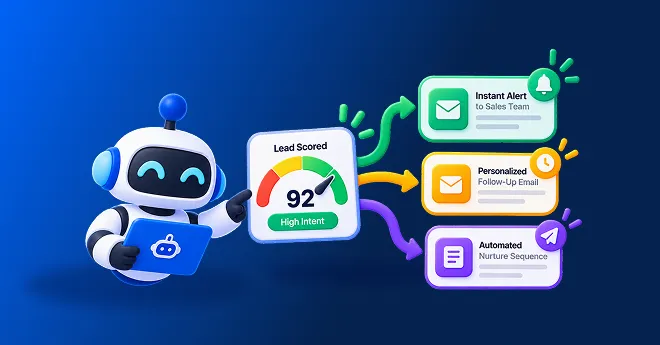
AI lead follow-up automation is software that continues nurturing a lead after the initial chat ends, using scheduled emails, reminders or alerts based on the lead’s score and stated timeline, so a captured lead never goes quiet by accident.
It picks up exactly where the chatbot’s first conversation left off, using what was learned during that chat, the visitor’s interest, timeline, and score, to decide what happens next and when.
Treating every captured lead the same way wastes the qualification work the chatbot already did. The cadence should match the score.
| Score | Ideal follow-up speed | Best channel mix |
| High | Within the hour | Instant alert to a rep, direct call or personal email |
| Medium | Same day | Personal email, calendar link, light automation |
| Low | Within a few days | Automated nurture sequence, no rep time needed yet |
| Tip Resist the urge to send an aggressive sales email to a Low-scored lead immediately after their first chat. They were not ready to buy during the conversation; a pushy follow-up rarely changes that. A slower, helpful nurture sequence performs better here. |
Harvard Business Review analyzed 1.25 million leads and found that firms who contacted a lead within an hour werenearly seven times as likely to qualify it as those who waited even one hour longer. Gartner also found that61% of B2B buyers prefer a rep-free buying experience, meaning the chat itself may be the clearest signal of intent you ever get from that visitor. If a High-scored lead sits for a day before anyone reaches out, most of that urgency has already faded.
This is exactly why follow-up automation should not mean “slower but more consistent.” For your best leads, it should mean instant, reliable action, every time, without depending on someone noticing the alert.

Here is a workflow that respects both the urgency of hot leads and the patience nurturing requires for everyone else.
Research on follow-up personalization found that referencing a previous interaction produces higher response rates than a generic template. “You mentioned wanting this live next month” performs far better than “just checking in.”
A follow-up sequence that only repeats “are you still interested?” wears thin quickly. Share something genuinely useful, a relevant case study, a specific answer to a question they raised, before asking again.
A direct calendar link or a specific, low-effort question performs better than a vague “let me know if you have questions.” Make the next action obvious.
Not every captured lead should get a sales-style follow-up. Many are genuinely still researching, and treating them that way protects the relationship for when timing improves.
A slower cadence, spread across a few weeks, respects that these leads are not on the same clock as a High-scored buyer.
Helpful content related to what they asked about in the chat keeps you present without pushing. This is where AI lead nurturing software earns its keep: consistent, low-effort touches that a rep would rarely have time to send manually.
If a nurtured lead returns to your site and shows new High-intent signals, such as a pricing page revisit or a new chat mentioning a budget, the automation should be able to escalate them into the fast-response track immediately.
Automation handles consistency. People handle judgment. The two should work together, not compete.

A rep should always be able to see the full chat history and follow-up timeline for any lead before reaching out, so a human touch never starts the conversation from zero.
Email remains the default starting point for most B2B follow-up, but relying on it alone leaves real response rate on the table.
It is low-cost, easy to automate, and works well for referencing specifics from the original chat. It should carry most of your Medium and Low-scored follow-up.
Even with automated emails running, a task assigned directly to a rep in the CRM ensures a human eventually reviews the lead, rather than assuming the automation alone will close it.
For leads that return to your site, the chatbot can pick up the earlier conversation directly, referencing what was discussed before, which often feels more natural than a cold email restating the same information.
Wherever a call or demo is the natural next step, a direct scheduling link removes a full round of back-and-forth email compared to asking “when works for you?”
Combining two or three of these, rather than relying on a single channel, tends to outperform any one method used alone, particularly for Medium-scored leads who are interested but not yet urgent.
A High lead getting the same slow nurture sequence as a Low one wastes the urgency the chat already surfaced.
Ignoring what the visitor actually said in the chat throws away the most useful thing your follow-up sequence has to work with.
Given that it typically takes several touches to secure a first meeting, a single unanswered email is rarely a real “no.” Build a sequence with more than one or two attempts.
Automation should trigger a person into action, but someone still needs to own actually making that call or sending that personal email. Assign this explicitly.
Check which follow-up messages actually get replies, and which stages leads tend to stall at, then adjust the sequence accordingly.
Track outcomes at each stage of the sequence, not just whether the sequence ran.
Time to first follow-up, split by lead score. Response rate by touch number, to see where your sequence is actually working. Stall rate, the share of leads stuck at one stage for too long. Meetings booked per sequence completed, the real measure of whether the automation is converting.
A great AI chat that ends in silence is a wasted qualification effort. Most B2B deals need several touches to close, and the leads most likely to be lost are the ones nobody systematically follows up with, whatever their score.
Automate the follow-up cadence by score, reference what the chat actually revealed, and keep a person ready to step in on your best leads the moment automation flags them. That is how you automate website lead follow-up without letting a single good conversation go quiet.

FAQ
Here are answers to common questions about follow-up timing, email sequences, lead nurturing, CRM automation, and when a sales representative should step in.
It is software that automatically continues nurturing a lead after an initial AI chat, using scheduled emails, reminders or alerts based on the lead’s score and stated timeline, so no captured lead goes quiet after the first conversation.
Research from RAIN Group found it takes an average of 8 touchpoints to secure a first meeting with a new prospect, while top-performing sellers do it in around 5, through more relevant, better-timed follow-up rather than raw volume.
No. High-scored leads with a near-term timeline need fast, direct outreach, often within the hour. Medium and Low leads benefit more from a slower, value-first nurture sequence rather than aggressive early outreach.
Yes, and it should. Automation handles consistent early-stage follow-up and reminders. Reps step in for the higher-value conversations, negotiation and closing, ideally alerted automatically once a lead is ready.
Email is the most common starting point, but combining it with reminders inside your CRM, calendar links and, where appropriate, a follow-up message from the chatbot itself tends to perform better than a single channel alone.
As close to immediately as possible. Harvard Business Review found that leads contacted within an hour were nearly seven times as likely to qualify as those contacted even one hour later, so speed on High-scored leads should be a priority.
Not for every lead. It automates the repetitive, predictable parts of follow-up and reminders. Reps still handle personal outreach on high-value or complex deals, ideally guided by what the automation has already learned about the lead.
 How to Automate Website Lead Follow-Up After an AI Chat

It’s 11:47 PM. Someone is on your website. They’ve read your services, checked your pricing, and they’re seriously considering reaching...
Quick summary Contact forms convert views into submissions at only around 9%, one of the lowest rates of any form...
Not every AI automation project needs to be a six-month enterprise overhaul. Some of the highest-value workflows to automate with...