
 10 Mins Read
AI Chatbot vs Lead Capture Chatbot: What’s the Difference for B2B Sales?
Quick summary Both live in the same chat bubble, but they do very different jobs. An AI chatbot answers questions....

| Quick summary Most of your website traffic will never fill in a form, yet many of those visitors are close to buying. Visitor intent detection reads the signals they leave, starts the right conversation, and turns anonymous visits into scored leads. This guide explains how it works, what to look for, and how to use it responsibly. |
Your website had 5,000 visitors last month. Analytics shows page views, bounce rates, and traffic sources. What it does not show is the name of anyone who mattered.
Somewhere in that crowd were a procurement manager comparing you with two rivals, a founder checking your pricing for the third time, and an operations lead reading your integrations page. They all left without a word.
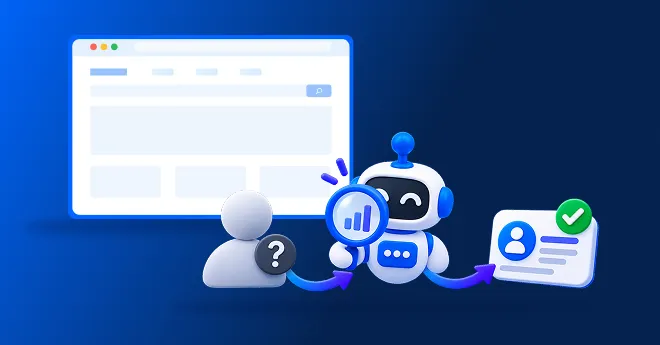
They were not invisible. They were leaving signals. Visitor intent detection is how you read them, and this guide shows how it turns anonymous traffic into sales opportunities.
Because buyers prefer to research alone, and forms ask for a commitment they are not ready to make. 6sense studied buyer identification and found that among visitors from identifiable accounts,70% to 80% remain anonymous, even to the companies they eventually buy from. Buyers also reported that only 30% filled out a form on the website of the vendor they bought from.
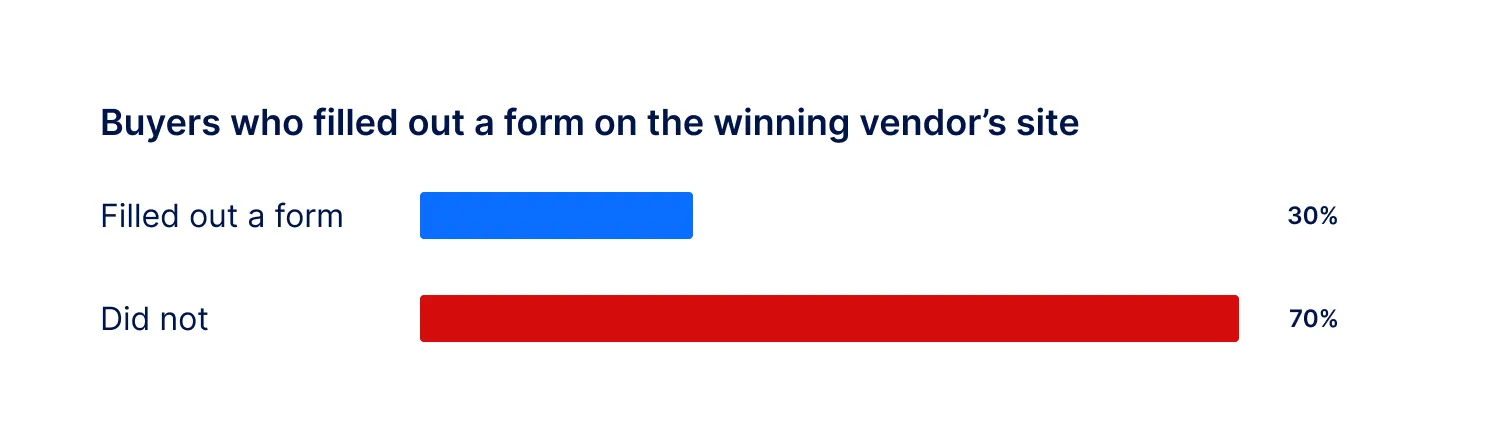
In other words, your forms miss most of the people who eventually become customers. If you only count form fills, you are only counting the minority who chose to raise a hand.
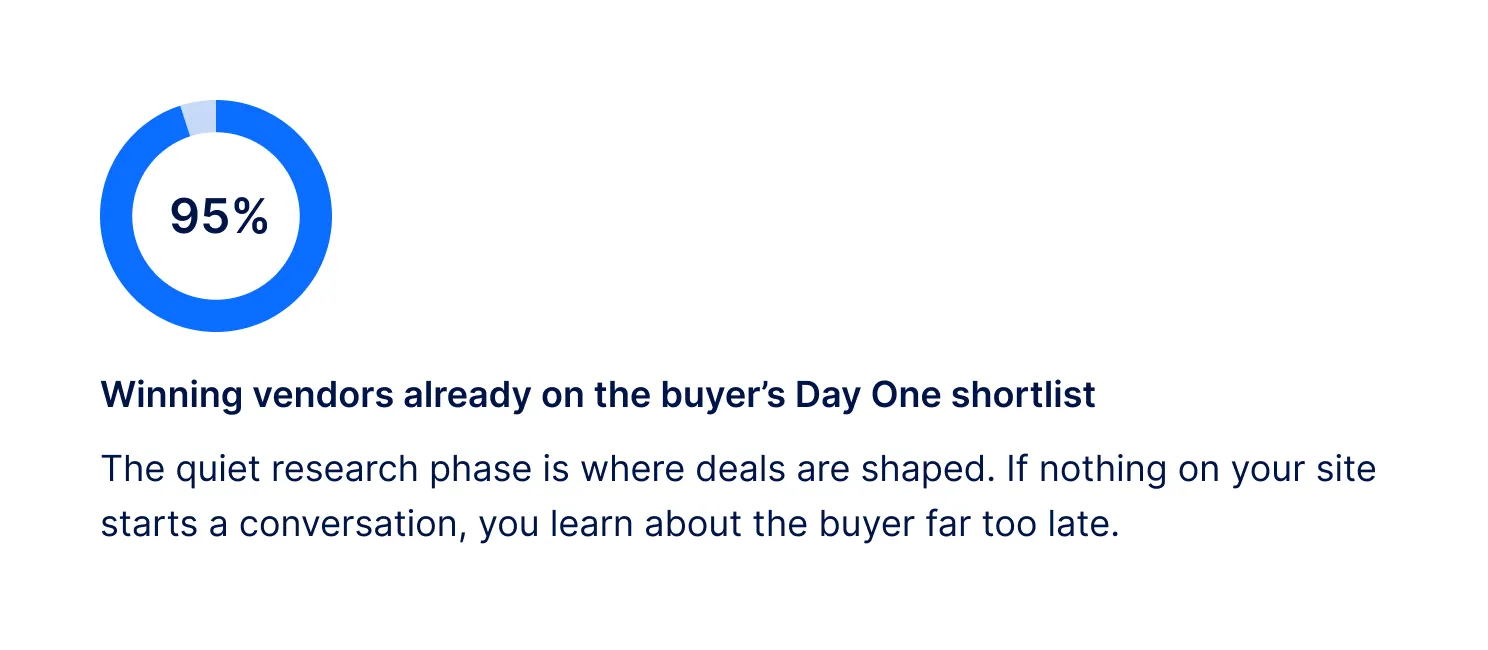
The 2025 6sense Buyer Experience Report found that buyers make first contact with sellers about61% of the way through their buying journey, and that 95% of the time the winning vendor was already on the buyer’s Day One shortlist. By the time someone asks for a demo, much of the decision has been made.
| Did you know? The same 6sense report says buyers initiate first contact more than 80% of the time, and that sales development outreach plays a minimal role in when they do. Buyers reach out when they are ready, not when they are prompted. Your website has to be ready for that moment. |
It does not mean unknowable. An anonymous visitor simply has not told you who they are yet. But they have still told you a lot: which page they are on, what they are asking, what they compare, and how often they return.
That is the idea behind visitor intent detection. You do not need to know a visitor’s name to know they are interested. You need to notice the signal, respond well, and invite them to share their details when it helps them.
Visitor intent detection is the process of reading signals from a website visitor, such as pages viewed, questions asked, and words used, to judge how close they are to buying.
Tools that do this are called visitor intent detection software. The newer versions use AI visitor intent analysis, which reads what someone types or selects in real time instead of relying on fixed rules. That is how a chatbot can tell a visitor asking “what does it cost for 20 users?” from one asking “what do you do?”.
Signals fall into three groups. The strongest picture comes from combining them.
| Signal type | Example | Example | Strength |
| Behavior | Opens pricing, then integrations | Checking cost and technical fit | Medium to high |
| Behavior | Returns three times in a week | Active evaluation | Medium to high |
| Conversation | “How much for 20 users?” | Budget is being planned | High |
| Conversation | “We want this live next month.” | Real urgency | High |
| Buying phrase | “Book a demo” | Ready to talk | Very high |
| Context | Arrives on a comparison page | Choosing between vendors | Medium to high |
| Casual browsing | One homepage visit, short stay | Early curiosity | Low |
| Tip Behavior tells you where a visitor went. Conversation tells you why. Combine both, and treat a single page view as a hint, not proof. |

The tool watches which pages someone views, how often they return, and what path they take. It is useful for spotting patterns, but it cannot tell you why a visitor is there.
Some platforms match visits to companies using IP address and account matching, and layer on research signals from across the web. A 6sense guide describes this as the way intent data platformsidentify companies visiting your site. It can be powerful for account-based teams, though it works at the company level and needs careful handling of privacy rules.
The tool starts a chat, reads what the visitor asks or selects, and asks a few natural questions. Intent comes from the visitor’s own words, and identification happens only when they choose to share details. This is how Corvexa works: it reads what a visitor asks or selects, whether that is pricing, a demo, support, or just browsing, and adjusts the conversation to match.
These approaches are not rivals. Behavior can trigger the conversation, and the conversation confirms the intent. The key question is what you do with the signal.
Here is the path one anonymous visitor takes.
A minute earlier, this visitor was an unnamed session in your analytics. Now your rep has a scored lead, the full conversation, and a preferred call time.
Not every tool reads intent well, and some only apply basic rules instead of true AI visitor intent analysis. Use this checklist when you compare options.

Every business has its own version. Here is how to build yours in an afternoon.
Look at the last ten deals you won. Which pages did they read? What did they ask first? What words did they use? Patterns appear quickly.
Decide what should happen for each signal. Pricing question: answer and ask about timeline. “Book a demo”: capture details immediately. Comparison page: handle objections. General question: help without pressure.
Add phrases like “book a demo,” “pricing for 50 users,” and “talk to sales.” When a visitor says one, the chatbot should skip the small talk and go to capture.
Job seekers, students and irrelevant enquiries should score Low, so they do not take up your team’s time.
Intent detection works best when visitors feel helped, not watched. Here are simple rules.
Tell visitors they are chatting with AI, and make it easy to reach a real person.
Ask for details as part of a helpful conversation. Do not require them to get an answer.
Link your privacy policy, use a cookie consent popup where your region requires one, and collect only what you need. Corvexa states that it is GDPR and PCI DSS compliant, but always check that any tool meets the rules where you operate.
A visitor with low intent is still a future buyer. Keep helping them, and let them come back on their own terms.
A single pricing page view could be a student. Combine two or three signals before treating someone as high intent.
A prompt that fires the moment someone lands feels pushy. Wait for a real signal.
Behavior leaves gaps. One well-placed question, like team size or timeline, fills them.
Speed still matters. Harvard Business Review found that firms contacting a lead within an hour werenearly seven times as likely to qualify it as those who waited one hour longer. Set alerts for High leads.
Read a few chats each week. You will find signals you missed and phrases to add.
Track outcomes, not just detections. Four numbers tell most of the story.
Anonymous-to-identified rate shows how many visitors become named leads. Qualified lead rate shows how many are a real fit. Response time to hot leads shows how fast you act. Meetings booked shows real movement.
Here is a simple illustration, not a promise. With 5,000 monthly visitors, lifting visitor-to-lead conversion from 2% to 3% adds about 50 leads a month, from traffic you already have. TheCorvexa leads dashboard shows each lead’s score, source page, and full chat, so you can see which signals turn into real business. See ourcase studies for real B2B examples.
Review your best deals, list your signals and hot keywords, and write your disqualifiers.
Let the chatbot learn from your site and documents. Connect your CRM and calendar through theintegrations.
Add the script tag, go live on pricing and comparison pages, and set alerts for high-value leads. Read the first chats and adjust. Ourhow it works page shows the full process

Most of your visitors will stay anonymous unless something helps them step forward. Visitor intent detection reads the signals they leave, starts a useful conversation at the right moment, and gives your team scored leads while interest is still warm.
Start with your pricing and comparison pages. Treat website visitor intent detection as a mix of behavior and conversation. Keep it transparent and let visitors choose what to share. Then read real chats and improve each week. The high-intent website visitors are already on your site. The question is whether anything speaks to them.

FAQ
Visitor intent detection is the process of reading signals from a website visitor, such as the pages they view, the questions they ask and the words they use, to work out how close they are to buying, so your team can respond to the right people first.
It watches or listens for buying signals, scores how strong they are, starts a helpful conversation at the right moment and passes ready-to-buy visitors to your sales team with context. Some tools focus on behavior, others on conversation, and the best combine both.
Start a useful conversation while the visitor is still on the page, read their intent from what they ask, and invite them to share contact details when it helps them. Corvexa captures name, work email, phone, interest and preferred follow-up time inside the chat.
They are visitors showing clear signs of readiness to buy, such as viewing pricing, comparing you with competitors, asking about cost or timing, or using phrases like book a demo.
It can be, if you are transparent, follow the privacy rules in your region, tell visitors when they are talking to AI and only collect details people choose to share. Always check any tool against your local rules.
 How Visitor Intent Detection Turns Anonymous Website Traffic Into Sales Opportunities

Quick summary Both live in the same chat bubble, but they do very different jobs. An AI chatbot answers questions....

Most businesses have already seen a chatbot. You visit a website, a small chat window appears, and it asks: “How...

Not every website visitor is a potential customer. Some people are browsing. Some are researching. Some are comparing different solutions....